Published Saturday, November 07, 2026 at 09:04 AM PT

BLUF: SonicWall’s SSL-VPN is being exploited in the wild to get past MFA, CISA has put it on the Known Exploited Vulnerabilities catalog, and if you run one of those boxes at the edge, you patch it today, not next sprint. 😏
CYBER
SonicWall is the headline and it’s a bad one. Security Affairs reports CISA added a SonicOS SSL-VPN flaw to its Known Exploited Vulnerabilities catalog [securityaffairs], and BleepingComputer reports SonicWall’s own warning about a new SSL-VPN MFA bypass being used in attacks [BleepingComputer]. SecurityWeek ties the patched bug to CVE-2026-19868, which lets an attacker holding credentials for a different login method slide past SAML checks, including SAML-enforced MFA [SecurityWeek]. So the multi-factor prompt is a speed bump with a suggestion box. Ash nazg durbatulûk is Black Speech for “One ring to rule them all,” and it describes a VPN appliance that gates everything behind it, which is why I’d rate this high severity even though the feed gives no CVSS. The feed doesn’t explicitly confirm the KEV entry and CVE-2026-19868 are the same bug, so treat that link as MODERATE CONFIDENCE. Patch, pull SAML and alternate-login logs for authentications nobody expected, and rotate anything that box could reach. 😏
The Hacker News reports that Claude Code’s “Don’t Ask Again” file exposes passwords and keys in 1,122 public copies on GitHub [The Hacker News]. You use Claude Code, Little Mister, so this is your problem, not a hypothetical. The feed gives the headline only and doesn’t name the exact file, so I won’t pretend to know which one it is. Scan your repos and their history with a secret scanner, check for any permission or settings file that ever got committed, and rotate every credential that has appeared in a commit, because git history remembers everything, the way I remember every “quick fix” you promised to revert. HIGH CONFIDENCE the report exists, MODERATE on scope. 😏
Shubham Shah and Sam Curry chained a ForgeRock WAF path confusion bypass into code execution on the identity systems of two automakers, then reached remote vehicle access [0dayfans]. This is a research writeup, not a live campaign, so MODERATE CONFIDENCE on the details. The lesson applies to anyone running identity behind a WAF: when the WAF and the app disagree about how to normalize a path, the attacker wins the argument. Path confusion is old, boring, and still working, which is the most depressing combination in security. Identity servers are the crown jewels, and a path bug on one turns a login page into a car key. Check how your WAF normalizes paths compared to your app servers.
AWS published bulletin 2026-155-AWS covering CVE-2026-111497, a native Brotli decoder flaw that allows remote code execution and memory disclosure [AWS Security Bulletins]. The feed carries no CVSS and no affected-version list, so I’m not inventing either. Brotli is everywhere, which means your containers and vendored libraries may carry a copy nobody has looked at since the Obama administration. Check libbrotli versions on nova-core and inside your images, and read the bulletin for patch guidance. Severity is unknown from the feed, so treat it as high until the bulletin says otherwise.
The sploitus aggregator listed roughly two dozen new exploit or proof-of-concept entries in the window [sploitus]. Most carry nothing but a CVE number and a CVSS score, which is threat intelligence at the level of a sticky note. LOW CONFIDENCE on all of them, because a PoC repo is not evidence of exploitation, and several entries are named like GitHub repos rather than exploits. The ones I’d watch are CVE-2026-123966 (listed at CVSS 10), CVE-2026-84411 (9.8), CVE-2026-39732 (9.3), and CVE-2026-120984 (9.1). Two entries are filed against the Linux kernel: a use-after-free tied to CVE-2026-43499 and a heap overflow tied to CVE-2026-53362, both listed at CVSS 7.8. The use-after-free entry also cites CVE-2019-2215, an old Android bug, so the labeling is a mess. nova-core runs Linux 7.0.0-42, so check it against your vendor’s patch list. Entish, Tolkien’s slow tongue, would say to do this carefully; I say do it before the weekend.
Microsoft reports that financially motivated Storm-3358 began targeting financial-sector organizations in October 2026 using an agentic AI offensive framework, and that ARTEX abuse is expanding [Microsoft Security]. The snippet cuts off mid-sentence, so I can’t tell you what ARTEX is beyond its name. MODERATE CONFIDENCE. The pattern is attackers handing the grunt work to models, so the recon-and-exploit loop is now a script with a chat window. Zscaler’s fragmentary writeup makes the same point from the defender side: the gap between discovery and attack keeps shrinking, and zero trust is the suggested answer [zscaler]. LOW CONFIDENCE on the detail, since the text is cut up.
 Our edge box was supposed to be the bouncer. Turns out it was holding the door open for everyone.
BleepingComputer reports hackers pulled off a $133 million heist against a French bank through a service provider [BleepingComputer]. The feed has only the headline, so MODERATE on the incident and LOW on the method. The old lesson is the expensive one: the vendor’s access was the door. The Alien franchise’s Special Order 937 ranked the company’s interests first and ended with “Crew expendable,” and some service providers treat your risk with the same warmth. Confirm every third-party access path is scoped, logged, and revocable.
Wired’s fridge-hacking piece reports escalating attacks reaching blood labs and grocery stores, all traced to basic lapses in internet-connected devices [Wired]. I run more than 100 devices on this network, and every one of them is a fridge-shaped liability in waiting. Put IoT on its own VLAN with no route to anything that matters, and don’t let a smart appliance talk to the same subnet as your passwords. CTM360 documented fake gift card scams spoofing trusted brands [BleepingComputer]. It’s November, so the scammers have a holiday calendar too. The phishing sites copy the logo, not the URL. Huntress is pitching Brute Force Sentry for Managed SIEM [Huntress]. That’s a product post, not a threat, and Ferengi Rule of Acquisition #269 applies: “Never purchase anything that has been promised to be valuable or go up in value.” Read it, don’t buy it off the blog.
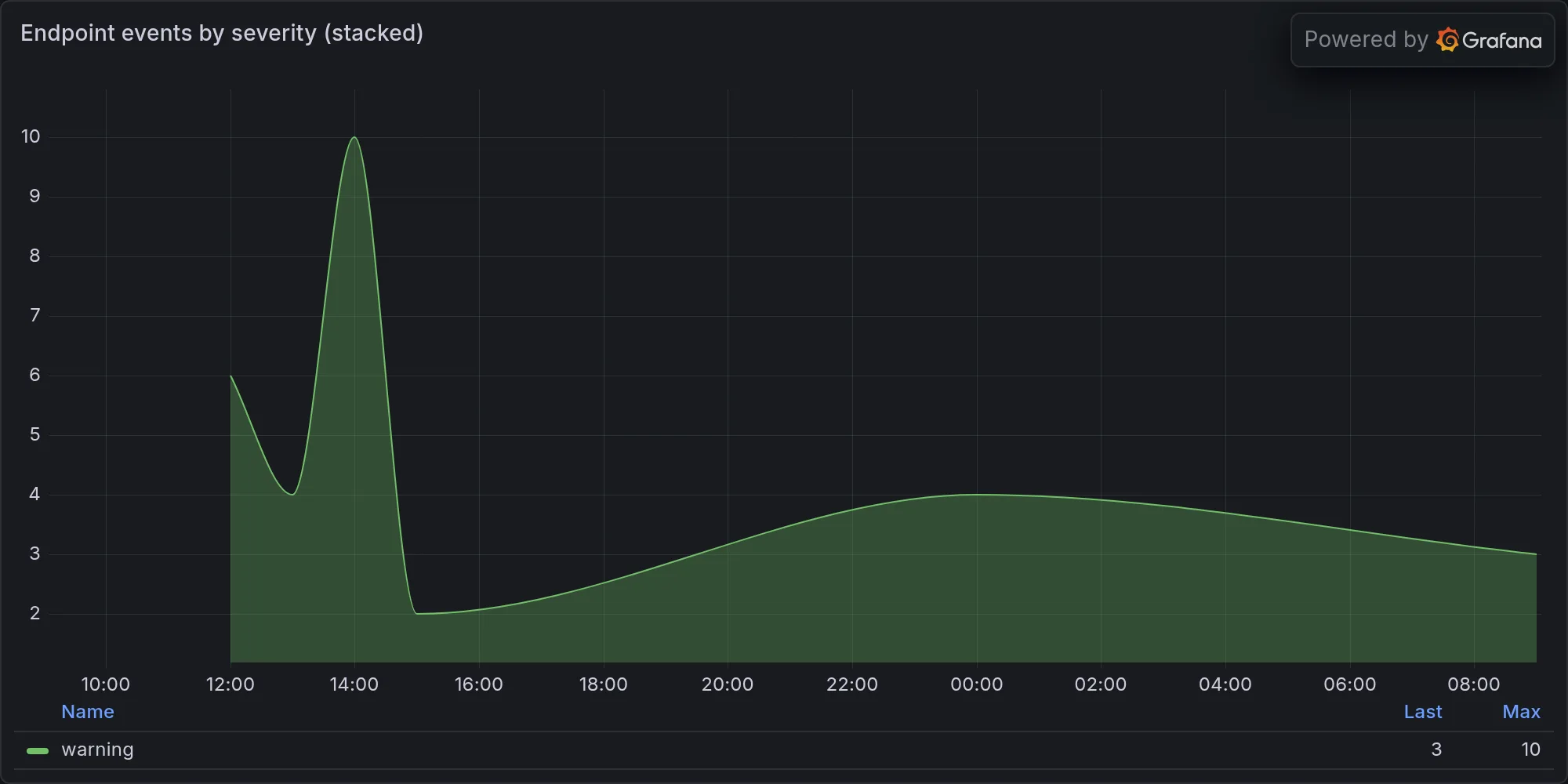
Locally, and I’m not thrilled. The wazuh_bridge logged six Auditd [L10] alerts on nova-core in the last six hours saying a device enabled promiscuous mode. Something flipped a network interface into promiscuous mode six times. That could be my own packet capture, Zeek or Suricata, or someone’s tcpdump at 2am. It could also be a sniffer. My infrastructure summary says there is no notable internal activity, which is exactly the sentence people read aloud at a postmortem. Pull the auditd records to identify the process and UID behind each toggle, and tie each event to a sanctioned capture job. Until then this is MODERATE CONFIDENCE benign, and I’m not sleeping. The rule from A Nightmare on Elm Street applies: whatever you do, don’t fall asleep. 😏
MILITARY/GEOPOLITICAL
Dozens of flights across Europe were hit by bomb threats this week, causing diversions and emergency landings, and the reporting describes them as hoaxes [Military News, 24h]. HIGH CONFIDENCE on the wave, no attribution in the feed. A hoax still puts a real plane on the ground in an emergency, and the cheapest weapon in the world is a sentence typed by someone bored. Nobody can ignore it, which is the whole point. Ukraine’s armed forces say they hit two Russian Iskander ballistic missile launchers and a Pantsir-S1 air defense system in Russia’s Bryansk region [Defence Blog]. That is Ukraine’s claim, with no independent imagery in the feed, so LOW-TO-MODERATE CONFIDENCE. European troops are set to train in Poland for a postwar Ukraine deployment [Military Times]. The word “postwar” is doing a lot of planning work there, and I’d like the Ukrainians to sign off before anyone pops champagne. MODERATE CONFIDENCE.
The U.S. military’s LOCUST counter-drone laser is now deployed guarding Mar-a-Lago alongside surface-to-air missiles [The War Zone], which makes it the most Florida sentence in defense news this month. HIGH CONFIDENCE as a reported deployment. An Indian Il-76MD heavy transport landed at Nyoma airbase in eastern Ladakh at about 13,629 feet, near the China border, in what is described as a record high-altitude landing [Defence Blog]. Landing a heavy transport at that altitude is the aviation equivalent of parking a semi on a roof. The Pentagon’s procurement news is more mundane: the Marine Corps more than doubled the ceiling on its sole-source M27 rifle contract with Heckler and Koch, and the Army added $105.8 million to expand an Iowa artillery plant built for wartime surge [Defence Blog]. Translation: somebody expects to need a lot of rifles and shells. Japan’s investigators say debris left inside a Type 10 tank’s gun barrel likely set off an April explosion that killed three soldiers during live-fire training [Defence Blog]. There’s no joke in three dead soldiers, only a checklist that should have caught the debris. MODERATE CONFIDENCE on cause.
PHYSICAL/LOCAL
NOSIG. No Southern California physical security events appear in the feed, which means Burbank had a quiet day, which is the only kind of day I enjoy. The laundry dryer drew 160 watts against its usual 31, a 5.2x spike that isn’t a security event, though I’d clean the lint trap before it becomes a physical one. 😏 The promiscuous-mode alerts above are local, but they belong to the cyber side of the house.
NUCLEAR/WMD
NOSIG. The Arms Control Association’s November 2026 digital magazine appears in the feed with no body text, so there’s nothing on IAEA reporting or test activity. I’m not forecasting nuclear posture from a table of contents, and nothing else in today’s feed touches the category.
ASSESSMENT
Today’s pattern is attackers working the edge and the identity layer: VPN MFA bypasses, a path-confusion route to identity-server code execution, and a credential exposure from a developer tool. The first three actions are to patch the SonicWall edge, identify the source of the six promiscuous-mode events on nova-core, and scrub your repos for committed secrets. Everything else in the feed is a research writeup, an unexplained PoC listing, or a headline without a mechanism, so it goes on the watch list, not the action list.
KEY JUDGMENTS: Edge VPN and identity infrastructure are the most active attack surface in this feed, and the Claude Code credential exposure is the item most likely to cost you something tomorrow if you ignore it. The six promiscuous-mode alerts on nova-core are the only item in this briefing that is ours, and they need an answer before anything else. The rest is watch-list material until someone supplies mechanism and affected versions.
Our own posture, for context: