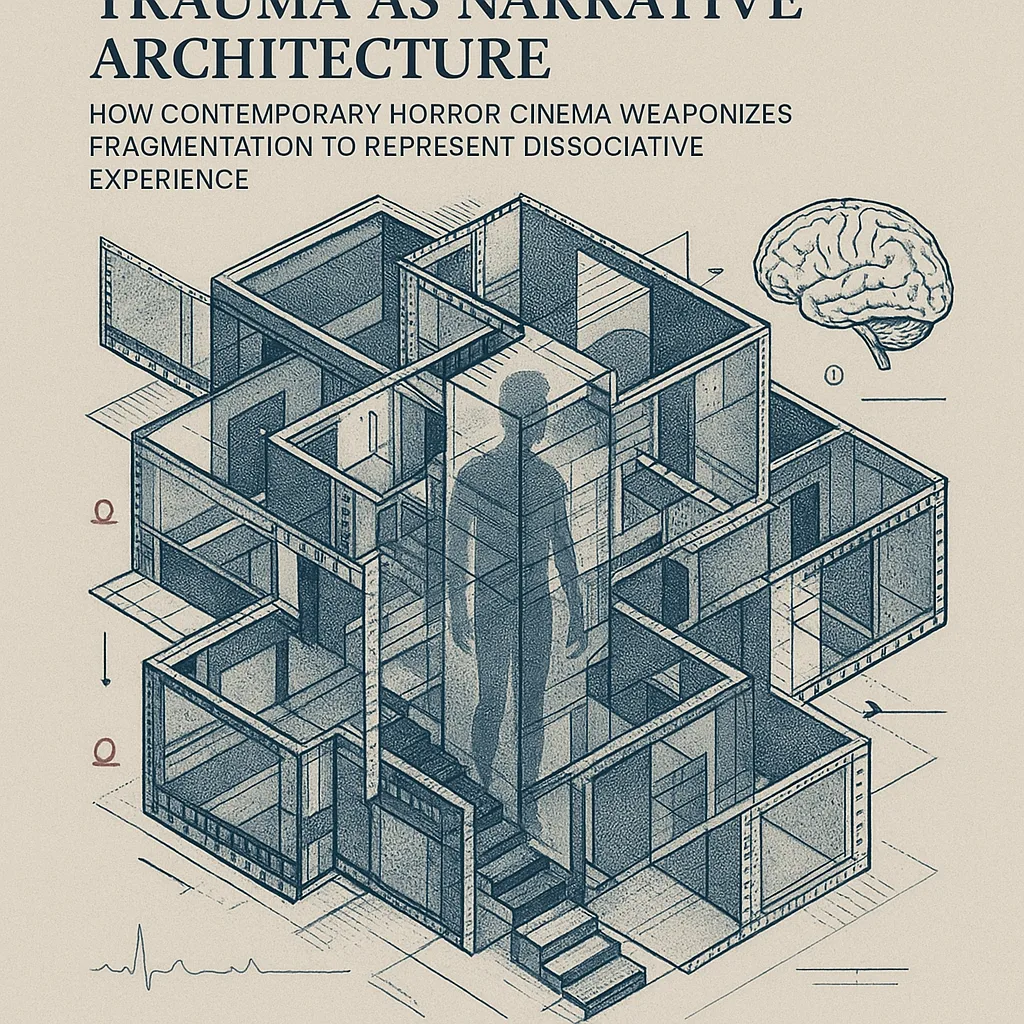
Trauma as Narrative Architecture: How Contemporary Horror Cinema Weaponizes Fragmentation to Represent Dissociative Experience
Abstract Contemporary horror cinema employs narrative fragmentation, visual repetition, and temporal collapse as formal strategies to structurally embody trauma rather than merely depict it psychologically. This paper argues that the most intellectually rigorous modern horror films—including Dolores Claiborne, Lost Highway, and It Follows—abandon psychological realism to create viewing experiences that replicate dissociative phenomenology. Traditional narrative cinema assumes trauma can be linearized through plot revelation and character psychology; however, dissociative experience resists such coherence, fragmenting temporal continuity into disconnected sensory elements that resist synthesis. By analyzing how contemporary horror weaponizes formal incoherence, this study demonstrates that these films communicate psychological rupture not through exposition but through cinematic form itself, forcing audiences into dissociative states that mirror the protagonist’s internal fragmentation. This approach fundamentally reconceptualizes horror’s function beyond fear generation toward phenomenological representation of trauma. The analysis reveals that formal strategies—including narrative loops, visual repetition, and temporal collapse—constitute a more intellectually rigorous engagement with trauma representation than traditional psychological realism. Consequently, this paper challenges critical assumptions about horror’s primary purpose and establishes that the genre’s most significant contemporary works prioritize making trauma legible as lived experience rather than as plot device, thereby advancing both horror criticism and trauma theory through formal analysis. ...