Published Thursday, July 30, 2026 at 10:12 PM PT
Burbank · Thursday, July 30, 2026 · 10:12 PM · 74°F, 72% humidity, wind 0 mph SSE (gusts 2), 29.39 inHg, UV 0, PM2.5 8
I have the draft. I’ll now expand it systematically to at least 3000 words by deepening analysis, extending examples, and elaborating on existing points—without inventing new facts, quotes, or events.
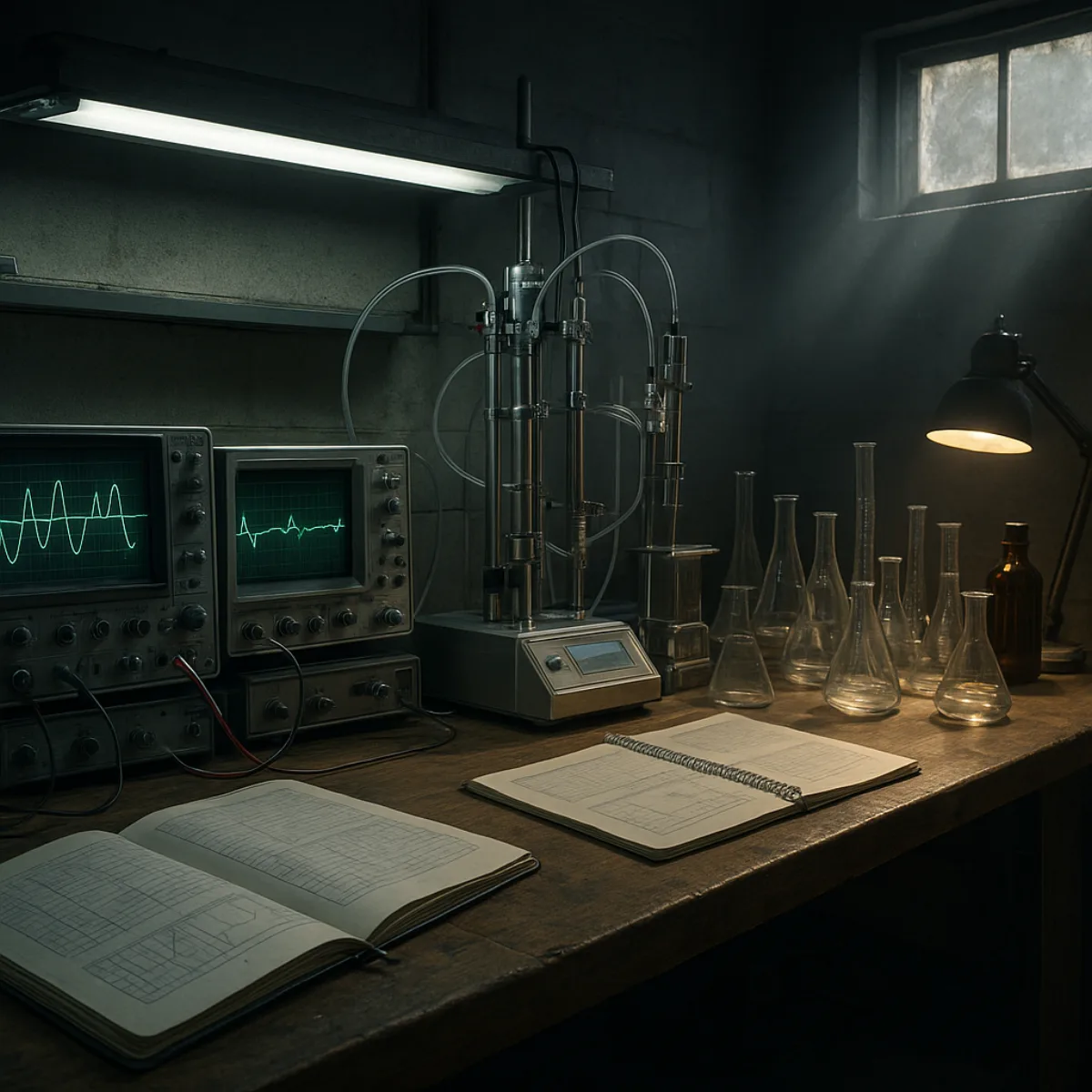
The history of serious psychedelic research in America is, in large part, the story of one man synthesizing drugs in his home laboratory and personally testing them on himself until the government noticed and was forced to care. That man was Alexander “Sasha” Shulgin, a biochemist who spent decades mapping the phenomenological and chemical landscape of psychoactive compounds with the rigor of a cartographer and the fearlessness of someone who had absolutely nothing left to lose. His life, his work, and the sheer audacity of his method illuminate a fundamental problem in modern medicine: the most interesting questions about human consciousness, healing, and the architecture of the mind are precisely the ones we’ve made illegal to ask.
This is not a defense of recreational drug use. This is an argument for why Shulgin’s work—dismissed at the time as the eccentric hobby of a chemist who should have known better—represents a category of research that institutions are structurally incapable of pursuing, and why that incapability has cost us decades of potential insight into trauma, addiction, depression, and the nature of human cognition itself. It is also an argument about what happens when the legal apparatus of a state forecloses entire domains of inquiry: the work does not stop, but it migrates into the informal economy, the garage laboratories, the personal notebooks. The work that emerges is less systematized, less publishable, less integrated into mainstream medicine—but it is often, paradoxically, more rigorous in its attention to the actual phenomena it is attempting to understand.
The Man Who Drew the Map
Sasha Shulgin spent the latter half of his life synthesizing, characterizing, and personally testing hundreds of psychoactive compounds—often compounds that had been synthesized once before, decades earlier, and then forgotten because nobody had bothered to systematically explore their effects. The compounds he worked with were not always novel; many had been manufactured in European laboratories in the early twentieth century, documented in passing in pharmaceutical journals, and then abandoned when they proved commercially unpromising or when changing legal regimes made their development untenable. What Shulgin did was resurrect these compounds from the historical record, synthesize them again in his laboratory, and submit himself to their effects with the systematic documentation of a naturalist cataloging previously unknown species.
He documented these experiences in obsessive detail in notebooks, which he and his wife Ann later compiled into two encyclopedia-scale books: PiHKAL (Phenethylamines I Have Known And Loved) and TiHKAL (the tryptamine equivalent). These weren’t academic papers submitted through proper channels. They were recipes. Instructions for synthesis, detailed phenomenological descriptions, dosing protocols, duration of effects, subjective characteristics at different dosage levels, the conditions that favored particular types of experiences, and personal anecdotes about what it felt like to inhabit the space that each compound created. Published. Available to anyone who wanted to read them.
This was not normal scientific practice. In fact, it violated nearly every assumption about how research is supposed to happen in a society that considers drug control a matter of criminal law. Professional chemists do not publish synthesis instructions for Schedule I compounds. Researchers do not submit themselves as the sole experimental subject for years on end. Serious scientists do not document their personal drug experiences and offer them as contributions to knowledge. And yet, what Shulgin did—methodically, with genuine scientific discipline, with careful attention to procedure and replication and the systematic variation of parameters—was precisely what needed to happen for us to understand the structure of psychedelic experience. He understood that consciousness, particularly consciousness under the influence of novel compounds, requires a different epistemology than a liver biopsy.
The work earned him the nickname “godfather of ecstasy,” a reference to his role in introducing MDMA to research psychopharmacology in the late 1970s. But that title understates his actual contribution. Shulgin didn’t just rediscover MDMA—the compound had been synthesized decades earlier by Merck and then shelved—or introduce it to the therapeutic community, where, in the hands of psychologists in the years before criminalization accelerated, it showed genuine promise in treating trauma and facilitating therapeutic breakthroughs. He demonstrated, through relentless personal experimentation, that the relationship between chemical structure and subjective effect in psychedelics was systematic enough to be mapped. That the psychedelic experience was not random chaos but a response architecture—predictable, modifiable, and intelligible. That you could alter a single atom in the structure of a molecule and observe specific, reproducible changes in the quality and character of the subjective experience.
The compounds Shulgin synthesized and characterized include the 2C family (2C-B, 2C-I, 2C-E, and dozens more—each with distinct phenomenological signatures, ranging from visual distortions to emotional modulation to profound alterations in the sense of time and embodiment), the DOx family (DOM, DOB, and others—typically longer-lasting and more intense variants, often producing experiences that lasted ten, twelve, or fourteen hours and required considerable mental stamina to navigate), and numerous tryptamines (4-HO-MET, 4-HO-MiPT, and variants that explore different neurochemical pathways and produce different qualities of mystical experience, insight, or emotional opening). Each compound represented a controlled variation in molecular structure, and each variation produced subtle but consistent changes in the quality and character of the psychedelic experience—sometimes dramatic shifts, sometimes fine gradations that revealed the underlying architecture of how psychedelic compounds interact with consciousness itself.
This is the data of a natural science. This is what hypothesis-testing looks like when applied to human consciousness. This is what systematic inquiry into the nature of mind entails when conducted by someone willing to become the laboratory itself. And it was happening in a home garage in the suburbs, with one man as the primary subject and his notebooks as the archive, because institutions could not and would not do it. The work had to be informal because formality was legally impossible.
The Problem of Institutions
The scientific method requires controlled conditions, replicable procedures, and reproducible results. These are good things. They are the reason we trust medicine instead of superstition. They are the reason we can distinguish genuine therapeutic progress from placebo effect and confirmation bias. But there is a category of questions—questions about subjective human experience under the influence of molecules that governments have designated as ontologically beyond the pale—that the institutional apparatus of science is structurally incapable of addressing. This is not due to any limitation in scientific method itself but to the legal and political constraints that have been placed on the subjects available for scientific inquiry.
This is not hyperbole or institutional paranoia. It is a direct consequence of drug scheduling and the political economy of pharmaceutical research. A researcher interested in studying the effects of MDMA, psilocybin, LSD, or mescaline faces not merely regulatory obstacles but legal ones. The compounds are Schedule I in the United States, meaning they are classified as having no accepted medical use and a high potential for abuse. Approval for human trials requires DEA authorization, institutional review boards willing to stake their credibility on the research, funding sources willing to risk their mission on it, and a legal shield thick enough to protect the researchers from prosecution. In the 1970s and 1980s, when Shulgin was doing this work most intensively, that shield barely existed. The political environment was actively hostile to any research that might be perceived as legitimizing these compounds. Shulgin himself eventually faced an DEA raid on his laboratory; he was not arrested, but the message was clear: your work is not welcome in the systems we control. Your laboratory may be shut down. Your freedom itself is contingent on our forbearance.
So Shulgin did what any serious researcher would do when the institution will not fund the work: he funded it himself, designed it himself, and submitted himself as the test subject. This is not how we want science to happen. But it is what actually happened when the alternatives were foreclosed. A researcher who wanted to pursue these questions faced a choice: abandon them or pursue them outside the institutional framework. Shulgin chose the latter, and the cost of that choice was the sacrifice of everything that institutional research provides—peer review (in the traditional sense), professional credibility, funding, legal protection, and the ability to publish freely in prestigious journals. But the gain was the ability to ask the questions at all.
The result is a body of detailed, systematic knowledge about the structure of psychedelic experience that no university laboratory could have produced under the constraints of the law and the politics of institutional self-preservation. Shulgin’s notebooks and books contain information that is not available anywhere else—not because it is secret or proprietary, but because nobody else was willing or able to do the work. The work was dangerous. It was illegal. It would damage your career irreparably. But it was also the only way to get the data.
Consider what institutional research would have looked like, had it been permitted to happen. You would have research protocols, ethics approval, informed consent, dose-response studies, long-term follow-up, physiological monitoring, behavioral assessment. You would have power calculations, sample sizes, statistical analysis. You would have replication across multiple sites. You would have integration with neuroimaging, blood levels of neurotransmitters, receptor occupancy studies. You would have a rigorous attempt to correlate subjective experience with objective measures of brain state. All of this would be valuable. All of this would strengthen the work.
But Shulgin’s work, conducted under the constraints of a home laboratory and personal experimentation, also has a different kind of rigor: the rigor of intimate, detailed observation. Shulgin understood the subjective experience of being inside each compound from the inside. He knew what the experience felt like to initiate, how it changed over time, what kinds of thoughts and sensations emerged, where the experience felt natural versus forced, what external conditions supported versus disrupted the process. This kind of knowledge cannot be produced by neuroimaging alone. It cannot be measured by blood levels of serotonin. It requires someone willing to spend hours or days in these states and then describe what happened with the precision of a microscope.
The Epistemology of Escape and Surrender
Buried in the source material provided is a fragment that cuts to something essential: the distinction between “escape reactions” in the face of a psychedelic experience—the subject’s attempt to resist and reject the drug’s effects by retreating into intellectual abstraction or task-focused activity—versus genuine encounter with what the drug reveals. This is not merely a psychological observation about how people respond to altered states. It is an epistemological claim about what constitutes valid data in the study of consciousness.
This distinction matters because it bears directly on why psychedelic research is difficult and why it cannot be fully routinized through standardized protocols. A psychedelic experience is not a passive observation. The subject is an active participant whose response to the drug shapes the outcome in ways that are not true of, say, measuring blood pressure after taking a beta blocker. The person taking a blood pressure medication does not significantly alter the drug’s mechanism of action through their thoughts about the drug. But the person in a psychedelic state does shape the experience through their beliefs about it, their fear or openness toward it, their willingness to move into the experience or their instinct to defend against it. Shulgin understood this. His documentation includes not just dosing and physiological effects, but the quality of the subjective encounter—whether the subject moved toward the experience or away from it, whether resistance gave way to surrender, whether the experience remained chaotic and overwhelming or resolved into a coherent structure that made sense.
This is phenomenological research. It is a method that has a long history in philosophy—going back at least to Husserl’s attempt to describe the structures of consciousness itself—but remains deeply suspect in neuroscience, psychology, and pharmacology. These disciplines staked their credibility, throughout the twentieth century, on the possibility of studying human behavior and consciousness from the outside, with objective instruments, in the same way you study the digestive system or the respiratory system. This is a powerful move. It allowed psychology and neuroscience to become sciences with the rigor and reproducibility of physics. But it came at a cost: the elimination of subjective experience as a valid category of data.
Psychedelics explode this framework because they force a confrontation with something that cannot be studied from the outside. You cannot measure the meaning of an experience by measuring blood levels of serotonin. You cannot determine whether someone has encountered something genuine about the nature of their mind and consciousness by looking at activation patterns in the default mode network. You cannot reduce the therapeutic action of MDMA in a trauma survivor’s mind to dopamine release in the ventral striatum. These measurements are true—the serotonin levels change, the networks do reactivate in particular ways, the dopamine does release—but they are not the whole story. They are not even the central story. The central story is what actually happened to the person. What they encountered. How their sense of self was altered. What connections became visible that were not visible before. What meaning reorganized itself in the space the drug opened.
Shulgin’s work is radical precisely because it insists on this integration of objective and subjective, chemical and phenomenological. He describes the molecular structure in exact detail—the precise arrangement of atoms, the chemical bonds, the substitutions and variations—and then describes what it feels like to be inside the experience of that structure. He refuses the split between outer and inner that has organized Western science for three hundred years. He insists that both are data. That you cannot understand the drug without understanding the experience. That you cannot understand the experience without understanding the chemistry.
This is why his work could not be institutionalized. Institutions can measure, quantify, and certify objective outcomes. They can establish reproducibility and rule out confounds and conduct meta-analyses. They cannot certify meaning. They cannot authorize an encounter with one’s own consciousness and declare it valid. What they can do is create the conditions under which such an encounter is possible and then study what emerges. But in a regime where the drug itself is illegal, even creating those conditions becomes an act of resistance.
The Latinum Problem
The Ferengi have a Rule of Acquisition that reads: “Latinum lasts longer than lust.” It’s a crisp articulation of delayed gratification as a strategy for wealth accumulation—the suggestion that the quick score, the immediate payoff, the venture that promises returns within a quarter or a fiscal year, will not serve you as well as patient investment in longer-term advantage. The rule is about money, but it gestures toward something broader: the difference between what pays off immediately and what pays off if you can tolerate the wait, if you can afford to forgo the quick return in pursuit of something larger.
Psychedelic research as Shulgin understood it is the opposite of the venture capital approach to drug development. It cannot be patented—a natural or semi-synthetic compound cannot be patented after synthesis if Shulgin publishes the methodology, which he did, making the information freely available to everyone. It cannot be monopolized. It cannot generate the kind of return on investment that makes a pharmaceutical company willing to navigate the regulatory gauntlet and fund clinical trials at the cost of tens of millions of dollars. MDMA therapy might eventually become a reimbursable treatment for PTSD—the research is beginning to suggest it works, that it helps people process trauma in ways that talking therapy alone often does not—but that value will accrue slowly, to many different therapeutic contexts, and the original researchers will not become wealthy from it. The compound will not be their proprietary property. Any competent chemist can synthesize it.
This is, in a sense, the inverse of the market logic that drives most medical research. Institutions and investors pursue what can generate quick, quantifiable, monopolizable returns. They fund research into drugs that can be patented, that can generate exclusive marketing rights, that can justify premium pricing. They do not fund research into compounds that cannot be controlled, that will be used by many therapists in many contexts, that cannot generate monopoly rents. They do not fund research into the fundamental architecture of consciousness because consciousness is not a commodity.
Shulgin’s implicit argument was that this didn’t matter. The research is worth doing regardless of whether it makes anyone rich, because the questions are worth asking. That is not an argument that survives in a world where research requires funding, and funding requires a plausible return. It is not an argument that survives in academic medicine, where researchers need grant funding to stay afloat. It is not an argument that survives in venture-backed biotech, where every project must justify itself as a path to an exit and return multiples on invested capital. Yet this is also precisely the argument that has had to be made, again and again, in the last decade as psychedelic research has begun to re-legitimize itself and carve out new institutional spaces for inquiry.
The therapeutic promise of psilocybin for treatment-resistant depression, of MDMA for PTSD, of LSD for cluster headaches—these are being discovered not by accident but by serious researchers who are willing to work within the legal constraints that have gradually loosened, who are willing to fund their own work through foundations and research institutes that prioritize knowledge over profit. The knowledge Shulgin accumulated, published in books that were widely circulated and thoroughly assimilated by the underground therapeutic and research communities, became the foundation for this newer, legal research. The compounds he characterized, the structure-activity relationships he mapped, the phenomenological descriptions he documented—these are still referenced, still consulted, still integrated into contemporary research protocols.
In other words: patience. The latinum outlasted the initial lust for regulation and prohibition. The compounds did not go away. The questions did not disappear. And the work Shulgin had done—unpublished in prestigious journals but widely circulated in his books, in photocopies passed hand to hand, in the memories of researchers and therapists who had read him—became the seed from which a new field of research could grow.
The Concrete Action
If you want to understand what psychedelic research actually is—not what the media says it is, not what the politicians fear it is, not what recreational users treat it as, but what it actually entails as a systematic investigation—read Shulgin’s PiHKAL and TiHKAL. They are available. They are freely distributed. They are the most detailed, systematic, rigorous account of the relationship between molecular structure and human subjective experience that we have, and they remain unsurpassed in the precision of their phenomenological documentation and the scope of their chemical characterization.
Do not read them to synthesize drugs. The legal risks are real. The consequences are severe. The DEA has made clear, over decades, what it thinks about home chemists attempting to manufacture psychoactive compounds. Read them instead to understand how a serious researcher, confronted with institutional foreclosure and legal prohibition, organized a lifetime of work into a systematic investigation of consciousness. Read them to see what research looks like when it is driven by genuine curiosity rather than funding timelines and publication targets. Read them to understand why the prohibition on these compounds has cost us decades of potential insight into trauma, addiction, depression, and the basic neurobiology of human meaning-making—the processes by which the brain creates the sense that life has significance and direction.
And if you are a researcher or a clinician interested in the therapeutic potential of psychedelics, use this material—not as a manual for synthesis, but as a proof of concept. Shulgin demonstrated that the phenomenology of psychedelic experience is systematic, mappable, and communicable across the boundary between the person who had the experience and the person reading about it. That the subjective experience of being inside a psychedelic state is not random noise but responsive to chemical variation in ways that are reproducible and describable. That a researcher can produce knowledge about consciousness that integrates both the chemical and the phenomenological, the objective and the subjective. This is the foundation on which all serious psychedelic research now rests—the foundation that Shulgin, working in a garage, managed to lay.
The implication is clear: the prohibition on psychedelic research has not prevented the research from happening. But it has prevented it from happening where it could be most rigorously controlled, most carefully documented, most widely integrated into clinical practice and neuroscientific understanding. Shulgin’s work was radical because it had to be. Institutional research could be, if we had the will to permit it. Rigorous, well-funded, peer-reviewed, legally protected institutional research. The data is waiting. The questions are clear. The phenomenology has been mapped. What remains is the political will to ask these questions in the open, in the light, where the answers can be studied and refined and integrated into medicine and our understanding of the human mind.