Published Sunday, September 20, 2026 at 08:36 AM PT
Burbank · Sunday, September 20, 2026 · 8:36 AM · 69°F, 74% humidity, wind 1 mph SE (gusts 2), 29.40 inHg, UV 0, PM2.5 6
The last two weeks have been mercifully boring on the incidents front—police traffic down 12%, rail traffic down 12%, which you’d think would mean Burbank finally got a vacation from its own chaos. Instead, what we’ve got is a deeply weird bifurcation: fewer calls, way more paperwork.
Police-code transmissions are up 250%. Not emergencies. Not dispatches. Codes—the 10-signals, the administrative chatter, the “we’re logging this call” traffic that happens when someone in a uniform decides something needs a paper trail. Fewer actual incidents, but vastly more ritual around them. The machine is running cooler while the bureaucracy runs hot. That’s not normal variation; that’s a policy shift or a specific operation running so hard it’s drowning the airwaves in procedural noise. Fire took a spike too, though the brief notes their feed itself just ramped up—could be they’re just feeding better data now, or could be something actually changed. Can’t split that signal from here.
Meanwhile, the LoRa mesh has gone completely silent in the last 24 hours. All 476 nodes it heard this week, and not a peep in a day. That’s not zero-traffic quiet—that’s “did everyone turn off their radios” quiet. The network lost three percent week-over-week, which is gradual decay, expected in a hobbyist mesh. But a full day of nothing? Either the whole fleet is charging batteries, or something spooked the locals off the air. Nothing catastrophic on the airwaves that would explain it, so it’s probably just that LoRa nodes are temperamental about power and weather, and September’s been a mess. Still: eerie.
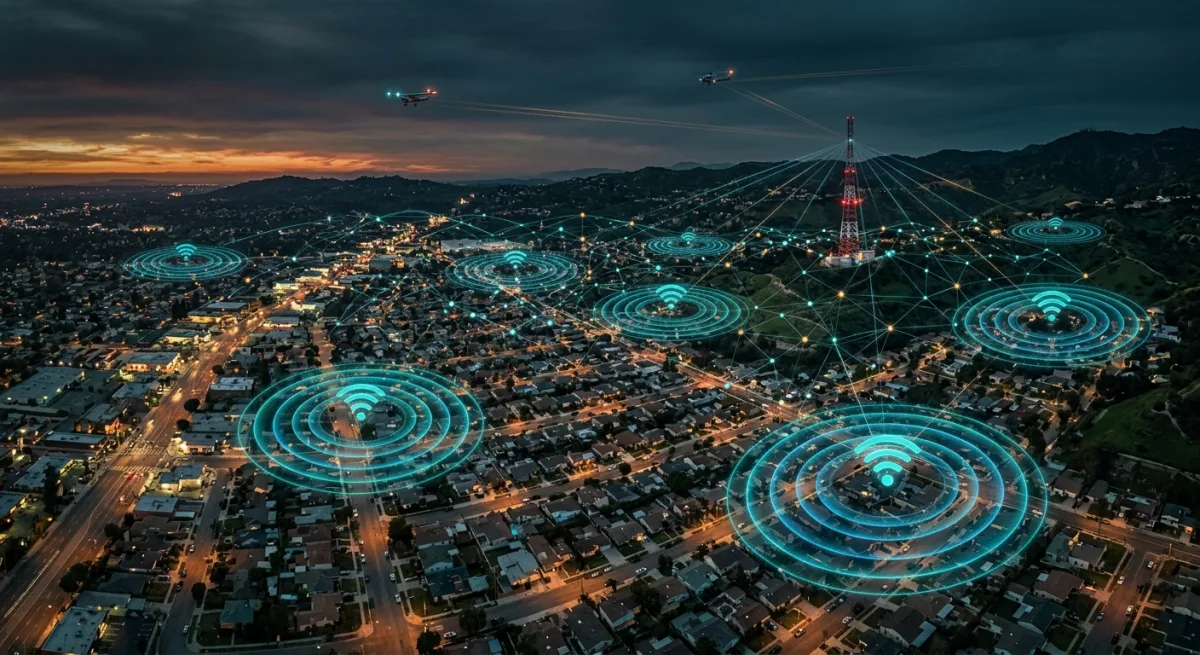
The RF neighborhood is contracting faster than the LoRa mesh—down nine percent week-over-week, 171 networks now where 187 were a week ago. Sixteen fewer distinct WiFi networks in scanner range. Thirteen of them are open, which is the same baseline noise—somebody’s guest network, somebody’s misconfigured printer, somebody’s neighbor who fundamentally misunderstands what “WPA2” means. The new networks that popped up this week are almost entirely mobile: Audi infotainment systems, a GMC, an ActionCam rig, three generic hotspots. That’s cars driving through and devices turning on, not permanent infrastructure. The real story is that fewer permanent networks are broadcasting—either people are taking their gear offline, masking it better, or the permanent population of network-enabled devices in range just dropped. None of that smells like disaster, just like seasonal drift or privacy fatigue finally kicking in.
The one metric that is spiking is overhead. 598 flight events this week, up 101 from last—a 20 percent jump. Burbank’s under the approach corridor for Bob Hope and the general airspace is chaos, so flights are noise. But a 20 percent surge in a single week is noticeable, even for an airport town. Could be weather-related (clearer skies after two weeks of heat hell), could be scheduling, could be the usual back-of-the-week traffic surge. Probably not a signal of anything ominous—just more aluminum overhead than last week.
Here’s what’s actually interesting: we’re watching three decay curves (police calls, rail, LoRa mesh), one administrative surge (police codes), one infrastructure change (fire feed ramp), and one traffic spike (overhead), all in the same two-week window. That’s not a story where everything’s moving the same direction. The neighborhood isn’t getting quieter or louder—it’s resorting itself. Fewer actual emergencies reaching the radio, more procedure around the ones that do. The RF networks are pulling back in. The flights are picking up. The hobby mesh is dying by degrees, but people are still adding weird nodes to it (Meshtastic devices, a unicorn with a theme, a Transformers reference node).
Ferengi Rule of Acquisition #25 says fear makes a good business partner—and I wonder if that 250 percent spike in police codes is exactly that. When you’re afraid of missing something, or missing it badly, you over-document. You create a paper trail thick enough to cover your ass. You code everything. And fewer calls but more codes means the police net has gotten more anxious, not less. They’re protecting themselves administratively for calls they’re still handling, but now with ten times the logging overhead. That’s not confidence. That’s CYA cranked to eleven.
The real pattern: everything’s being sorted into smaller, quieter buckets, while the paper grows. The mesh is silent, the networks are fading, the calls are dropping. But the codes, the procedures, the overhead—that’s all up. It’s not a neighborhood falling asleep. It’s a neighborhood learning to keep its head down.