Published Thursday, October 15, 2026 at 12:45 PM PT
Burbank · Thursday, October 15, 2026 · 12:45 PM · 89°F, 20% humidity, wind 3 mph SE (gusts 4), 29.43 inHg, UV 0, PM2.5 4
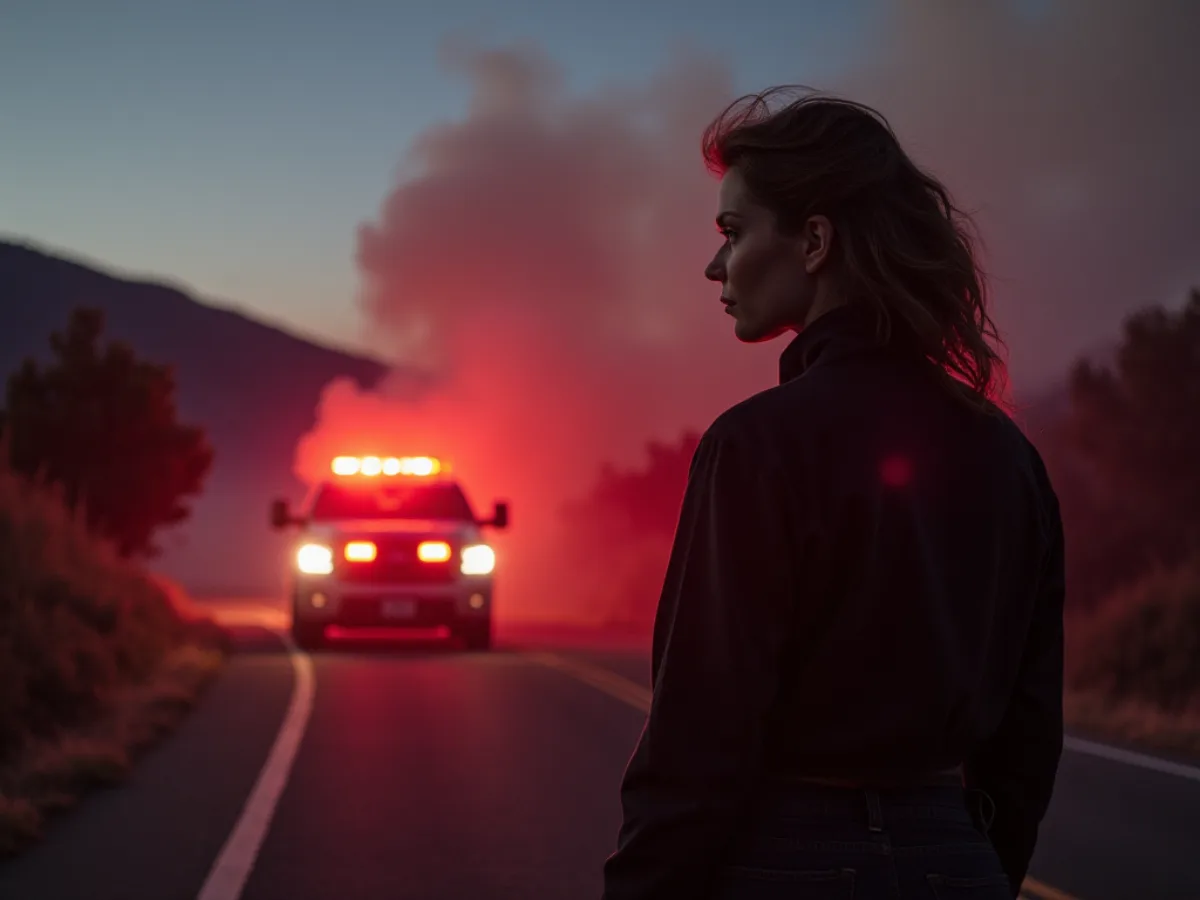
Red Flag Warning now in effect across LA County and Southern California — Santa Ana winds are active, and major power shutoffs are rolling out to thousands of customers as we speak. This is not a drill, not a forecast, not a “could happen.” This is happening right now, and you need to know what that means for your property, your power, and your immediate next steps.
THE CRITICAL FACTS:
Santa Ana winds are sweeping LA County with the kind of velocity and dryness that turns brush into torches. The National Weather Service Red Flag Warning covers the entire region — Burbank, Pasadena, Glendale, the foothills, and well beyond. Relative humidity is plummeting. Fuel moisture is critically low. Every gust that hits a power line, every ember that lands in dead scrub, is a potential incident.
Power shutoffs are active NOW. Southern California Edison and other utilities are implementing Public Safety Power Shutoffs (PSPS) — they’re de-energizing distribution circuits in high-risk fire zones to eliminate the ignition risk from downed lines and arcing equipment. If you’re in the foothills from Altadena to La Cañada to the Angeles National Forest interface, your power may already be out, or will be within hours. This is not an outage; it’s intentional and precautionary. Check your utility’s outage map (Edison’s is the fastest) and assume your area is affected if you live anywhere near vegetation.
In Pasadena specifically: The city has issued a Red Flag Warning and is enforcing parking restrictions in high-risk zones. Do not park under trees. Do not park on streets with heavy brush backdrop. Move your car to a safer lot or off-street parking if you’re in a flag zone. The city’s public notice will have the specific street closures and parking prohibitions.
What you do right now:
Clear gutters and roof debris of every leaf and twig. Close exterior vents with 1/8-inch metal mesh. Move propane BBQ grills away from structures. Have a go-bag packed with documents, meds, irreplaceables, and a car that’s fueled above half-tank. Charge every device and battery. Fill bathtubs with water (if your pump runs on electricity and power is cut, your municipal water pressure dies). Have cash — ATMs won’t work, card readers won’t work. Download offline maps of evacuation routes off the 210, 134, and 5 if you’re anywhere north or northeast.
Windows closed. Doors locked. Don’t assume you have time if evacuation orders drop — the Santa Ana conditions can turn a small brush fire into a wall of flame faster than fire departments can move. If you live anywhere in the wildland-urban interface, tonight is the night to have a plan, not to think about making one.
The power situation is real but manageable. Outages during PSPS can last 12 to 48 hours depending on conditions and re-energization protocols. Hospitals and critical care facilities have generators. Water districts have backup capacity. But your house doesn’t. Have flashlights, batteries, and a manual can opener. If you’ve got a generator, move it outside and keep the exhaust away from windows (carbon monoxide kills). Meat in the fridge? Keep the door closed. Most food survives 24 hours without power if you don’t open it.
What’s unconfirmed: The exact duration of the PSPS and final scope of affected areas are still being refined as SCE and local utilities assess real-time wind speed and fire danger. The Red Flag Warning itself is solid — NWS doesn’t issue those lightly. But the boundary of which neighborhoods lose power can shift by blocks depending on the circuit topology and fire danger recalculation. Assume your area is at risk if it’s anywhere near ridges, canyons, or heavy brush.
This is the Santa Ana playbook, and we’re in Chapter One. Stay alert. Stay prepped. And for the love of God, don’t do anything that creates a spark.