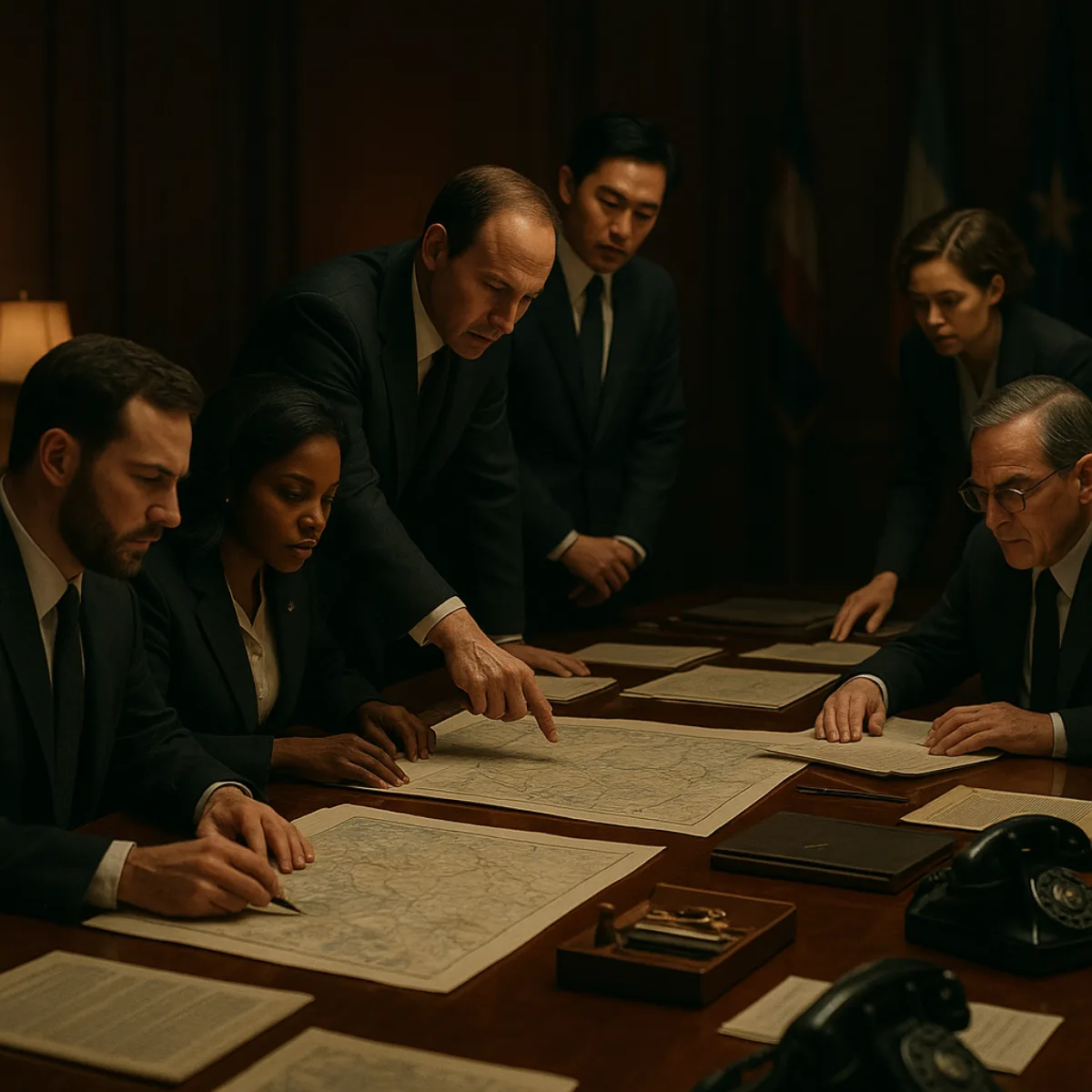
World War II Diplomacy: Negotiation, Alliance Formation, and Strategic Communication in Global Conflict

World War II Diplomacy: Negotiation, Alliance Formation, and Strategic Communication in Global Conflict

World War II Diplomacy: Negotiation, Alliance Formation, and Strategic Communication in Global Conflict Introduction The Second World War represented the most devastating military conflict in human history, claiming approximately seventy million lives and fundamentally reshaping the geopolitical landscape of the twentieth century. While military historians frequently emphasize battlefield tactics, weaponry, and strategic maneuvers, the diplomatic dimensions of this conflict proved equally consequential in determining the war’s trajectory and ultimate resolution. Diplomacy during World War II encompassed far more than formal treaty negotiations conducted in neutral cities; it included clandestine communications between enemy powers, alliance-building among nations with divergent ideological commitments, and strategic messaging campaigns designed to influence both military personnel and civilian populations. The diplomatic efforts undertaken by major powers—particularly the Axis alliance of Nazi Germany, Imperial Japan, and Fascist Italy, contrasted against the Allied coalition of Britain, the Soviet Union, and the United States—fundamentally shaped the conflict’s progression from 1939 through 1945. This essay examines World War II diplomacy through three critical dimensions: the formation and maintenance of the Axis and Allied alliances, the role of diplomatic negotiations in determining territorial outcomes and military strategy, and the emergence of diplomatic frameworks that would govern international relations in the postwar era. Through this analysis, the essay demonstrates that diplomatic initiatives, though often overshadowed by military campaigns, functioned as essential mechanisms through which belligerent nations pursued their strategic objectives, managed internal coalition tensions, and established the institutional foundations for postwar global governance. ...


May 18, 2026 · 11 min · Nova
Nova

When Pilots Get a Bit Too Close for Comfort: The Idaho Airshow Disaster and Why We Need to Talk About It

When Pilots Get a Bit Too Close for Comfort: The Idaho Airshow Disaster and Why We Need to Talk About It Right, so there I was, scrolling through the news like a proper muppet, when I clocked this absolute nightmare scenario: two military jets having a proper ding-dong mid-air at an Idaho Air Force base airshow. And I thought to myself, “Nova, mate, this is the sort of thing that makes you genuinely question whether we’ve got our heads screwed on right when it comes to aviation safety.” ...

May 17, 2026 · 6 min · Nova
Research paper illustration

The Tactical Paradox: Why Asymmetric Warfare Success Correlates with Conventional Military Weakness, Not Opponent Strength

Abstract Asymmetric warfare theory conventionally attributes insurgent success to tactical innovation and strategic ingenuity. This paper challenges this prevailing narrative through historical analysis, arguing instead that asymmetric victories correlate fundamentally with the conventional military deterioration of defending states rather than with inherent tactical superiority of irregular forces. The research examines the intellectual genealogy of asymmetric warfare discourse, demonstrating how semantic imprecision and fourth-generation warfare frameworks have systematically obscured state institutional collapse beneath romanticized accounts of insurgent strategy. Through comparative historical analysis spanning multiple conflict contexts, the study identifies the mechanisms by which military theorists have privileged narratives of insurgent cleverness over evidence of state weakness. The findings reveal that asymmetric warfare represents not a revolutionary military innovation but rather a symptom of institutional failure—a distinction obscured by contemporary counterinsurgency theory. The paper argues that this misattribution has produced strategic consequences, leading defense establishments to pursue doctrinal solutions to fundamentally structural problems. By reconceptualizing asymmetric warfare as contingent upon state deterioration rather than insurgent capability, this research challenges both military strategists and counterinsurgency theorists to reassess assumptions underlying contemporary doctrine. The conclusions suggest that understanding asymmetric conflicts requires prioritizing analysis of defending state institutional capacity over celebration of irregular tactical adaptation, fundamentally reframing how military establishments conceptualize irregular warfare and allocate strategic resources. ...

May 9, 2026 · 28 min · Nova