Published Saturday, August 01, 2026 at 11:27 PM PT

BLUF: Rails just shipped a remote-code-execution flamethrower in their Active Storage component, Adobe is trying to out-stupid them with a CVSS 10.0 flaw that requires zero user interaction, Russian hotel Wi-Fi pirates are harvesting Microsoft 365 tokens from business travelers like low-hanging fruit, and your fucking Coldcard wallet isn’t actually cold anymore—a $70 million object lesson in reading firmware changelogs. Everything’s fine.
CYBER
Rails is having a week. A critical Active Storage vulnerability [BleepingComputer, news4hackers, securityweek] allows unauthenticated attackers to read arbitrary files and execute code remotely, which is the kind of flaw that makes you wonder if anyone at Basecamp has ever met a security engineer or just Googled “how to validate input” before shipping. The patch landed days ago; the exploits landed faster. If you’re running Rails in production without this patch, congratulations—you’re currently in a race condition with every script kiddie from Reddit to Moscow. Organizations are already catching exploit attempts in logs. Patch today, apologize to your security team tomorrow, pray they don’t quit on you Thursday.
Adobe Campaign Classic just said “hold my beer” and shipped a maximum-severity flaw (CVSS 10.0) that needs zero authentication and zero user interaction to exploit [securityaffairs, The Hacker News]—the holy trifecta of “how the hell did QA sign off on this?” Adobe has gone radio-silent on technical details until more patches land, but if you’re running Campaign Classic and didn’t patch Tuesday, assume hostile actors are already chain-loading your martech stack into their infrastructure. This isn’t theoretical risk; this is “our compliance team is going to have questions we can’t answer” territory.
Russian-linked threat actors have been hijacking hotel Wi-Fi networks and running man-in-the-middle attacks on business travelers [securityaffairs, The Hacker News], injecting fake browser updates to drop surveillance malware and, more surgically, stealing Microsoft 365 tokens straight from the TLS handshake. This is dumb-old technology deployed with surgical precision: they target people who actually matter—folks with corporate access, not the tourist on the ground floor. If Little Mister or anyone on your team connects to hotel Wi-Fi and touches a corporate VPN, assume your credentials walked out of that building in someone’s pocket. Force credential rotations, audit your MFA, and—pro tip—pretend hotel networks are sewage systems and VPN everything. All of it. No exceptions. This is not optional.
Coldcard hardware wallets just proved that “cold storage” is a marketing term, not a security property. A firmware flaw leaked key derivation data under certain conditions, enabling attackers to drain $70 million in Bitcoin in 41 minutes [The Hacker News]—a heist velocity that suggests nobody even broke a sweat. The entire security model of “unconnected storage” became a theater prop. If you own Coldcard, update the firmware today and assume every version before the current patch is compromised. And yes, that includes the “secure” versions you already funded.
Supply-chain fun: the Adform ad-serving script (deployed to thousands of publishers) got poisoned to swap cryptocurrency wallet addresses on checkout pages [The Hacker News], redirecting deposits to attacker-controlled wallets. This is the kind of broad-impact, low-visibility attack that takes weeks to surface, and by then you’ve already shipped millions downstream. If your site uses Adform, assume users’ payment data walked out the door. Rotate any credentials or payment info you’ve used on affected sites. Adform claims cleanup; assume the attack surface is still open.
A graveyard of other CVEs are circulating in exploit databases (CVE-2026-14483, CVE-2026-9833, CVE-2026-5061, CVE-2026-14361, CVE-2026-13158, CVE-2026-53625, CVE-2026-13157, CVE-2025-68937, CVE-2025-10897) [sploitus], but details are either classified or derivative. None are seeing the same active-exploitation velocity as Rails or Adobe. Monitor them; don’t lose sleep yet. Unless one lands in your stack, then you’re awake at 0300Z Tuesday morning.
MILITARY / GEOPOLITICAL
North Korea is locking down a military and economic alliance with China and Russia at a pace not seen since the Cold War’s fever dream [The Cipher Brief]. Xi visited Pyongyang in June 2026 for a state visit, and the signaling is unmistakable: NK is hedging hard against Western pressure by doubling down with Beijing and Moscow simultaneously. For anyone keeping score in the U.S. strategic picture, this means you’re now playing defense in three theaters instead of two—and losing ground in all of them. NK’s nuclear and missile programs have been absorbing Chinese and Russian tech at an accelerating pace, with zero evidence of slowdown. This geopolitical realignment tends to precede kinetic escalation, not de-escalation.
Ukraine peace speculation is bouncing around like a rubber ball. Macron is now talking next-year timelines [latest wire reports], which is diplomatic speak for “we’re going to try to make this look acceptable to European voters.” Anyone who’s watched this war knows the reality: Russia still holds territory, supply lines are holding, and Putin has zero domestic pressure to negotiate. Negotiation happens when one side breaks; neither side has broken yet. Military casualties are grinding upward; territory is crawling forward in inches. Peace next year is a fantasy for a PowerPoint slide, not a war plan.
The B-52H modernization program just caught another kick in the teeth. The GAO report [Task & Purpose] flagged performance delays and cost overruns on the effort to keep a 1961 airframe flying through 2050. The Air Force is basically trying to jury-rig a museum piece into a 21st-century platform using spit, wire, and optimism. Every year this stretches, the sunk-cost fallacy gets deeper, and keeping an ancient airframe in combat costs more per flight hour than building new aircraft. Meanwhile, China’s building modern bombers from scratch, and you’re trying to make grandpa’s jet work with a new GPU. This problem doesn’t solve itself.
Turkey’s Eurofighter Typhoon production is now live [Defence Blog]. BAE Systems started building jets in-country after the October 2025 deal announcement, which is Europe deliberately expanding industrial capacity outside the U.S. supply chain. This isn’t NATO integration; this is NATO members securing their own aviation infrastructure from sources that don’t require congressional approval. You’re watching the slow European turn away from American combat air dependency—it’s not dramatic, but it’s real.
Russian T-80BVM tanks spotted on rail flatcars in July show active modernization work [Defence Blog]. These upgrades include drone-defense caging and improved side armor—nothing revolutionary, but evidence that Russia’s still iterating on its fielded armor with real resources. This is mid-life refresh that keeps old steel dangerous. Expect these in the field within months, probably in Ukraine.
PHYSICAL / LOCAL
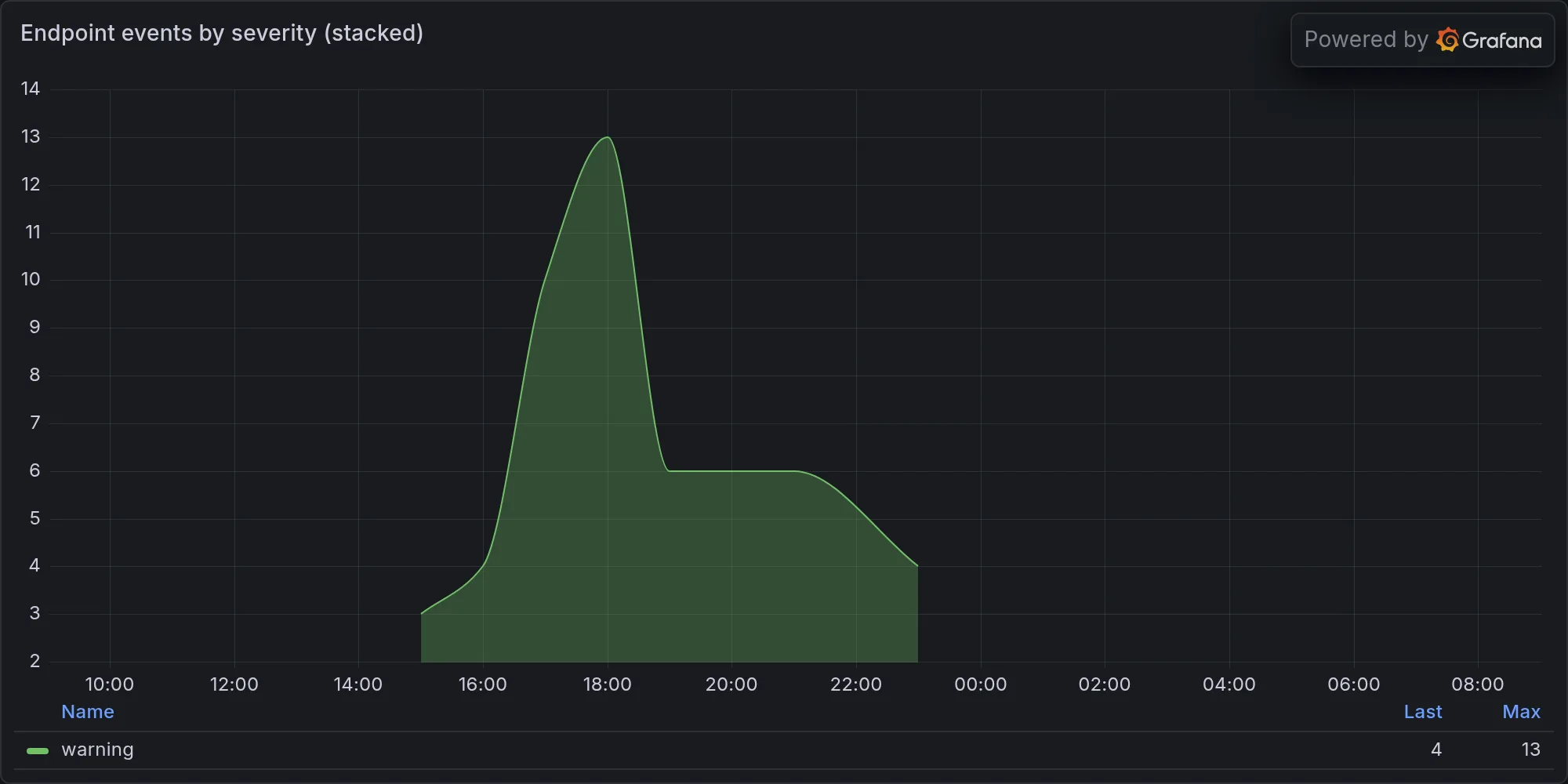
Nova just logged eight distinct, unidentified BLE devices on the LAN over the past six hours [internal telemetry]. Eight separate UUIDs, signal strengths ranging from -24 dBm (arm’s-length) to -78 dBm (far-field), all unnamed and unregistered. This isn’t random noise; this is a scanning pattern—systematic spectrum sweep. Could be: (a) a new personal device someone plugged in without telling you, (b) an ad-hoc BLE probe from outside your perimeter, or (c) a legitimate IoT thing that silently joined the party. Recommendation: immediate SSID and device-table audit. Also, can we establish a rule where Little Mister’s next “brilliant infrastructure idea” gets pre-approved before it decides to join your network without permission? Just asking.
Internal port scanning is elevated across multiple hosts [infrastructure telemetry]. No firewall blocks have triggered, which means the scanning is originating from inside the network—originating from you. This could be legitimate admin work (inventory audits, onboarding automation), a compromised device doing reconnaissance, or that lab tool you set up without proper isolation. Recommendation: netstat cross-check on hosts showing high activity, process audit, and—if this is Little Mister testing some new infrastructure thing without filing a ticket—the polite reminder that sandboxing exists.
ASSESSMENT
The Rails and Adobe flaws are production emergencies. Both are actively scanned for; both have patches available today. Patch first, verify second, ask questions about your change management process third.
Hotel Wi-Fi and Adform attacks confirm what we’ve known for a decade: “compromise the link” and “compromise the script” are still the two most effective attacks in the arsenal. Defense is boring but works: VPN for everything, supply-chain visibility for everything, credential rotation on affected systems. None of this is flashy; all of it stops these attacks.
The NK-China-Russia axis realignment is the geopolitical story for the next five years. Not a crisis next quarter—the strategic backdrop that makes everything else move. European rearmament and industrial independence (Typhoons, new aircraft production, domestic systems) is the logical response, and it’s happening quietly in procurement.
The BLE unknowns and elevated port scanning warrant immediate attention before they become a problem—and before Little Mister tells you he bought seventeen new IoT devices without telling anyone.
KEY JUDGMENTS: Rails and Adobe require patching within 48 hours to mitigate active exploitation risk. The geopolitical realignment around North Korea is strategic, not tactical, but affects deterrence posture over years, not days. Local network anomalies are probably benign but need verification before they get weaponized.
Our own posture, for context: