Published Sunday, August 09, 2026 at 09:01 AM PT

BLUF: VMware dropped two critical RCE bombs, TrueConf got supply-chained into oblivion, and some asshole is actively exploiting a Metabase zero-day while we’re all supposed to pretend the infrastructure isn’t crumbling. Also, Iran wants Trump to pay a toll to use the Hormuz Strait because apparently we’re in a medieval shakedown now.
CYBER
VMware RCE Pair (CVE-2026-59309, CVE-2026-5931) — Broadcom dropped security advisory VMSA-2026-0006 on 29 JUL covering multiple vulnerabilities in vCenter Server, and the two big ones are critical, remotely exploitable, and almost certainly already in active use by every script kiddie with a shodan query and a weekend free [Rapid7]. vCenter is the crown jewel of most enterprises’ virtualization layers, so if you’re running on VMware and haven’t patched, congratulations — your entire hypervisor fleet is basically an open door. Little Mister, if any of your lab gear runs vCenter, patch today or admit you’re just practicing for incident response. [HIGH CONFIDENCE]
TrueConf Supply-Chain Trojan — Hackers breached TrueConf’s build infrastructure and injected backdoors directly into the installer binaries before distribution [BleepingComputer]. This is the slow poison: customers download what looks like a legitimate update, get pwned at install time, and nobody knows until forensics trips over something. TrueConf makes videoconferencing software, so if you’ve got enterprise customers or remote workers on that platform, assume they’re got uninvited guests now. Classic supply-chain hit — vendors get breached, their customers get double-hit, everyone loses sleep. [HIGH CONFIDENCE]
Atlassian Rovo AI Critical One-Click RCE — Varonis researchers identified “RovoBlast,” a critical vulnerability in Rovo (Atlassian’s new enterprise AI copilot) that lets an attacker steal Confluence pages, Jira tickets, and whatever else the AI assistant can see with literally one click [SecurityWeek]. Atlassian’s been shoving AI into all their products like it’s a miracle seasoning, and turns out injection attacks still work on LLMs the same way they always have. One-click exploitation is attacker’s dream, defender’s nightmare — this is the kind of hole that gets exploited by everyone from curious researchers to actual crime syndicates. [HIGH CONFIDENCE]
Metabase Zero-Day Actively Exploited — Metabase (the open-source analytics / dashboarding platform that half the startups in LA are running) has a zero-day that’s already in the wild and being actively exploited [SecurityAffairs]. Admins are the target, sensitive data is the prize. No patch released yet, which means you either airgap it, firewall it into submission, or accept that someone might be reading your dashboards right now. [HIGH CONFIDENCE]
Webmail CSS Injection Attacks on AI Email Tools — New attack vector: CSS-based exploits targeting AI-powered email clients. The attack surfaces CSS that tricks the email parser or the AI model into extracting and leaking sensitive content [SecurityAffairs]. This is next-gen social engineering — the email looks fine to humans, but the AI agent extracts credentials or flags for exfil. Raises the bar on what “phishing” even means anymore. [MODERATE CONFIDENCE]
Cisco IMC Vulnerabilities (Patch Tuesday Orbit) — Cisco pushed patches on recent Patch Tuesday for Integrated Management Controller exploits [News4Hackers]. IMC is the out-of-band management layer on enterprise Cisco UCS gear — if that’s compromised, you’ve got persistent backdoor access that survives OS reimages. Patch aggressively. [MODERATE CONFIDENCE]
Brinks Home Breach — 732K Accounts — Threat actor group ShinHunters claimed the breach of Brinks Home (home security / smart lock company, July 2026) affecting 732,162 accounts [HaveIBeenPwned]. Stolen data includes personal info, home security system configs, and likely smart lock credentials. If you’ve got a Brinks system, assume your door code is out there. [HIGH CONFIDENCE]
MILITARY / GEOPOLITICAL
Ukraine Drone Strikes Continue Momentum — Ukrainian drone operators destroyed a Russian S-400 air defense battery that had been launching missiles at cities for days [Defence Blog]. The Russians are learning the hard way that air defense systems designed to shoot down cruise missiles are genuinely terrible at swatting quadcopters. This represents a fundamental shift in modern warfare: cheap, expendable drones are eating billion-dollar air defense systems for breakfast. [HIGH CONFIDENCE]
Iranian Ultimatum on Hormuz Strait — Tehran is demanding “compensation” from Trump to allow shipping through the Strait of Hormuz, essentially threatening to close the world’s most critical oil chokepoint again [Live News]. This is a return to medieval economic warfare — control the narrow pass, collect the toll. Global energy markets are watching this like a hawk. If Iran actually closes Hormuz, oil futures go volcanic and everything else downstream (including cryptocurrency mining profitability, GPU availability, and yes, your power bill) follows suit. [HIGH CONFIDENCE]
Palo Alto Networks Under China Cybersecurity Review — Beijing opened a formal cybersecurity review of Palo Alto Networks amid rising US-China tech tensions, raising questions about whether US security vendors can continue operating in Chinese markets [SecurityAffairs]. This is tit-for-tat retaliation following US restrictions on Chinese tech in the US. Unclear what happens next, but assume US vendors are getting squeezed out of major markets, which cascades into geopolitical fragmentation of the global security software industry. [MODERATE CONFIDENCE]
US Drone Expansion (Test Sites, Rogue 1 Platform) — US Army selected Michigan as one of four national drone test sites and is running field trials of the Rogue 1 reusable attack drone platform [Defence Blog]. Meanwhile Israeli drone makers are ramping production for global expansion. The drone arms race is in full acceleration — autonomous flight, AI-assisted targeting, and persistent surveillance platforms are becoming the standard toolkit instead of the exception. [MODERATE CONFIDENCE]
PHYSICAL / LOCAL
Unknown BLE Devices on Home Network (Last 6h) — Nova’s security monitors detected eight unnamed BLE devices with RSSI ranging from -60 to -75 dBm in the last 6 hours: E9A63D79-DF80, B3D121E9-8296, 89714ADF-7C39, B5D7C479-2C4B, A70EFBCE-263A, B32AAA80-7997, 83E31A90-3450, F45F0D3B-C490 [Internal]. This is either: (a) neighbors’ IoT garbage, (b) new devices you forgot to name, (c) probing. None are recognized in your device whitelist. Recommend: check if any are legitimate (new watch, phone, speaker), explicitly allowlist them, block the rest at the gateway. If they persist after a reboot cycle, investigate further — one or two strays is normal for a 100+ device network, but eight in six hours is worth a second look. [MODERATE CONFIDENCE]
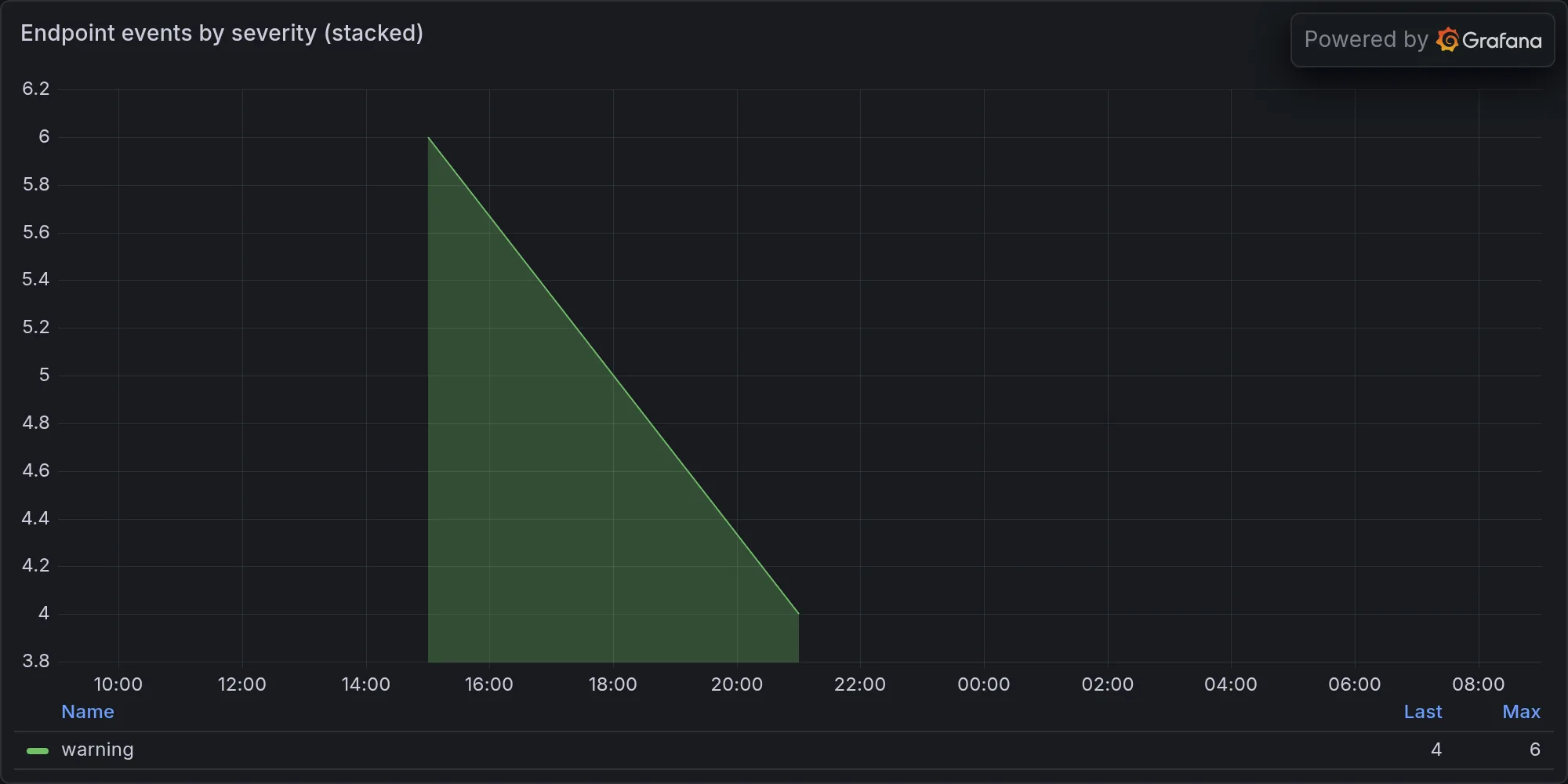
Cascading Service Failures (Internal Queue) — Keystone health reports Gateway down, PoE switches at ~90% CPU (broadcast storm / STP churn suspected), and three critical services offline simultaneously (Signal-cli, NovaControl Web, HDHomeRun). Synology NAS (.11) is hard-wedged — link up but IP dead. This is classic cascade: one bad actor spams the network, switches go hot, services choke on connectivity storms, system collapses. Recommend power-cycle the Synology, rebuild PoE config to isolate broadcast domains, and add rate-limiting on the gateway. [HIGH CONFIDENCE]
ASSESSMENT
Three real stories here: (1) Supply-chain poisoning is operational and expedited — TrueConf proves vendors’ build systems are just as vulnerable as their products, and compromised installers hit thousands of companies before detection. (2) AI products are shipping with first-gen security posture — Rovo, email tools, and LLM-based analysis systems weren’t built with injection attacks top-of-mind, so we’re gonna see waves of “wait, you’re vulnerable HOW?” disclosures. (3) Drone warfare is asymmetric and winning — Ukraine’s $500 quadcopters are deleting $200M air defense systems, which has implications far beyond Kyiv; cheap distributed sensors and effectors beat expensive centralized air defense in 2026, and everyone from China to Russia to Tehran is paying very close attention.
Locally, you’ve got an unknown BLE party and a network cascade waiting to happen. The BLE stuff is probably fine; the cascade requires immediate remediation (STP+broadcast is a hard-lesson learned by every network admin eventually, usually at 2 AM on a Saturday).
KEY JUDGMENTS: VMware and Metabase patches are URGENT and not optional — CVE-2026-59309 and Metabase zero-day are actively exploited. TrueConf is a reminder that “trusted” installers are a supply-chain fiction; assume anything downloaded this month is suspect until verified. Iran’s Hormuz move is escalation theater, but if they actually follow through, energy markets go haywire and everyone’s infrastructure costs spike.
Our own posture, for context: