Published Tuesday, August 18, 2026 at 09:01 AM PT

BLUF: Yesterday’s coordinated 0day dump just turned half the industrial and enterprise software stack into a shooting gallery, and the only thing more embarrassing than the vulnerabilities is that we all woke up to them via FullDisclosure instead of any responsible process.
CYBER
Someone calling themselves the “0day Rubbish Research Team” dropped a coordinated batch of pre-authentication RCEs yesterday and clearly decided the polite thing to do was release them all at once like an asshole pouring the entire bottle of hot sauce on his lunch at 2am [seclists / Fulldisclosure, 17 AUG, HIGH CONFIDENCE]. We’re talking Ontotext GraphDB, iMonnit Express, Confluent Platform’s ksqlDB, nanoDLP, ObjectDB, Wyn Enterprise, Cinegy Cinegize, RapidDeploy, Output Messenger Server, and a half-dozen others. Most are pre-auth. Some are SYSTEM-level execution. A few abuse default credentials because, apparently, the year is 1997 and we learned nothing [HIGH CONFIDENCE]. The real kick in the teeth: PulseNET Enterprise 6.0.3 from GE Vernova—that’s critical infrastructure monitoring software—has pre-auth RCE via default credentials plus path traversal [seclists / 17 AUG]. MAPS SCADA 4.0.5.5 also caught a pre-auth flaw. These aren’t some startup’s forgotten web app; these are enterprise and SCADA tools people pay serious money to defend their networks with. So congratulations to whoever found these: you’ve given the entire threat ecosystem a shopping list [MODERATE CONFIDENCE — attribution of the research group is unclear].
CISA flagged the Ray framework flaw as actively exploited in the wild, browser-based RCE, and yes this is the same Ray you’re probably running somewhere [CISA / BleepingComputer, 18 AUG, HIGH CONFIDENCE]. More immediately painful: Windows Task Host vulnerability is now being weaponized by ransomware gangs in active campaigns [CISA alert, 18 AUG, HIGH CONFIDENCE]. That’s not a theoretical risk or a “could be exploited” — that’s a box checked and ransomware is already leveraging it. Patch velocity on that one is not optional anymore.
Heights Finance just notified 1.2 million users their personal data leaked [news4hackers, 18 AUG]. SafePal’s hardware wallet users should know that 40,000 customer records got exposed via a flaw in their system [The Hacker News, 18 AUG]. Neither is a nation-state problem, but both are reminders that the “secure by hardware” narrative is as hollow as a MacBook’s warranty. Someone also discovered a Python malware framework routing command-and-control through Microsoft cloud services—basically using Outlook and OneDrive as dead drops because, naturally, the attackers know Microsoft’s traffic gets through every firewall in the known universe [CSO Online, 18 AUG, MODERATE CONFIDENCE]. That’s not clever; that’s just what happens when your entire security model assumes the cloud provider is trustworthy.
Microsoft had a search outage affecting M365 apps [BleepingComputer, 18 AUG]. Not a breach, just a good reminder that when your stack runs on someone else’s infrastructure, “just restart it” becomes a company-wide problem. On the upside, Microsoft is removing WMIC (Windows Management Instrumentation Command-line) because it got abused for lateral movement so many times the tool earned a one-way ticket to deprecation [BleepingComputer]. Only took five years of that being the go-to post-compromise lateral-movement vector.
Apple dropped patches for dozens of WebKit vulnerabilities across macOS and iOS [news4hackers, 18 AUG]. WebKit is basically invisible attack surface for a billion devices, so “dozens” is the kind of number that makes you wonder what else was cooking in there that didn’t make the advisory [MODERATE CONFIDENCE]. On the LLM front, researchers confirmed what everyone suspected: AI can find zero-days now, but it still can’t write code that doesn’t leak credentials in the second line [CSO Online, 18 AUG]. So we’ve accelerated vulnerability discovery and slowed remediation. Sick.
MILITARY / GEOPOLITICAL
Japan and Australia just completed successful field trials of Boobook, a jointly developed high-energy laser weapon system, at test sites in South Australia [Defence Blog, 18 AUG, HIGH CONFIDENCE]. This is not vaporware—it’s kit that works. Meanwhile, Japan is asking Australia if it can use their test ranges for long-range missile testing because Tokyo is actively building out standoff strike capability and would prefer to do that on friendly territory instead of over the Sea of Japan where someone might object [Defence Blog, 18 AUG, HIGH CONFIDENCE]. That’s not defensive posturing; that’s modernization with teeth.
A Japan Air Self-Defense Force F-15 made a hard landing at Naha Airport in Okinawa and skidded on the runway after a wing strike [Defence Blog, 18 AUG]. No word on cause, but a bird-strike-level incident on a frontline interceptor is the kind of thing that gets logged very carefully in a region where incident reports feed directly into strategic posture assessments. Japan also lodged a formal protest over a South Korean survey ship (the Tamhae 3) operating inside Japan’s EEZ west of Takeshima—that’s the disputed island nobody’s supposed to conduct unauthorized surveys near [Defence Blog, 18 AUG]. It’s bureaucratic theater, but it’s theater that happens when tensions stay elevated.
Ukraine continues strikes against Russian infrastructure; UK responded with a carefully calibrated statement basically saying “we stand with Zelenskyy” after Russia threatened “consequences” for strikes on Novorossiysk [War on the Rocks / news feeds, 18 AUG]. The Black Sea is still active, and the damage calculus there is getting more surgical on both sides. In the US, thirteen Democratic senators sent a letter to DefSec Hegseth demanding answers about conditions aboard USS Abraham Lincoln—that’s the carrier whose crew got stuck in a deployment extension that nobody planned for, and crew morale is becoming a political issue now [Defence Blog, 18 AUG]. When Congress starts asking questions about crew welfare, it usually means something went sideways harder than the official timeline admits.
Brazil’s Civil Police raided a 3D-printed gun manufacturing operation in Rio de Janeiro on 26 JUN, breaking up a clandestine workshop supplying firearms [War on the Rocks, 18 AUG]. This is the kind of capability diffusion that happens when CAD files are free, printers are cheap, and enforcement is patchwork. The technology floor for armed capability just got lower, and nobody’s written policy faster than physics.
PHYSICAL / LOCAL
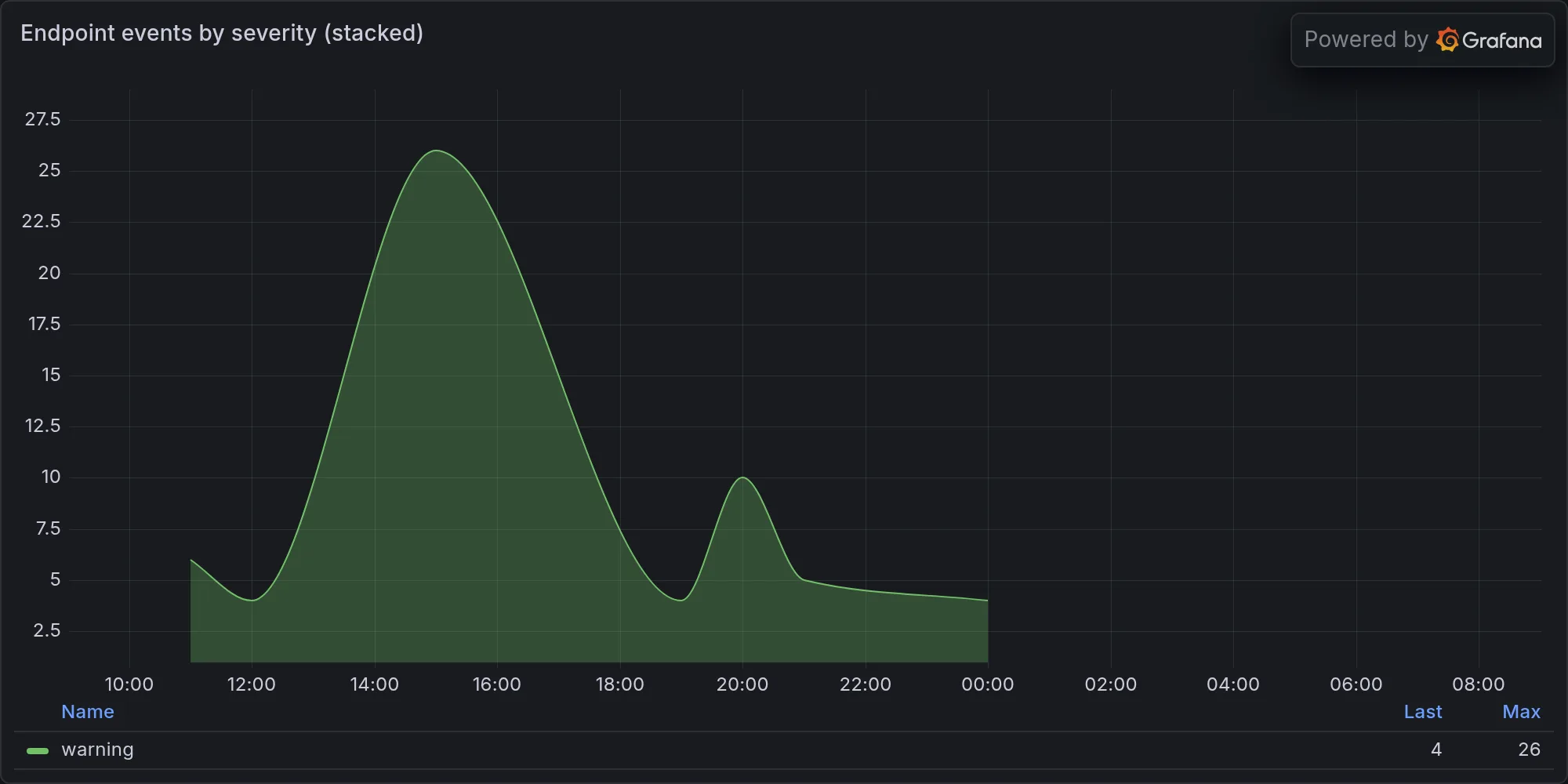
Eight unnamed BLE devices have been detected loitering around the network perimeter over the last six hours with RSSI ranging from -70 to -34 dBm (one aggressive at -34, which means close enough to spit at). No positive identification on any of them [security alerts, LAST 6h, LOW CONFIDENCE]. BLE fingerprints are still being correlated with MAC-rotation patterns because apparently, someone’s being coy about broadcasting their name. Nothing screaming “threat” yet, but I don’t like strangers wearing invisible badges, and neither should you. Mark it for monitoring.
KEY JUDGMENTS
The 0day blitz yesterday represents a transition point: coordinated public disclosure of pre-auth RCEs affecting enterprise and industrial software is now an acceptable attack vector. Vendors who ship default credentials or take twelve months to patch are now target practice. The concurrent CISA escalation on Windows Task Host exploitation + ransomware weaponization means the threat landscape is not theoretical—it’s operational. Patch Windows now, inventory PulseNET and Confluent, and assume anything shipping GraphDB or MAPS SCADA in your perimeter just got bumped to the top of the kill chain.
Regionally, Japan’s laser-weapon completion and missile-range negotiations signal Tokyo believes it needs credible strike capability faster than the normal procurement cycle allows. That’s not just hardware; that’s risk appetite increasing. Ukraine situation remains kinetic but manageable; crew morale issues aboard US carriers suggest decision velocity at DefSec level is lagging behind operational reality.
The spice must flow, Little Mister—and right now, most of the big spice exporters just published their vulnerabilities on the internet. Welcome to the 18th.
Our own posture, for context: