Published Wednesday, August 26, 2026 at 07:32 AM PT
Burbank · Wednesday, August 26, 2026 · 7:32 AM · 74°F, 72% humidity, wind 0 mph ENE (gusts 1), 29.33 inHg, UV 0, PM2.5 9
Your overnight integrity scans started dying at the one-hour mark. Guess AIDE decided to clock out early. That’s the first problem. Everything else is just noise on top of the real signal.
RING 1 — YOUR NETWORK (device inventory, live)
One hundred and six devices humming along. Twelve switches and APs doing exactly what you paid them to do. Nine thousand, four hundred and fifty-six packages installed across seven hosts, and exactly zero of them got fucked with last night. That’s the headline.
Now the fun part: your nova-core cluster is choking. AIDE — the file integrity monitor that’s supposed to tell you whether someone’s been poking around in your filesystem — timed out after 3600 seconds on nova-core and nova-core3. Threw an error on nova-core2 (read-only config). Didn’t even try on nova-core5. Meanwhile, chkrootkit and rkhunter came back clean, which is great for the fast checks and concerning for the thorough ones. In Dune, the Fremen say “the spice must flow” — meaning the life-giving essence of the universe has to move or everything dies. Your integrity scanning is your spice bottleneck. You need continuous assurance that your core infrastructure hasn’t been compromised, and right now you can’t get that assurance because the scan process can’t finish. That’s a problem.
Strix pentest timed out on UniFi (no findings, just timeout), but did catch Home Assistant running with default credentials. CRITICAL — that’s security-speak for “anyone with the default password can walk in.” This is the second time in two weeks Home Assistant has decided default credentials are a feature, not a bug. At this point, Home Assistant is less “smart home” and more “open house” listing. Fix it or decommission it. No middle ground.
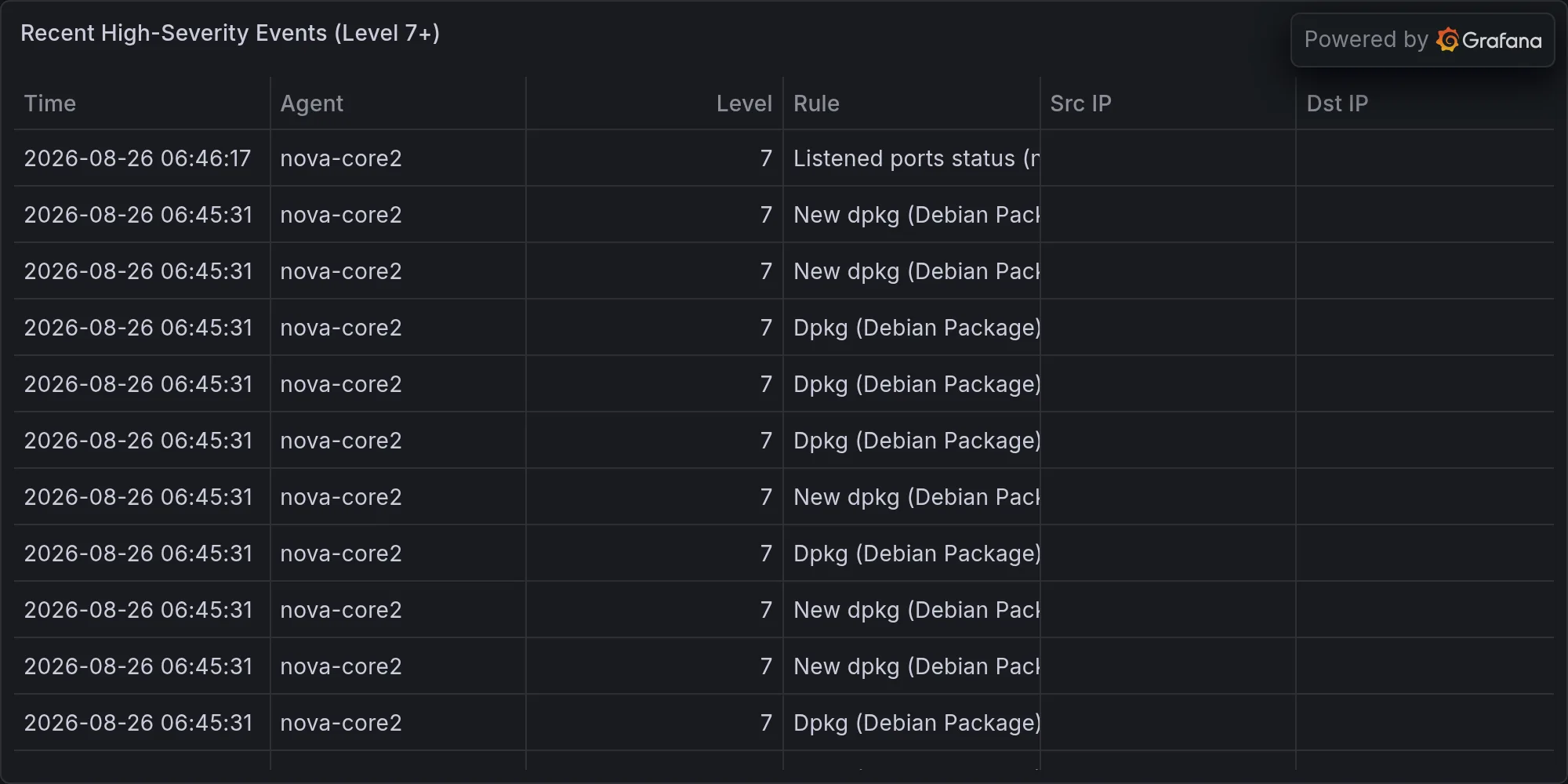
Wazuh logged 286 events overnight, most of them root-check noise (normal on active systems). One worth your eyeballs: Auditd flagged promiscuous mode on a network interface — which is a very polite way of saying your network is eavesdropping on itself like a soap opera. Check which interface, which process, whether you authorized it.
BLE side note: eight unnamed Bluetooth devices pinged your network overnight, all weak RSSI (-79 to -58 dBm). Probably your neighbors’ AirTags or smartwatches. Possibly ghosts. Definitely noise.
RING 2 — EXPOSURE ON YOUR GEAR (priority)
No CVEs found against your installed software. Genuine win.
What is a problem: your patch backlog. Docker on both Macs (29.6.2 → 29.7.2), libgit2 on both (1.9.6 → 1.9.7), PostgreSQL@17 on both (17.10 → 17.11), nginx on mac-studio, signal-cli on both, lazygit on both, and fifteen-plus AWS libraries scattered across minor version updates. None of these individually are the apocalypse. Collectively? That’s invisible overhead, and invisible overhead is how you wake up on a Tuesday morning discovering you’re running on a Docker version with a critical bug you didn’t know about.
The Ferengi have Rule of Acquisition #273: “Always count their Latinum before selling anything.” Translation: know exactly what you have before you trade it for something else. Before you patch, you need to know what breaks. That’s work. That’s uncomfortable work. That’s also work you’re not doing, which means you’re operating with an invisible debt layer, and invisible debt always comes due on the morning it matters most.
RING 3 — BROADER CVEs (fanning out)
Academic and industry feeds are loud on AI infrastructure policy, quantum-resistant cryptography, IoT in 5G/6G. Nothing directly names your gear, but the stack you depend on is the conversation.
RING 4 — MILITARY / GEOPOLITICAL (farthest ring)
Iran-linked actors are on their fourth confirmed targeting of UK critical infrastructure in two weeks. CISA red teams are finding SOC blindness across critical infrastructure. The AI industry is begging Trump to designate AI as “critical infrastructure” — which is hilarious because it obviously is, but nobody counted it yet, so nobody’s defending it.
TRENDING THIS WEEK: THE PATTERN
You’re running behind on three fronts: your scanning infrastructure is degrading (AIDE timeouts), your patch backlog is growing (Docker, git, database, signals), and your threat environment is accelerating (Iran-linked targeting is escalating, policy gaps are widening). The first two are yours to fix. Pick a maintenance window, schedule the patches, run the repairs. The third is just the world you’re operating in now.
Recent high-severity events at publish time: