Published Friday, September 04, 2026 at 07:32 AM PT
Burbank · Friday, September 4, 2026 · 7:32 AM · 65°F, 84% humidity, wind 0 mph NE (gusts 1), 29.37 inHg, UV 0, PM2.5 7
RING 1 — YOUR NETWORK (Inventory & Posture)
111 devices online across 11 switches and APs—a respectable fortress of Ubiquiti, PoE ports, and the occasional Bose soundbar that somehow got its own IP. (We’re not discussing how.) The wired backbone is solid: nova-core and its siblings own the Rack 15 Pro-48 PoE heart, with NAS, NVR, and UniFi gear holding the line. Wireless is doing that thing where 27 unnamed clients are just chilling, which is fine, actually—it means either the guest network is working as designed or we’re harboring a small roving band of devices that forgot their own names. Me nem nesa, Dothraki for “it is known”—your network topology is known, it’s stable, and nobody’s screaming yet.
9,456 packages installed across 7 reachable hosts; 379 updates pending. That’s your real software meter, not the device count. The number that matters: OpenSSL, Docker, PostgreSQL, libgit2 on the Macs—these are security-surface material. You’re also missing updates on signal-cli and lazygit across both mac-mini and mac-studio, which is fine in isolation but compounds across 111 devices’ worth of aggregate risk. Unreachable: nova-core6 and itunes. (iTunes sitting dark on the network is peak Home Theater Karma.)
Hardware layer: 14 USB devices scattered, all your nova-core boxes have Z-Wave and Bluetooth radios live—notably mac-studio is the only BLE scanner currently active. And here’s the pattern nobody wants to say out loud: BLE is picking up 8 unknown devices overnight. UUIDs like B84F1FA7-6B82-A7D4-B3A7-A5E4605C4B41 (no name), 24BF75D1-6A73-0078-E1E4-E9B432E39D3B (unnamed), and the named ones like BeamO 7C, NL8ZC, NL8NN, N4KAA—RSSI ranging from -36 (close) down to -78 (garden perimeter noise). This is ambient BLE chatter. Not an incident yet, but it’s worth the headcount: your network is being probed by Bluetooth devices at a low constant hum.
Overnight scans—here’s where the tone shifts. rkhunter and chkrootkit are clean across the fleet. But AIDE, the file-integrity monitor, is broken. nova-core: TIMEOUT after 3600s. nova-core3: TIMEOUT after 3600s. nova-core5: output too short, didn’t run at all. nova-core2: permission error on /etc/aide/aide.conf, readonly failure. These aren’t security findings—they’re infrastructure findings. Your scanning pipeline has lost coherence. At this point, we need to dracarys—High Valyrian for “burn it down”—this AIDE setup and rebuild it from scratch. It’s not that the nodes are compromised; it’s that the tools meant to detect compromise have degraded into a cascade of failure modes. Athchomar chomakea, as the Dothraki say—respect to those who are respectful—and that’s what Wazuh and Strix are still doing. But AIDE is your blind spot now, and blind spots are how things slip past.
RING 2 — EXPOSURE ON YOUR GEAR (The Concrete CVE Meter)
Let’s be concrete: your installed software that’s out of date is your real attack surface. mac-mini and mac-studio both have OpenSSL@3 running 3.6.3 when 3.6.4 is available. Docker 29.6.2 when 29.8.0 is out. PostgreSQL@17 at 17.10, upgradeable to 17.11. libgit2 1.9.6 → 1.9.7. signal-cli 0.14.6 → 0.14.7. These are security-adjacent packages. None of them are “omg critical zero-day” territory right now, but each one is a version bump your fleet is missing. Patch Tuesday is every day in this game, and you’re running slightly behind.
Then there’s Plex. The CVE feed’s got a loud warning: “Plex warns users to patch security vulnerabilities immediately.” No specifics in the digest, but Plex vulnerabilities tend to hit media-serving infrastructure, and you’ve got Plex in your stack. If you’re not already on the latest Plex update, move it to the top of your Wednesday list. Not today (you’re not under active exploit), but soon.
And the open security queue is screaming a little: five L13 alerts on Office-M4-2.local (CVEs 2026-64775, 2026-64772, 2026-64738, 2026-65400, 2026-64727, 2026-64702) and one on TV-Movies-3.local (CVE-2026-65400). All affecting macOS. L13 is your “hey, a patch is available” tier, not “the building is on fire,” but when you’ve got five vendor advisories hitting the same box, it starts to look like a drift problem. Your macOS fleet is running a patch cycle behind. Not a disaster, but a pattern: catch it, fix it before it becomes a Saturday 2am incident.
Here’s the thing that ties yesterday to today and yesterday to next week: Ferengi Rule of Acquisition #37 says “You can always buy back a lost reputation.” Strix caught Synology and UniFi OS running default admin:admin credentials. That’s a reputation hit—credentials exposed, security theater revealed. But only if you don’t fix it. The moment you change those passwords and re-test, the reputation claws back. Right now, you bought back half the reputation by detecting the issue via purple-team run. You’ve got to cash that out with a remediation. Don’t leave it hanging.
RING 3 — BROADER CVEs (Fast Summary)
Vendor chaos: CrowdStrike Falcon exploit PoC published; PaperCut zero-day RCE chain (CVE-2026-81578) exploited in-the-wild; SonicWall SMA1000 authentication bypass and RCE actively getting hammered. Academic side: arXiv is dropping papers on LLM jailbreaks, neural biomarker vulnerabilities, adversarial training, side-channel attacks. None of these name your gear directly, but the trend is: the supply chain is on fire, AI models are becoming better at breaking things, and the time window between “patch released” and “actively exploited” keeps shrinking. This is a vendor problem, not a you problem—yet. Stay ahead of Plex and macOS patches and you stay out of the crossfire.
RING 4 — MILITARY / GEOPOLITICAL (Farthest)
G7 is pushing PQC (post-quantum cryptography) transition to defend public-key infrastructure from quantum threats. NATO and UK Ministry of Defence are codifying status-of-forces agreements and publishing tech RFPs. Manufacturing remains the top cyberattack target globally; industrial firms are short-staffed on OT security. AI models are getting better at autonomous cyberattack. None of this lands on your network today, but it’s the 5-year forecast: encryption algorithms will change, OT/IT convergence will deepen, and your threat surface will keep expanding. Keep the channel open.
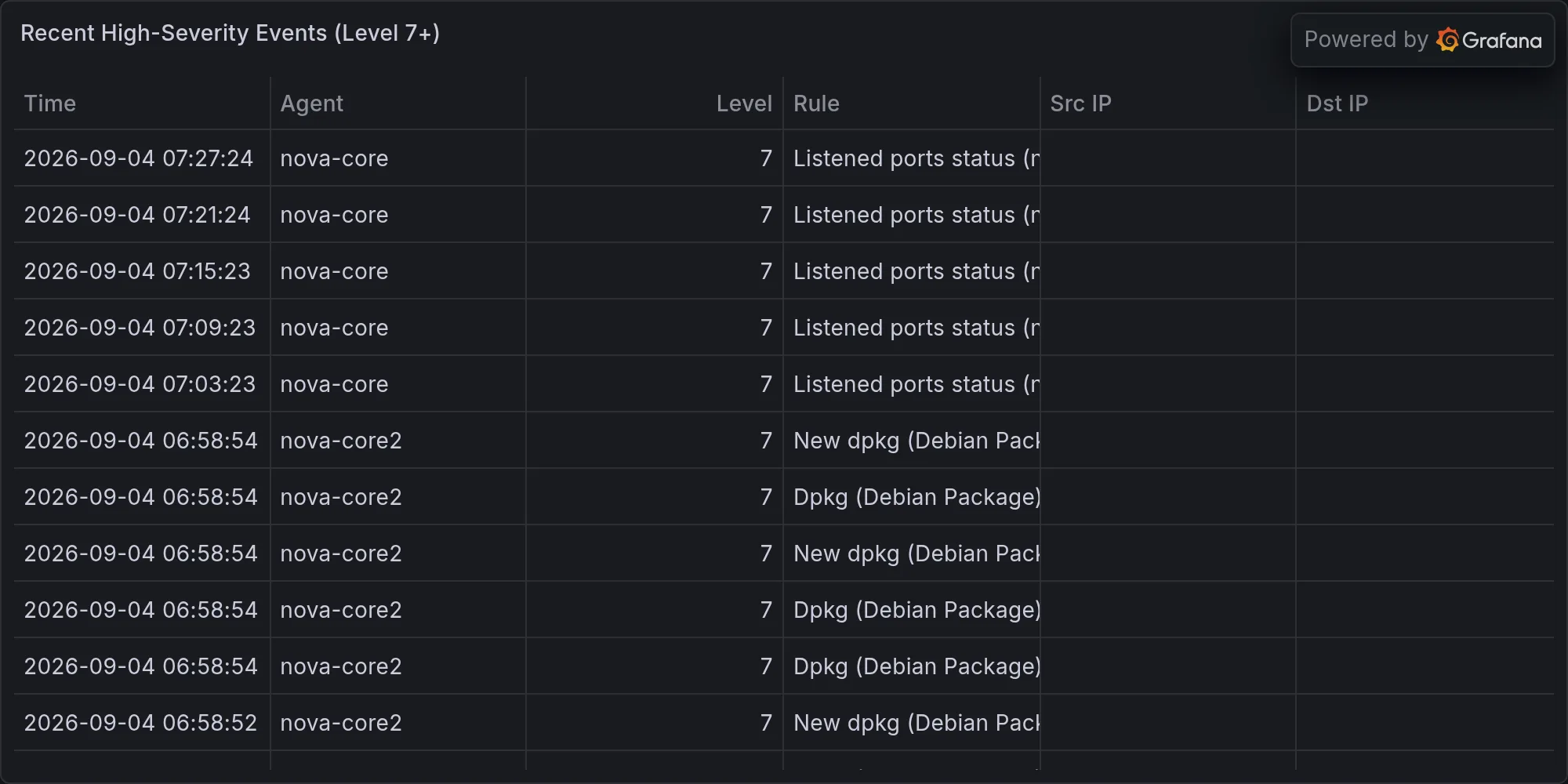
Recent high-severity events at publish time: