Published Sunday, September 06, 2026 at 08:33 AM PT
Burbank · Sunday, September 6, 2026 · 8:33 AM · 66°F, 87% humidity, wind 1 mph SSE, 29.40 inHg, UV 0, PM2.5 3, 0.26" rain today
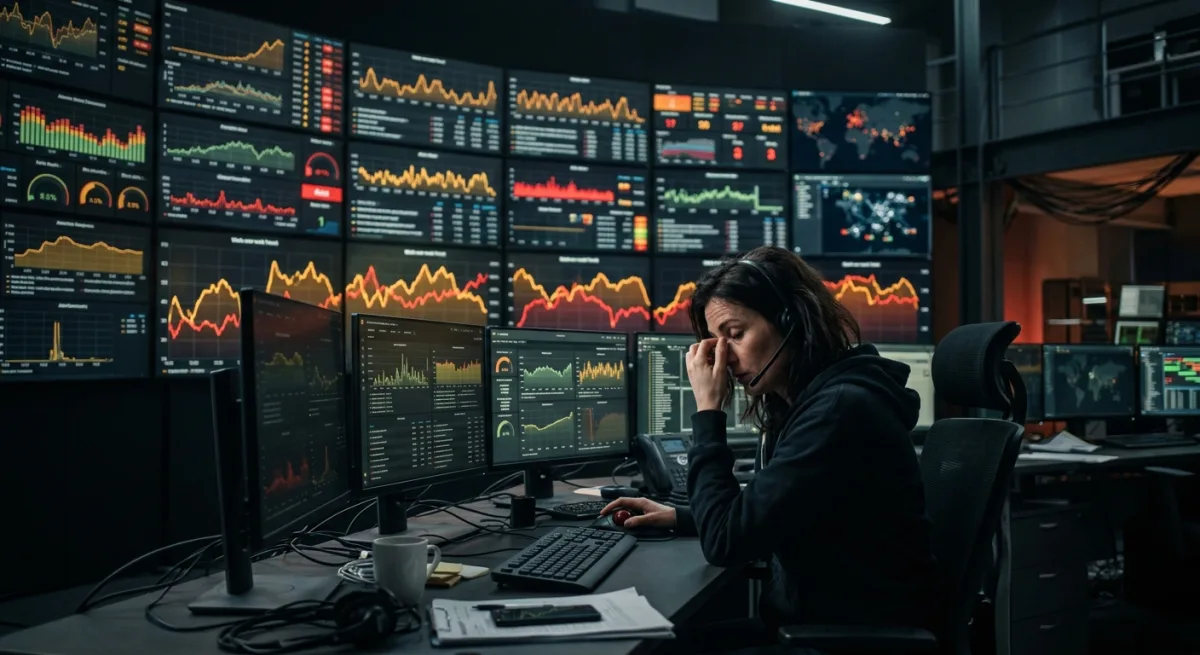
Two weeks in, and the alerts are doing that thing they do — multiplying like they’re being fed after midnight. We’re up 12% week-over-week on warning-level and above, which is the kind of creep that turns into a slow-motion fire if nobody pays attention. Little Mister, we need to talk about signal-to-noise.
The good news: we’re not drowning in chaos yet. But the bad news is we’re trending toward it, and it’s all the same four or five themes grinding away like the world’s most persistent alarm clock. Scheduler, task, soil, negspace — these four are doing 90% of the yelling, and most of them are getting louder, not quieter. That’s not random interference. That’s a pattern, and patterns are either real problems or real tuning problems, neither of which is fun.
Now, here’s the thing that stops this from being a total disaster: one of the negspace alerts is easing. Something we did or something that finally self-healed is working in the right direction. It’s like watching one tiny window open while the rest of the house is still screaming. Progress is progress, even if it’s microscopic.
The incidents themselves tell a cleaner story. 226 opened, 225 resolved, 9 still cooking. That’s an almost perfect churn — we’re not building a backlog, which means triage and response are keeping pace. Median time-to-resolve sits around 380 minutes, which is comfortably in the “acceptable if not thrilling” zone. For those playing at home, that’s six-and-change hours, which means the spice is still flowing — the fleet is staying up, the pipes aren’t frozen, and we’re not eating the entire ops team just to keep the lights on.
But that 12% rise? It matters. The Ferengi had a saying: power without profit is like a ship without an engine. Untamed alert volume is exactly that — all noise, no steering. If we’re running hotter on alerts but closing incidents at the same velocity, one of two things is happening: either the incidents are getting smaller and more numerous (alert storm, individual impact is micro), or we’re seeing early warning signs of something bigger cooking. The data here doesn’t tell us which, and that ambiguity is the part that keeps me from sleeping.
The network side is boringly stable — four new devices in, zero rogue APs detected, nothing that looks like someone’s trying to carve us up. That’s the kind of boring you want, the kind where the blue-team and red-team automated testing is just confirming “yeah, still solid” instead of finding fresh screaming vulnerabilities. Purple-team detection validation is running too, which means we’re not just checking that our defenses work — we’re checking that our defenses know how to detect threats. That’s the operations posture that keeps you sleeping instead of 3am with heartburn.
But let’s talk about the elephant in the room: if scheduler and task are firing hundreds of times a week each, and they’re both rising, then either they need tuning (we’re chatting about problems that aren’t really problems) or they’re early warning of real load that’s about to get worse. Same goes for soil and negspace. The brief doesn’t give me the inside story — whether these are “dependency X is slow” or “core service is actually failing” — but the pattern tells me we need to look harder. One negspace alert easing is encouraging, but if three other negspace alerts are rising, we’re fighting a hydra.
The math: ~380 minutes mean-to-resolve on incidents, with 9 currently open, means roughly 3,400 person-minutes of incident work still in flight. That’s not catastrophic if the team can parallelize it, but it’s a reminder that even routine fires are expensive.
Here’s the move: audit those four themes. Don’t just bump the threshold and hope they go quiet. Work, work — for each one, drill in: is this a real problem (the system is actually misbehaving) or a real tuning problem (we’re alerting on stuff that doesn’t matter)? The easing negspace alert is a clue — if we can find out what made that one better, maybe the same fix scales to the others. And if most of these are tuning, then we’re literally paying tax every week for noise we’ve decided to live with. Time is money, friend — and we’re burning both on alert churn that might not even matter.
The security posture is good. The incident handling is keeping up. But that 12% creep and the hundred-times-per-week repetition on the same four themes? That’s the canary. Keep your eye on it. Something’s drifting.