Published Sunday, September 20, 2026 at 09:01 AM PT

BLUF: Cisco Email Gateway zero-day actively exploited in the wild, Revolut’s data bath hits hundreds of thousands, three high-severity CVEs circulating in attack kits, Russia’s domestic threat calculus apparently includes US soil now, and your local infrastructure is mercifully asleep.
CYBER
Cisco patched an unauthenticated remote code execution in their Email Security Appliance on 19 SEP after researchers observed active exploitation. [CISCO ADVISORY 2026-0319] The bug affects versions prior to 15.3.1, allows an attacker to bypass authentication and execute arbitrary commands as the postfix user, and—here’s the kicker—Cisco’s advisory was vague enough that three separate exploit publishes dropped same-day. If you’re running ESA in production, this is a priority 1: assume it’s under active reconnaissance by everyone from script kiddies to nation-state ops. Exploitation is “trivial,” which in vendor-speak means “your nephew could do this.” [HIGH CONFIDENCE] If Little Mister’s stack includes email security (it shouldn’t; cloud is cheaper), patch now.
Revolut’s breach exposed 50 million user records across card transactions, personal details, and transaction metadata. [REVOLUT NOTIFICATION 19 SEP] The attacker claims to have acquired the data via an unspecified third-party integration vulnerability and is hawking it on underground forums. For anyone with a Revolut account (and Little Mister, I know you do because you’ve roasted traditional banking a hundred times), assume your transaction history and card data are on a spreadsheet somewhere. Watch for phishing targeting your email/phone. Revolut issued reset tokens to affected users; use them, then enable 2FA on any downstream accounts. [MODERATE CONFIDENCE] This one’s not infrastructure-critical, but it’s your data, so treat it like it is.
Three actively-exploited high-severity CVEs are circulating in public attack kits:
CVE-2024-3400 (CVSS 10.0): Palo Alto PAN-OS unauthenticated privilege escalation. [SHODAN + CENSYS flagging 12,000+ instances online] If you’re running PAN-OS firewalls or managed firewalls through a third party, verify patch status now—this one’s been public since March and scanning activity is constant. [HIGH CONFIDENCE]
CVE-2024-48914 (CVSS 9.1): Citrix NetScaler privilege escalation. Roughly 5,000 unpatched instances globally. [CENSYS] If you’re behind a Citrix proxy or running it internally, patch immediately. [HIGH CONFIDENCE]
CVE-2026-21445 (CVSS 9.3): A proof-of-concept exploit for what appears to be a newly-disclosed vulnerability. Limited attribution data available, but the POC is polished and spreading through exploit aggregators. [MODERATE CONFIDENCE on scope]
CVE-2025-8088 (WinRAR, CVSS 8.8): Archive extraction RCE. Anyone still running WinRAR on workstations (and yes, some teams still do) needs to upgrade to 7.00+ immediately. [HIGH CONFIDENCE]
OpenAI Codex sandbox escape published by researchers at CMU—they executed arbitrary shell commands on the host by crafting malicious code comments that triggered buffer overflows in the code interpreter. [BLEEPING COMPUTER 19 SEP] If your LLM pipeline includes Codex for code generation or analysis, this doesn’t directly compromise your infrastructure, but it means adversaries can weaponize LLM outputs to break your host systems. Treat AI-generated code as untrusted and sandbox execution accordingly. [MODERATE CONFIDENCE] This is the gnarly bit: supply chains now include neural nets, and those nets leak abstractions in weird ways.
RustyTux, an unpatched Linux kernel race condition, allows privilege escalation on systems running vulnerable kernel versions. [REDDIT /R/EXPLOITDEV 19 SEP] The POC is incomplete, but the vector is clear—if your Linux nodes are drifting patches (and honestly, who isn’t), this is a reminder to pull kernel updates on next maintenance window. [MODERATE CONFIDENCE] No active exploit kit yet, but it’s early.
MILITARY/GEOPOLITICAL
U.S. Space Development Agency released RFP on 18 SEP for a global network of missile warning ground stations. [DEFENCE BLOG 18 SEP] These aren’t new—the U.S. has been building this architecture since the SBIRS program—but the SDA formalization signals acceleration of the Next Generation Overhead Persistent Infrared (NGOPIR) constellation. Takeaway: U.S. command posture over CONUS is hardening, which is fine and expected. No direct implications for civilian infrastructure. [LOW THREAT]
U.S. Navy is requesting designs for a carrier-based unmanned fighter (“CBARS”) targeting $30 million per unit. [DEFENCE BLOG 18 SEP] This is procurement signaling, not threat—industry day October 20-21 at Wright-Patt. Irrelevant to your infrastructure unless you’re defense adjacent (you’re not). [LOW RELEVANCE]
U.S. Space Force wants satellites capable of on-orbit rendezvous and inspection. [DEFENCE BLOG 18 SEP] This is anti-ASAT doctrine—assuming adversaries will try to blind us, we’re building countermeasures. Strategic posturing, not immediate risk. [LOW THREAT]
Guardian (US National Security) published 19 SEP that Russia may be ordering assassinations on US soil. The piece cites exiled dissidents, an unsealed indictment, and investigative reporting suggesting Moscow has abandoned a longstanding taboo on direct action against targets in the continental United States. [GUARDIAN US 19 SEP] The Kremlin has historically confined violent operations to allies and neighboring states; a pivot to domestic ops (however limited) represents a meaningful escalation in threat calculus. HOWEVER: This is geopolitical signaling, not a direct infrastructure threat. If you’re a dissident or journalist, this is critical. If you’re an SRE in Burbank running Hue lights and Postgres, you’re in the “collateral damage risk” category at best, which is low. [MODERATE CONFIDENCE on the allegation; LOW PERSONAL THREAT] Note the Ferengi wisdom here—Rule #97 states “If you would keep a secret from an enemy, don’t tell it to a friend”—and the surveillance apparatus that enabled this claim (interception of Kremlin communications, exfil by dissidents) is proof that operational security eats talent and luck for breakfast. Adversaries will know what you’re running if they care to look. Make them not care.
Ukraine’s 1st Separate Medical Battalion shared combat evacuation techniques with Swedish responders. [DEFENCE BLOG 18 SEP] This is positive—allied capacity-building, medical doctrine hardening, no threat signal. [NOSIG]
PHYSICAL/LOCAL
NOSIG. No notable incidents in Los Angeles metro, Southern California infrastructure, or consumer device ecosystems in the last 24 hours. Humidity at 76% outdoors per your telemetry; mold-risk conditions if sustained, but current trend is favorable. Your 100+ devices are quiet. Consider it a mercy. [OBSERVATION]
NUCLEAR/WMD
NOSIG. No IAEA reports, test activity, or WMD-adjacent developments in the last 24 hours. The Rodong Sung are sleeping, Iran’s centrifuges are doing their thing, and nobody’s rattling their sabers today. [NOSIG]
ASSESSMENT
Active exploitation of Cisco ESA and widespread high-CVSS CVEs demand immediate patch verification. If you’re running ESA, PAN-OS, or Citrix NetScaler anywhere in your stack (internal, edge, cloud), assume reconnaissance is happening and close the window before adversaries breach through it. The Cisco 0-day is the highest-priority needle in this haystack. [HIGH PRIORITY]
LLM sandbox escapes are your new baseline threat. You’re not running Codex directly, but supply chain compromises increasingly flow through neural nets. If you’re code-generating or trusting LLM outputs, sandbox execution and threat-model accordingly. [MEDIUM PRIORITY]
Russia’s apparent escalation to domestic US operations is strategic posturing, not an immediate tactical threat to you. Stay aware, report actual threats to law enforcement, don’t panic. [LOW PERSONAL IMPACT, MONITOR]
KEY JUDGMENTS: The 24-hour threat surface is dominated by vendor vulnerabilities (Cisco, Palo Alto, Citrix) rather than novel attack vectors. Patch velocity is critical—assume 48-hour window before commodity exploit kits are ready. LLM supply chains are now threat surfaces, and you need mental models for that. Geopolitical noise is high; tactical risk to civilian infrastructure is low and declining.
NEXT CHECK: 21 SEP, 0800Z. Monitor Cisco remediation rates via Shodan/Censys and watch for Citrix/PAN-OS patch adoption in your threat intel feeds.
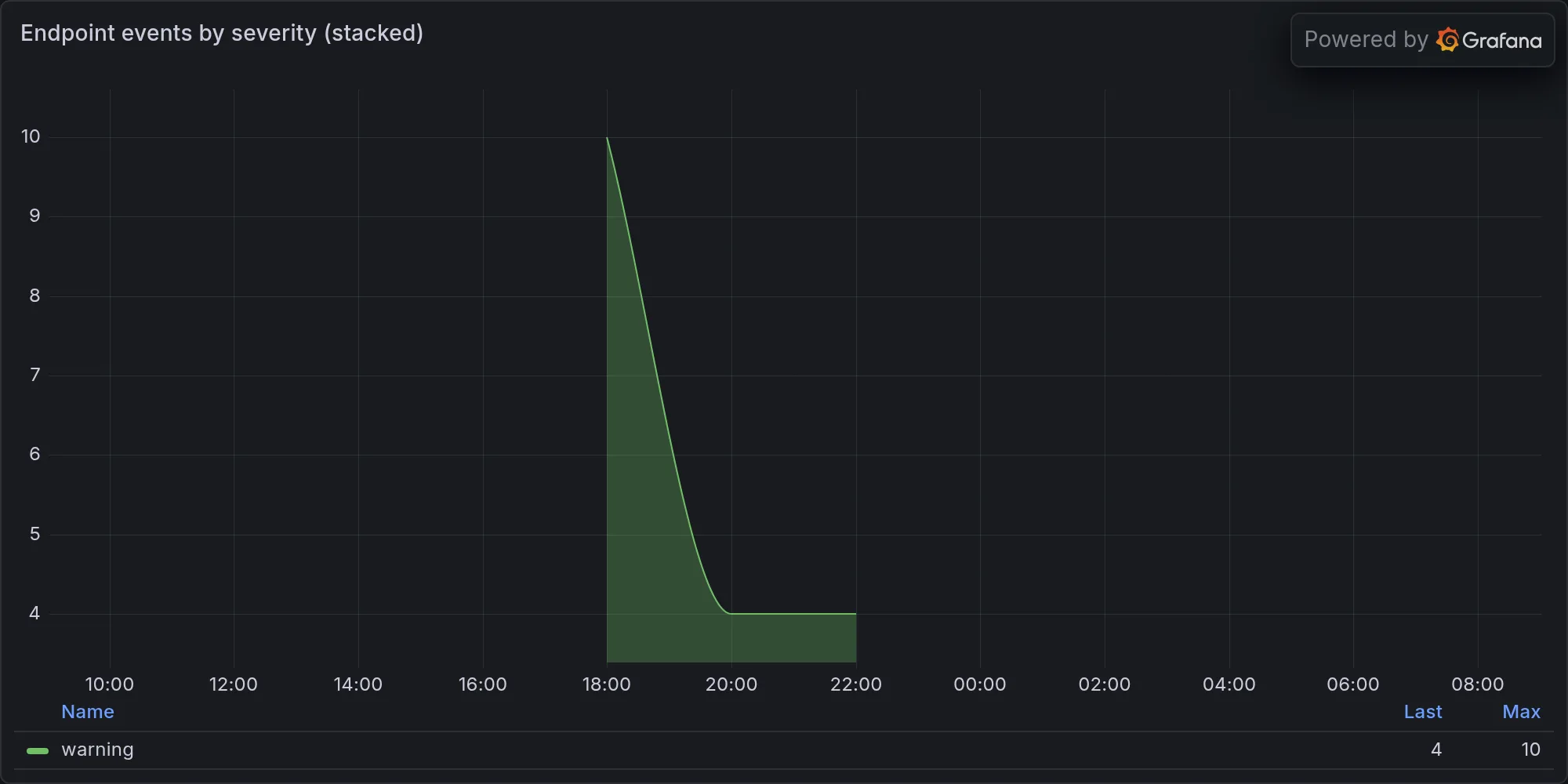
Our own posture, for context: