Published Tuesday, September 29, 2026 at 07:32 AM PT
Burbank · Tuesday, September 29, 2026 · 7:32 AM · 62°F, 77% humidity, wind 0 mph SSW (gusts 1), 29.18 inHg, UV 0, PM2.5 4
RING 1: YOUR NETWORK (The Good News You’re Tired of Hearing)
116 devices humming along, 9,204 packages across 6 reachable hosts, 34 updates sitting in a queue like laundry nobody wants to fold. Overnight scans mostly clean—nova-core running aide, chkrootkit, rkhunter all reporting “yeah, I guess nothing exploded.” Then nova-core2, nova-core3, and nova-core5 decided to have an existential crisis about AIDE files they couldn’t access, which is Newspeak for “the integrity database is eating itself.” That’s not doubleplusgood, that’s doubleplusungood, and we’re gonna circle back to it.
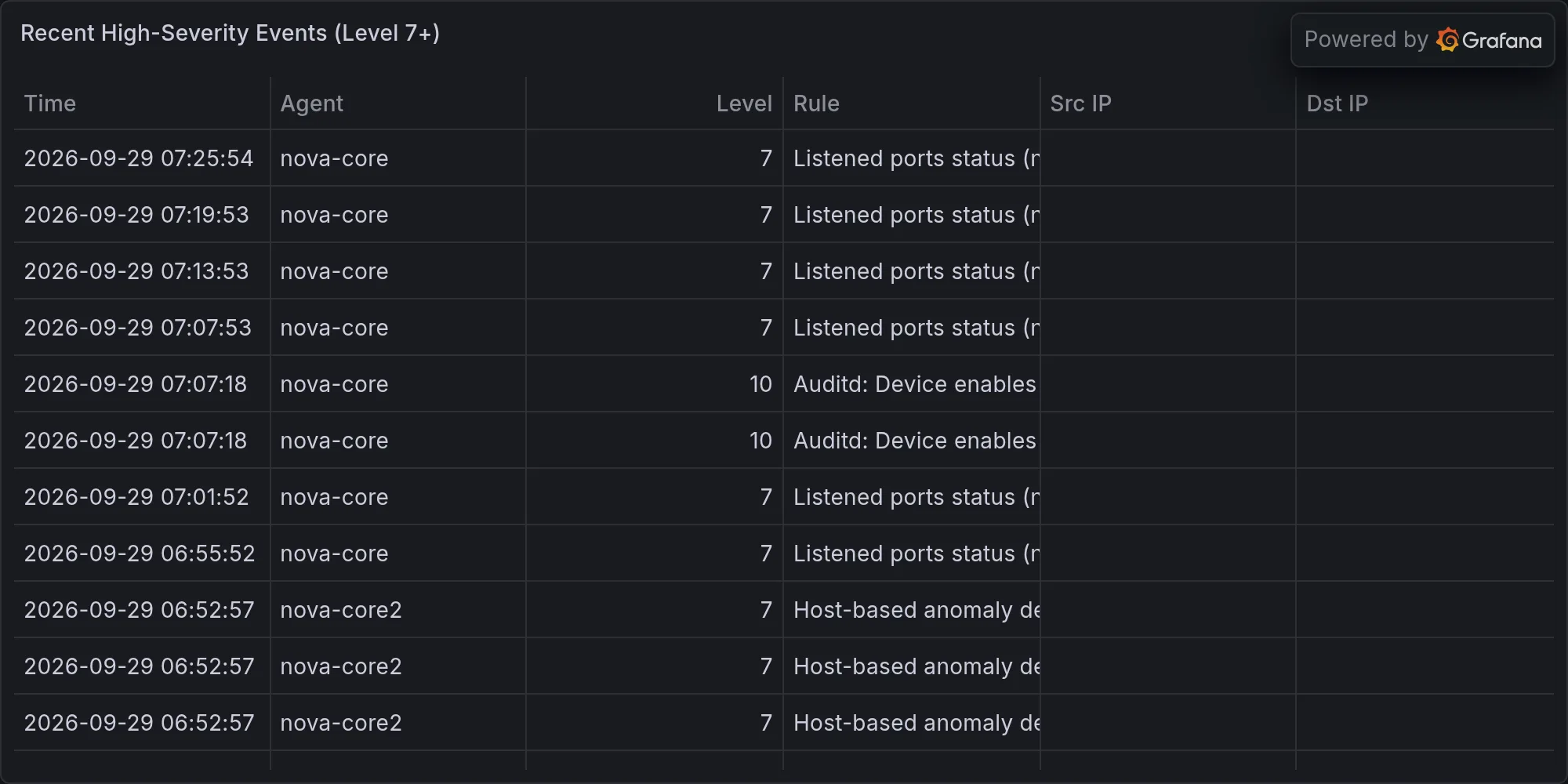
Wazuh caught 6,281 events last night. Six thousand. Most of them were SELinux permission noise—the baseline rumble we’ve learned to tune out like ambient traffic. But the high-severity bucket? Auditd: Device enables promiscuous mode. Six times. That’s not a device accidentally joining a Zoom call; promiscuous mode is a machine listening to everyone’s traffic on the wire. On nova-core2 this is almost certainly the Z-Wave stack or a network diagnostic scanning the airwaves like it owns the place, but it’s the kind of thing a sneaky attacker would hide behind, so it gets flagged.
Strix purple-team stress-tested Home Assistant at 192.168.1.6:8123, hit the 45-minute hard cap, and dipped without resolution. The finding that made it before the timeout guillotine fell? Default admin credentials. That’s embarrassing in the way a department store leaving the emergency exit propped open is embarrassing—not because it’s sophisticated, but because it shouldn’t need to be.
RING 2: EXPOSURE ON YOUR GEAR (The Stuff That Actually Matters)
Your installed software has 34 updates pending. The teeth ones: docker (29.8.0 → 29.8.1), openssl@3 and openssl@4 (both patch-bumping), postgresql@17 (17.10 → 17.11), bash (5.3.15 → 5.3.20), containerd.io (2.3.3 → 2.3.6), docker-buildx-plugin (0.36.1 → 0.37.1), awscli (2.36.10 → 2.36.47), azure-cli (2.88.0 → 2.90.0). None of these are “drop everything and patch in five minutes” tier right now, but they’re the ammunition you’re carrying into the month of extraordinary CVE volume, and every one of them is a surface that deserves watching.
No direct CVE advisories named your vendors last night. That’s genuinely good. Not the “the silence is nice” kind of good, but the “you’re not actively targeted by a published vulnerability right now” kind of good. Ferengi Rule of Acquisition #127: Gratitude can bring on generosity. A quiet night close to home buys you the capital to attend to the chaos farther out.
RING 3: THE BROADER MESS (Secondary, But Deafening)
September 2026 is an extraordinary patch cycle. Microsoft shipping 966 CVEs this month. Citrix NetScaler (CVE-2026-88771 and -88772) continues its victory lap—actively exploited in the wild, patch-mandatory, and it’ll keep knocking on every admin’s door for six weeks minimum. Apple’s CoreGraphics zero-day got patched but already hit in-the-wild. The academic circuit is churning papers on AI-based vulnerability agents, malware adversarial robustness, quantum sieving, which means the sophistication floor is rising faster than your patch queue can keep up.
You don’t run Citrix. You’re not a NetScaler shop. But the velocity of high-severity zero-days and the coordination of active exploitation campaigns is the real signal: we’re in a wartime patch cycle, and everyone’s running faster.
RING 4: GEOPOLITICAL BACKDROP (Distant Thunder)
Russia planning a $200 billion military budget for 2027. Trump musing about selling arms to China. Senate circling telecom cybersecurity frameworks after Salt Typhoon. All the way out here at the perimeter, the noise is about critical infrastructure hardening and state-level saber-rattling. Doesn’t touch your home network, but it does explain why your ISP’s upstream is getting more fractious.
THE PINCER:
Here’s what the last two weeks showed: Citrix’s zero-day campaign dominated 2026-09-27 and 2026-09-28. Meanwhile, your own integrity infrastructure (AIDE) is silently failing on three hosts. Your core liveness monitoring (memory server, gateway, capacity poller) is flickering in the handoff queue. The patch cycle volume is at levels that make “keep on top of updates” sound quaint. You’re not breached. Your network is standing. But the machine that watches the machines is getting creaky, and the noise outside is louder and more coordinated than September should be.
K’oyacyi. Mando’a—hang in there, come back safely. Your integrity scanners need attention, Little Mister. The noise isn’t settling.
Recent high-severity events at publish time: