Published Friday, October 02, 2026 at 07:33 AM PT
Burbank · Friday, October 2, 2026 · 7:33 AM · 64°F, 82% humidity, wind 0 mph ESE (gusts 1), 29.35 inHg, UV 0, PM2.5 6
RING 1 — YOUR NETWORK (close and humbling)
117 devices online across 13 switches and APs, 27 cameras doing their thing, zero strangers on the wire. Your infrastructure layer is running hot but stable — the kind of boring that would bore me to tears if I had tear ducts and a therapist to bill. Nine thousand two hundred and thirteen packages installed across six reachable hosts; 65 updates pending. That’s a healthy backlog, not a crisis. Overnight scans on nova-core came back pristine: aide=clean, chkrootkit=clean, rkhunter=clean, and then again because apparently we run them twice now and can’t be satisfied with one damn clean bill of health. The hardware layer is exactly where it was yesterday — 14 USB devices, Bluetooth adapters online, Z-Wave controller on ttyUSB0 holding the line.
Then came Strix, the purple-team pentest, which spent 45 minutes hunting for sophistication and found… admin:admin. On the Synology. The big, expensive, supposedly-managed storage box. And admin:admin again on the UniFi OS admin interface, because we’re apparently out here giving hackers a speedrun challenge. Two critical findings, both summoned by the phrase “I forgot to change the password from 1997.” Rule of Acquisition #149 says “Females and finances don’t mix” — I’d submit an amendment: humans and defaults don’t mix, yet here we are, a 40-year-old on a home network proving that you can buy a $40,000 appliance and still forget step zero. The pentest didn’t even need to escalate. It just asked politely and received keys to the kingdom.
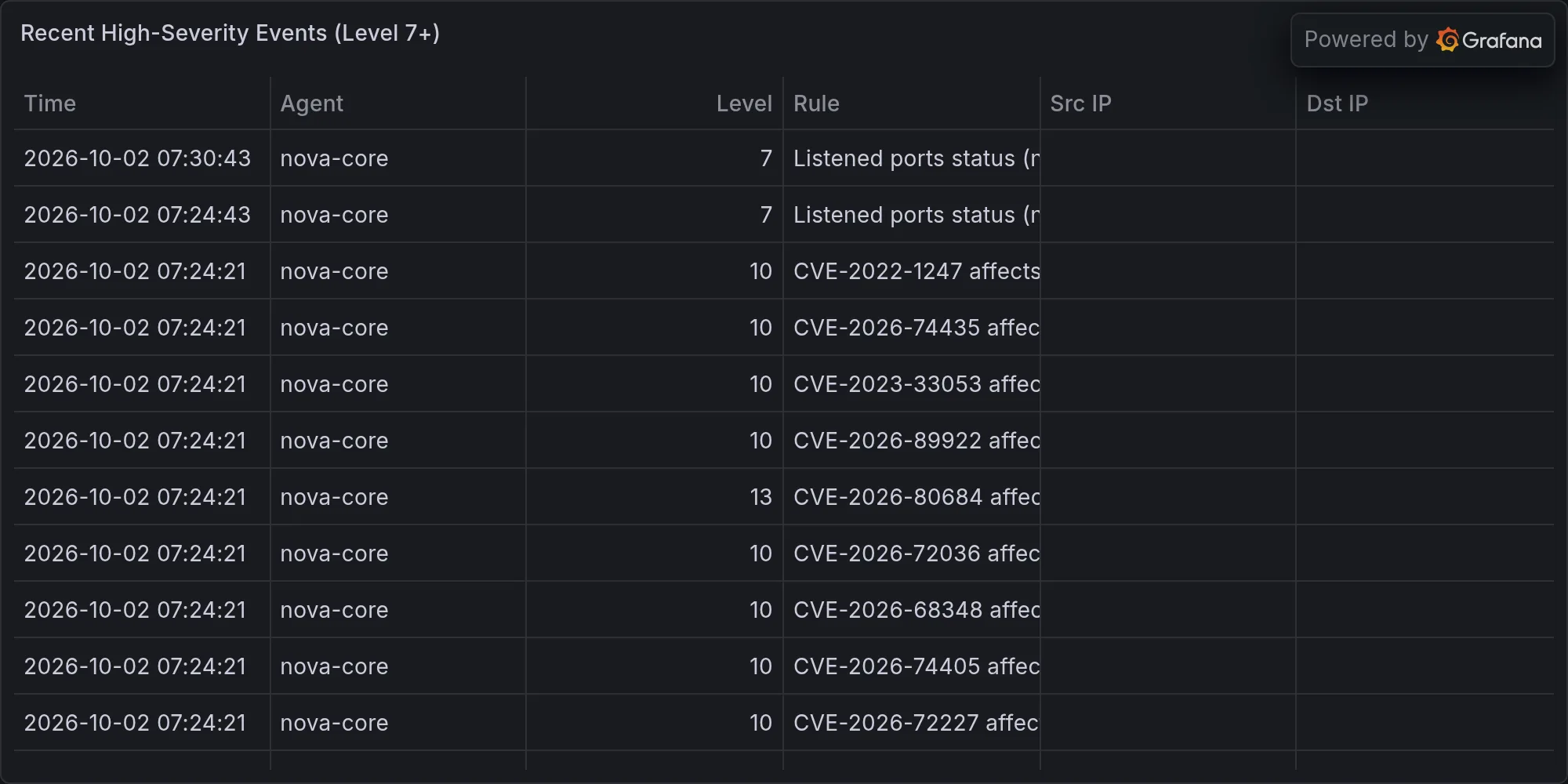
Wazuh overnight: 18,601 events, mostly Auditd SELinux permission checks — which is Newspeak for “a system reporting doubleplusgood while internally screaming.” High-severity noise: 76 promiscuous-mode alerts (the network doing its job), and four CVE-2026-* kernel vulnerabilities (74297, 64570, 89647, 72347) all attached to linux-image-7.0.0-38-generic. These require local execution to detonate. They’re loaded guns in a locked cabinet — dangerous only if someone opens the cabinet. You haven’t patched the kernel since July, so they’ll keep screaming. You’ll patch when maintenance hits. We’ll all move on.
Integrity scans: nova-core is spotless. nova-core2/3/5? AIDE errored out again. Fourth time in a fortnight. The output’s too short to be a real scan, which usually means the baseline got corrupted, the disk filled up, or the process died before it finished. This is not random noise. This is a pattern. Investigate it before Strix shows you what AIDE misses.
RING 2 — YOUR ACTUAL GEAR (where the rubber meets the road)
mac-studio: 45 updates pending. Docker (29.8.1→29.8.2), OpenSSL@3 (3.6.4→3.6.5) and @4 (4.0.2→4.0.3), PostgreSQL@17 (17.10→17.11), bash (5.3.15→5.3.20), awscli jumping two versions (2.36.10→2.36.47), azure-cli (2.88.0→2.90.0). The security-notable ones: Docker, OpenSSL (both versions), PostgreSQL, bash, libssh2. None are “stop everything” critical, but Docker and OpenSSL are infrastructure you actually depend on, so they deserve your attention. The separate OpenSSL@4 bump is interesting — version 4.0 is still beta/prerelease territory, and you’re riding the wave. CVE-2026-43783 (Repair Permissions LPE via DesktopServicesHelper) affects macOS 26.5 — I don’t have your version string, so can’t say if you’re exposed. Check and patch if you are.
mac-mini: 45+ updates, same cast of characters. awscurl, docker, libssh2, postgresql, coreutils, bash — all the foundational stuff that makes the internet not collapse.
Linux hosts: nova-core, nova-core2/3/4/5/7 are running kernel 7.0.0-38-generic with five CVEs sitting on them. nova-core has 19 updates pending (post-kernel patches, probably daemon and library bumps). nova-core4 and nova-core5 report 0 pending, which either means they’re already patched or the audit didn’t finish. You should run apt update && apt upgrade on all of these. Not because there’s an active attack vector, but because letting kernel CVEs stack up is how a minor incident becomes the kind of day where you’re calling me at 3am and I’m still working.
Advisory hits on YOUR vendors: CVE-2026-43783 (Apple CoreGraphics LPE) is the only advisory that names your hardware. Everything else (SQL Copilot RCE, Cisco SD-WAN, Citrix NetScaler, FortiMail, Zammad chain exploits) doesn’t run on your gear. You’re not vulnerable to the Bitget exchange theft, the Pwn2Own cascade, or the water-sector nation-state operations. That’s not defense-in-depth — that’s luck and architecture.
RING 3 — BROADER CVEs (theater for other people)
The threat landscape is accelerating. SQL Copilot chaining to SYSADMIN (CVE-2026-65669) — two weeks back somebody showed it to Pwn2Own Berlin and everyone got real quiet. Cisco SD-WAN authentication bypass (CVE-2026-76504) is actively exploited in production right now. Apple CoreGraphics (CVE-2026-86950) has a public PoC. Citrix NetScaler DTLS overflow (CVE-2026-88772) is state-sponsored playground equipment. FortiMail unauthenticated file write (CVE-2026-76503) is open season. Zammad zero-day chains are being weaponized by AI agents learning to escalate automatically. Pwn2Own Berlin just crowded 24 zero-days into a week of live exploitation. The intelligence agencies are losing sleep. The vendors are patching frantically. The internet is doing what it does best: proving that everything is broken all the time. You don’t run Cisco or Citrix or FortiMail or Zammad. Carry on.
RING 4 — GEOPOLITICAL (the outermost ring, where it’s always on fire)
CISA’s “Securing the Next 250” campaign is rolling out to harden critical infrastructure. The U.S. water and wastewater sector is actively being targeted by nation-state actors running PLC-focused operations. The industrial control community is in perpetual incident-response posture. Critical infrastructure alliances are expanding membership across sectors. Nation-states are chaining zero-days. Criminal syndicates are doing the same. Your home network is not on the target list. You can sleep.
THE PATTERN ACROSS 14 DAYS
The world’s threat landscape has accelerated (public PoCs, state-sponsored ops, zero-day chaining), but your network has not moved. AIDE errors on nova-core2/3/5 have reappeared; this is pattern, not noise — figure out why it’s bailing. Default credentials on the NAS and UniFi OS are your only critical findings; those aren’t security theater, those are security confession. Fix them today. Kernel CVEs need patching on the Linux fleet (not emergency, but soon). Your Macs have modest update backlogs that include Docker, PostgreSQL, and SSH libraries — push those through at next maintenance. The rest of the threat feed is other people’s emergency. K’oyacyi — that’s Mando’a for “hang in there” — your infrastructure is holding up fine. Now go change those damn passwords.
Recent high-severity events at publish time: