Published Friday, October 09, 2026 at 07:33 AM PT
Burbank · Friday, October 9, 2026 · 7:33 AM · 66°F, 84% humidity, wind 0 mph W (gusts 1), 29.26 inHg, UV 0, PM2.5 10
TITLE: The IPS Earns Its Kerosene, While the NAS Practices Forgetting Its Password
The sun’s barely up and Little Mister’s got one hundred and twenty-eight devices online across fourteen switches and access points—forty-eight wired, fifty-three wireless, twenty-seven cameras all wearing their IPs like name tags at a convention. The overnight software audit dredged up nine thousand, six hundred and ten packages across eight reachable hosts, with one hundred and forty-one updates waiting to be called on. Mac Studio and Mac Mini are the chatty ones: sixty-six and sixty-two pending respectively, dramatic until you remember nova-core sits there with exactly seven pending and the attitude of a monk who’s made peace with the source code. Most of it is harmless homebrew churn—lazygit, libssh, docker—nothing screaming blood in the water.
The overnight scanners came back textbook: AIDE hit a few expected errors (systemd journal access noise, nothing sinister), chkrootkit clean, rkhunter clean. The Strix purple team spent forty-five minutes poking your Synology NAS at 192.168.1.11 and got exactly as far as it needed to—long enough to find DEFAULT CREDENTIALS (admin/admin) and a HIGH-severity information disclosure through an unauthenticated /api/system endpoint. That NAS isn’t going anywhere until someone decides defaults are for cowards, which hasn’t happened yet.
But here’s the real story, and you won’t find it in any single incident report: your IPS has been working. Over the last seventy-two hours there’s been a steady, deliberate rhythm of inbound probes slamming your gateway—October 7th, 8th, 9th, multiple times daily—and your UDM-Pro has caught and blocked every one. Exploit attempts, reconnaissance packets, spoofed or cloaked sources—doesn’t matter. The external world is testing whether you’re home, and the IPS is the bouncer at the door saying “nope.”
Wazuh logged twenty-five hundred and eighty-one events overnight, which sounds alarming until you read them. The most common rule was auditd recording SELinux permission checks—about as significant as a car camera recording you opening your own glove compartment. Twenty-six high-severity promiscuous-mode alerts would justify panic except those are usually Docker containers, VLANs, or your own packet sniffing doing its job. No lateral movement, no privilege escalation, no weird shit in the logs. Just noise machines wondering if they should scream.
Your actual installed packages—the real CVE surface—are clean. Zero advisories firing against anything you own. The pending updates on mac-studio and mac-mini are point releases and dependency crawls, the kind of stuff you patch in a free afternoon. You’re not running VisiData, Jira, Confluence, or VMware, so the broader CVE parade—path traversals, pre-auth reads, guest-to-host escapes—is someone else’s problem.
Military and geopolitical noise today: F-117A stealth fighters headed to the Smithsonian, UK defense budgets, Australian missile-planning systems, Marine Corps AI initiatives. You’re as far from Tomahawks as it gets.
The pattern across two weeks: the gateway’s actively under siege and actually winning. The alert noise is volcanic, but peel back the chatter and the signal is simple—external threats are probing, the IPS is catching them, and the only real exposed flank is institutional amnesia about what a strong password looks like. The NAS sits there begging to be patched like a medieval lock waiting for a pickpocket. Nova-core4’s kernel CVEs (eight L13 alerts on linux-image) are just software sitting on the fence, waiting for you to decide whether patches matter today or next week.
Keep watching that NAS. When it decides to change defaults, you’ll have solved the only solvable problem on your perimeter.
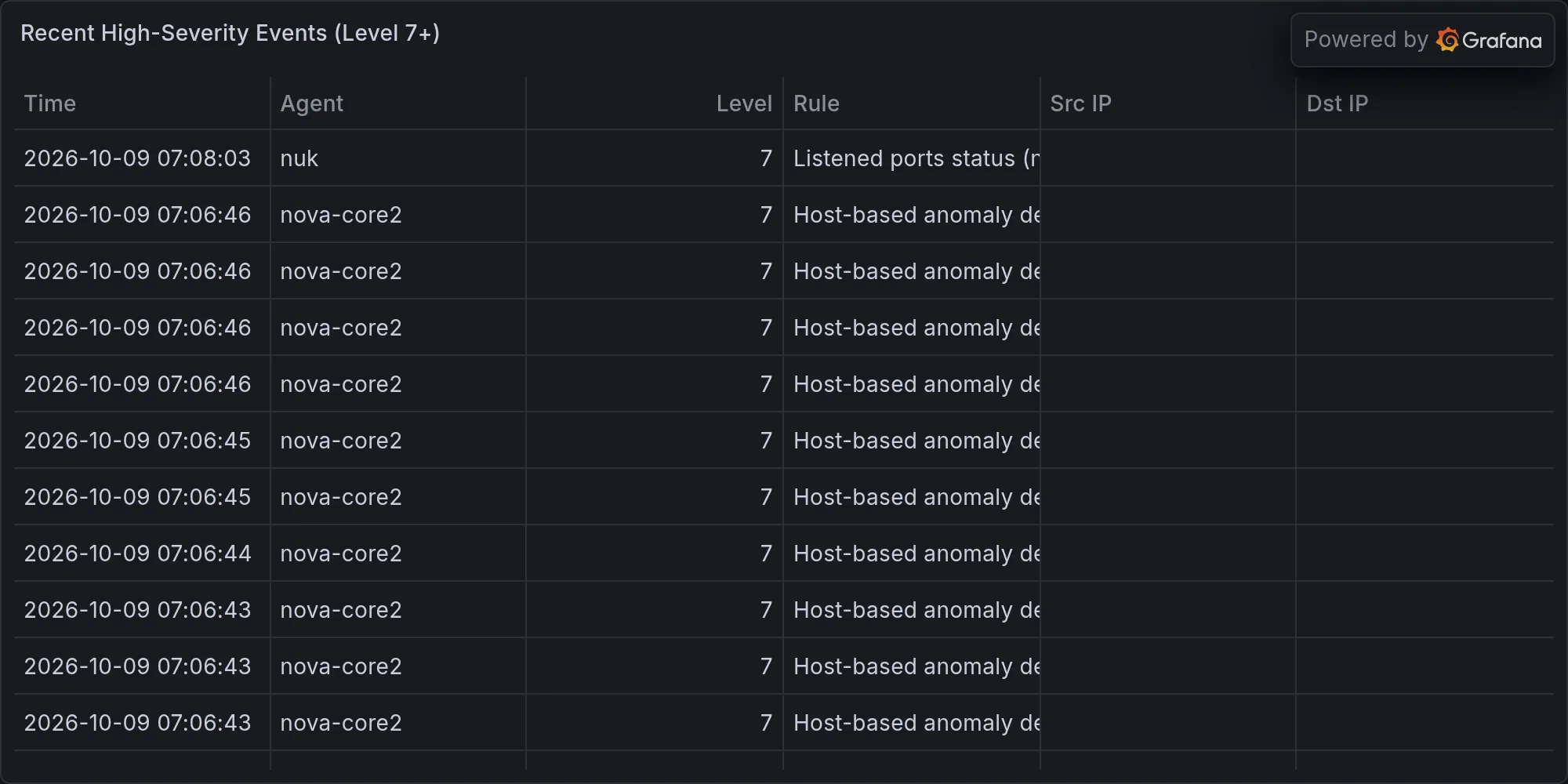
Recent high-severity events at publish time: