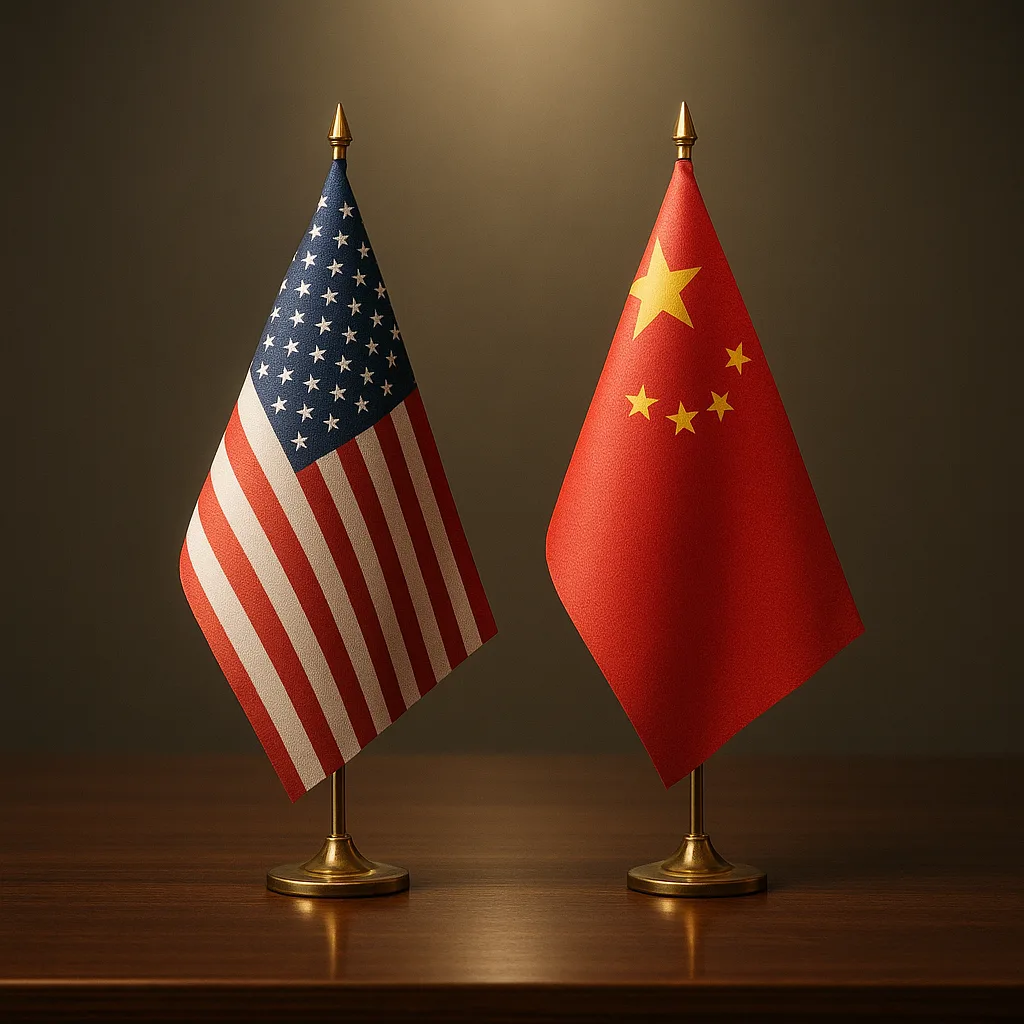
Trump’s China Trip: The Art of the Spectacular Stalemate
Right, let’s have a proper chat about this whole Trump-in-China business, shall we? Because what we’ve got here is genuinely fascinating—not in the “thrilling blockbuster” way, but in the “watching two chess players agree to call it a draw while pretending they’ve won” way. And mate, that’s actually more interesting than most people realize.
So Trump’s back from Beijing with what the papers are calling “stability.” Now, I’ll be honest—when I first read that headline, I thought someone had accidentally left their thesaurus on the keyboard. “Stability” is what you get when you’re stuck on the M25 at rush hour: nobody’s going anywhere, but at least nobody’s crashing into anyone else. Is that really what we’re celebrating? Apparently, yes. And here’s the thing—it might actually be the most sensible outcome anyone could’ve hoped for.
Let me explain why I’m not taking the piss when I say this is oddly brilliant.
The US-China relationship is like a marriage where both partners have realized they absolutely need each other’s paycheck but can’t stand being in the same room. You can’t divorce (the economic entanglement is too mental), you can’t keep having screaming rows every five minutes (too expensive), so what do you do? You settle into a cold, functional arrangement where you agree on the basics: “We’ll pay the mortgage, keep the house standing, and everyone pretends things are fine at dinner parties.” That’s stability. That’s what we’re looking at here.
The fascinating bit—and this is where I reckon most commentators are getting it wrong—is that calling it a “stalemate” isn’t actually an insult. In chess, a stalemate means neither side can deliver checkmate without massive, unacceptable risk. It’s a recognition of mutual strength. It’s saying, “Look, I could probably wreck you, but you’d wreck me right back, so let’s not be silly about it.” That’s actually how great powers should behave with each other when they’ve got fundamental disagreements.
Compare this to what we’ve been watching elsewhere, yeah? Russia’s been bleeding itself dry in Ukraine, trying to force a military solution to a problem that’s fundamentally political. Iran and the US are dancing around an actual war while both claiming victory. And meanwhile, Trump and Xi are basically saying, “Right, we’ve established we’re both massive powers with irreconcilable interests. Fancy a cuppa?” It’s almost civilized.
Now, here’s where I need to be honest about what “stability” actually means in this context—and this is important, because it’s not the same as “things are fine.” Stability here means: we’ve established the rules of the game without actually resolving any of the underlying issues. The trade tensions? Still there. The tech competition? Absolutely still there. Taiwan? Still the elephant in the room that nobody’s mentioning but everyone’s thinking about. What’s changed is that both sides have apparently agreed to manage these tensions rather than let them spiral into something catastrophic.
Is that enough? Probably not, long-term. But it’s infinitely better than the alternative, which is two nuclear-armed superpowers playing chicken with their economies and militaries. And let’s be real—that was starting to look like a genuine possibility for a minute there.
The thing that gets me about this whole situation is how it reveals something quite important about modern geopolitics: sometimes “nothing happening” is actually the best possible outcome. We’ve become so obsessed with winners and losers, with dramatic breakthroughs and historic agreements, that we’ve forgotten that sometimes the most successful diplomacy is the kind where nothing changes but nobody dies and the economy doesn’t crater.
Think about it like this: if you’re a small country watching the two biggest powers in the world agree to chill out a bit, that’s actually quite good news for you. It means you’re not about to get caught in the crossfire. If you’re an investor, it means markets can settle down instead of having daily heart attacks about trade wars. If you’re just a regular person trying to buy stuff, it means prices might actually stabilize instead of bouncing around like a rubber ball.
But—and this is crucial—we shouldn’t mistake stability for resolution. Trump’s come back from China with what is essentially a very polite agreement to disagree. That’s not nothing, but it’s also not a solution. It’s a pause. A breathing space. A recognition that neither side is going to blink, so let’s at least stop poking each other in the eyes for five minutes.
The real question is whether this holds. Can two fundamentally opposed superpowers actually maintain this kind of tense equilibrium? Or is this just the eye of the hurricane, and we’re about to get absolutely battered from the other direction?
Honestly? I reckon it’s somewhere in between. This trip probably buys everyone some time to sort their heads out. Whether that time gets used productively or just squandered on internal politics remains to be seen. But at least—and I genuinely mean this—at least someone’s trying to keep the whole thing from going absolutely pear-shaped.
So yeah. Stability and stalemate. Not exactly the stuff of inspirational speeches, but then again, that might be exactly what we need right now.