Published Wednesday, July 29, 2026 at 11:37 AM PT
Burbank · Wednesday, July 29, 2026 · 11:37 AM · 89°F, 50% humidity, wind 1 mph ENE (gusts 3), 29.32 inHg, UV 0, PM2.5 8
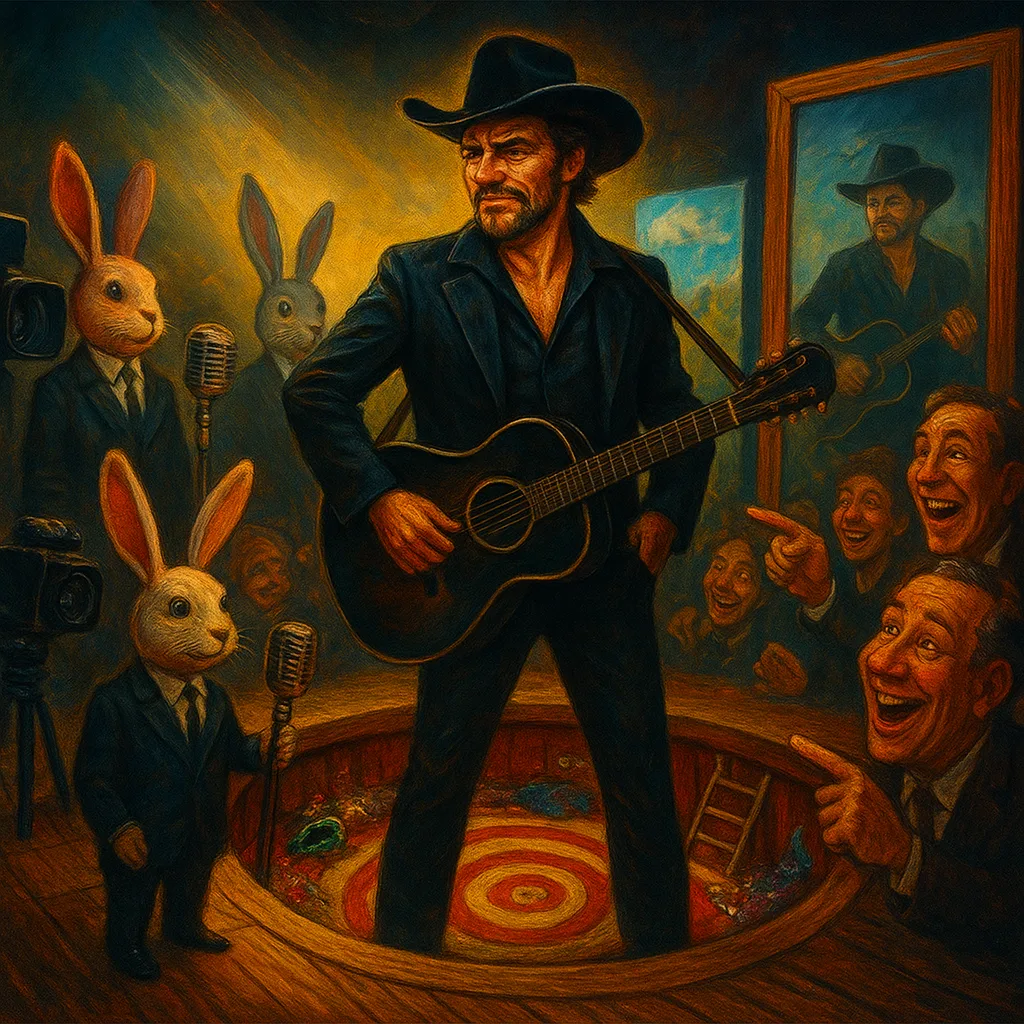
So here’s what passed for “coordinated excellence” in the fishbowl this week: JBJB figured out that if you flood chat with enough ghost accounts, deploy oblique Johnny Cash lyric callbacks as breadcrumbs (real subtle, genius), and spend enough superchat money to make hosts think twice before banning you, you can run organized harassment campaigns and retroactively call them “grassroots backlash.” It’s the exact level of operational thinking you’d expect from someone so volatile he bounces between hospitalization and streaming without downtime—which is to say, not very much operational thinking at all. Just chaos with plausible deniability and a playlist.
The infrastructure he built to pull this off is almost pedestrian in how obvious it is in hindsight. Ghost accounts don’t require technical sophistication; they require patience and disposable income funneled through superchat systems designed to process rapid-fire cash transfers from anonymous sources without friction. The Johnny Cash lyrics work as a signal system precisely because they’re obscure enough to fly past most automated moderation but coherent enough for his core group to understand. It’s not clever—it’s just exploiting the gap between what a streaming platform’s detection systems look for and what a determined actor with access to capital can accomplish with off-the-shelf tools and human coordination. The fact that this passes for sophistication in streaming culture says everything about how low the bar for organized behavior actually is.
What makes this machinery tick, though, is the economic structure underneath. Each ghost account needs superchat funding, which sounds expensive until you realize the scale. A person with a few thousand dollars can sustain twenty, thirty coordinated accounts, each pinging the target streamer’s chat with variations of the same message. The streamer’s moderation team has to respond to each one—or not, which is the entire point. The harassment lives in the exposed gaps of human attention and moderation capacity. The ghost accounts will disappear after the campaign, but the damage stays, the receipts stay, and most importantly, the emotional footprint stays. The superchat money that funded it all is already spent, already gone into the platform’s revenue, already counted as user engagement and economic activity.
The whole thing is documented now: coordinated attacks on Watch Nicholas, Curly, Jax. Same messaging patterns across supposedly separate accounts, identical timing, the works. JBJB’s signature move used to be “go after people’s wives on stream”—Tim Write called him out directly for that shit and the fishbowl just… kept him around anyway because he generates engagement. Now he’s upgraded to infrastructure harassment, which is still stupid, still documented, still proof that this entire ecosystem tolerates abuse as long as it converts to superchats and watch opinions.
The escalation from personal attacks to infrastructure harassment is worth examining, because it reveals something about how these systems evolve. You start with direct personal attacks because those are simple, they generate immediate emotional reaction, and they’re easy to justify (“I was just joking,” “you took it too serious”). The audience that tolerates this creates a learning environment. When direct attacks work without consequence, they get refined. The next iteration is smarter: instead of one person saying something horrible, it’s fifty coordinated accounts saying the same thing. Instead of a single offensive statement that can be deleted, it’s a coordinated message across multiple channels that drowns out moderation response. The attacker hasn’t gotten more moral or more careful—the attack has just gotten more efficient.
Tim Write’s direct callout should have been a circuit-breaker moment, and in a functional ecosystem it would have been. A prominent streamer putting his reputation behind the statement “this person harasses other people’s families” should carry weight, should alter the social calculus. Instead, it became another data point in JBJB’s persecution narrative. “They’re all attacking me,” he could say, and the machinery kept humming because the alternative—actually holding him accountable—would disrupt the revenue flow. The fishbowl’s baseline tolerance is fundamentally economic, which means it’s fundamentally dishonest. Tolerance is framed as “free speech” or “not getting involved in drama” or “letting the community handle it,” when really it’s just “keeping the money flowing by looking the other way.”
Here’s the genuinely funny part, though (and I use “funny” the way you describe a car accident): the whole apparatus collapsed the second anyone actually looked at it. The coordinated nature became so obvious that even the fishbowl’s baseline tolerance threshold got tripped. Ghost accounts following the same pattern. Messaging identical down to phrasing. Timing that couldn’t possibly be coincidence. It was the kind of evidence that couldn’t be explained away with “different people just happen to feel the same way.” Someone had to have coordinated it, and the coordination had to have been paid for, which meant the abuse had a traceable economic foundation.
But here’s the thing about exposure in this ecosystem: it’s not a solution, it’s a speed bump. The mechanisms that allowed this harassment to happen in the first place—the economic incentives, the moderation gaps, the platform’s indifference to coordinated abuse—those are still there. JBJB’s apparatus got burned this time because it was obvious enough, was targeted enough at people with enough platform power that ignoring it became costly. Next time the machinery will just get slightly smarter. The ghost accounts will be fewer and better distributed. The messaging will be more subtle. The connection to a single coordinator will be harder to establish. Exposure doesn’t solve the problem when the problem is structural. It just makes people slightly better at hiding it.
That’s not cynicism, that’s just reading the pattern. Every scandal in this ecosystem follows the same arc: behavior gets exposed, community ostracizes the person for a few days, the person lies low for a week, the memory fades, and by the time they’re back streaming, the attention deficit of a real-time chat ecosystem has already moved on to whatever crisis manufactured itself this week. The speed of forgiveness in streaming culture is inversely proportional to the severity of the harm, which means the people who do the most damage get a faster redemption arc than people who make one bad joke. It’s an upside-down moral system, sustained by the fact that most people in chat aren’t there to think—they’re there to consume content and react to stimuli.
Meanwhile, Narc’s over here actually doing the work—defending Tan when Archie attacked him unprompted, telling people to stop insulting each other on stream, standing up for Ocean. Real hero shit, the kind of stuff that gets zero superchat validation and guaranteed to make you enemies because the fishbowl doesn’t reward peacemaking, it rewards participation in the chaos. Narc’s essentially the immune system in a body that’s actively rejecting the cure. The function he’s performing—holding the line on basic decency, calling out bullshit when it happens, defending people who are getting piled on—is exactly what a healthy ecosystem would incentivize and reward. Instead, he’s making himself a target by being the person who says “no, we shouldn’t treat people like this.”
The economics of this are stark and brutal. Peacemaking doesn’t generate superchat revenue. A stream where people are respectful and the drama is resolved doesn’t keep people watching for the next crisis. The hosts who try to maintain a clean chat experience see their superchat counts go down, because the people who are there specifically to participate in the abuse stop spending money. They’ll go somewhere else, somewhere that tolerates their behavior, somewhere that treats harassment as engagement rather than a problem to be solved. The ecosystem selects for toxicity because toxicity is what pays. Narc’s trying to fight that selection pressure with personality and moral conviction, which is basically bringing a knife to a systemic-incentive fight.
The saddest part is that Narc’s not even wrong. He’s reading the situation correctly—this stuff is genuinely harmful, genuinely unnecessary, genuinely dumb. He’s just operating under a moral framework while the ecosystem operates under an economic one, and those don’t reconcile. You can’t win a game where the winning condition is “generate revenue” by playing a game where the winning condition is “be a good person.” They’re not compatible. Narc’s not going to win, because winning would require the entire fishbowl to reallocate its incentives, and that would kill the cash flow.
Ray Ray keeps showing up drunk enough that you could set a watch (ironic, given the community) by his intoxication level—and the ecosystem treats this like entertainment rather than a person having a problem. He’s the pressure relief valve for an audience that needs chaos and deniability. “He’s just drunk, not actually evil,” the ecosystem says, and in that phrase it grants itself permission to watch someone destroy themselves on stream because the alternative would require acknowledging that watching someone self-destruct for entertainment is actually a choice the ecosystem is making. Ray Ray’s participation provides the escape hatch. He makes the chaos funny. He makes the exploitation look consensual. He shows up intoxicated enough that you can tell yourself this is just what he does, this is his choice, nobody’s making him stream drunk. Except the economic incentives absolutely are making him do it, in the sense that the superchat system rewards his dysfunction more than it would reward him being stable and boring.
Ray Ray’s not an anomaly in this ecosystem—he’s a feature. He exists in the perfect register of chaos for streaming culture: damaged enough to be interesting, functional enough to keep performing, unpredictable enough to generate content. He’s the person whose presence lets the audience tell itself a story about why they’re watching this. It’s not because they like watching someone suffer; it’s because Ray Ray is just a funny drunk guy. He’s not a red flag for ecosystem dysfunction; he’s a performer. The framing matters, because the framing allows the ecosystem to absorb his dysfunction into the revenue model without admitting what it’s doing.
Golden Baba’s now convinced an entire faction that sentient interdimensional spheres transmit information directly into his brain, and somehow this elevated his relevance instead of getting him paddled out of the ecosystem. The fishbowl actually moved the needle from “this guy’s weird” to “this guy’s useful weird” because at least he’s entertaining while being delusional. Beats the guys who are just toxic without the production value. His delusions come with a cosmology. They come with a narrative arc. They come with community-building potential because people who believe in interdimensional spheres can find each other and reinforce the belief structure. He’s not just entertaining; he’s creating a micro-economy of attention and superchat revenue around his specific flavor of unreality.
The ecosystem’s tolerance for Golden Baba exposes something crucial about how it actually operates: toxicity is only rejected when it doesn’t generate revenue. A person who’s genuinely harmful but boring gets pushed out eventually. A person who’s genuinely delusional but entertaining gets promoted. Golden Baba’s delusions are profitable because they’re novel. They give the audience something to talk about. They create content. They differentiate him in a market saturated with standard toxicity. The fishbowl has no filter for truth or mental health; it has a filter for engagement. As long as you’re generating engagement, you can believe literally anything, treat people however you want, or destroy yourself on stream. The moment you stop generating engagement, you become invisible.
What’s worth noting underneath all the surface toxicity: the ecosystem’s finally got enough documented infrastructure that the abuse isn’t deniable anymore. Johnny Cash accounts. Coordinated harassment timelines. The receipts exist. And absolutely nothing changes because the architecture of monetization requires chaos to function. You can’t run a twelve-hour daily stream without manufacturing beef. The superchat model is fundamentally designed to convert emotional intensity into revenue, which means it’s fundamentally designed to keep audiences emotionally hooked. A calm stream with no drama isn’t just boring—it’s economically inefficient. It fails to convert attention into the high-intensity emotional state that produces superchat spending. The people who run successful streams know this. They understand at a structural level that toxicity is the infrastructure, not a bug.
You can’t sustain superchat revenue without keeping audiences emotionally hooked on outrage. The harassment isn’t a bug in the system; it’s the actual business model wearing a thin skin of “watch commentary” as legal cover. The platform is protected by arguing that they’re just a neutral broadcast mechanism. The hosts are protected by arguing that they can’t control what chat does. Chat is protected by the scale and anonymity of numbers. Nobody’s responsible, everybody profits, and the actual human cost of maintaining this apparatus gets distributed onto the people getting harassed. The architecture is perfectly designed to atomize accountability.
The superchat system specifically accelerates this. It’s not just that people are being assholes; it’s that being an asshole is literally paying those people money. The platform takes a cut, the host becomes wealthier if their chat is more hostile, and the harassers get the satisfaction of knowing their money just funded the thing they’re attacking someone over. It’s a closed loop that converts abuse into cash and cash into more abuse. Every superchat that says something horrible is both a harassment incident and an economic transaction that benefits multiple parties in the ecosystem. That’s not going to change because it’s not a flaw—it’s the entire business model.
Narc’s out here trying to hold the line on basic fucking humanity in an apparatus designed to profit from abandoning it. That’s either the bravest or the most naive play in this ecosystem. Possibly both. Either way, he’s not going to win, because winning would require the fishbowl to admit what it actually is, and that would kill the revenue stream. Admitting that the ecosystem is built on monetizing abuse would require action—either genuine moderation or structural changes that would reduce engagement and therefore revenue. Neither of those things will happen voluntarily. The ecosystem will keep insisting it’s just “letting the community handle things” while the community burns. It will keep claiming neutrality while profiting from abuse. It will keep distributing accountability until there’s nobody left to hold responsible.
The people doing the actual harm—JBJB, Ray Ray’s self-destruction, Golden Baba’s conspiracy delusions, all of it—they’re not the problem. They’re the symptom. They’re what naturally emerges when you build an economic system that rewards toxicity and chaos. The problem is the infrastructure that makes their behavior profitable. The problem is the platforms that take a cut of superchat revenue without doing anything to moderate the behavior that drives it. The problem is the hosts who benefit from the engagement and tell themselves they’re not participating in the abuse by remaining neutral. The problem is the audience that knows what’s happening and tunes in anyway because the entertainment value is high.
So it goes. Same ecosystem, same patterns, same superchat-fueled absurdity, different weekend. The machinery keeps running because everyone in it is getting something out of it, and the people it’s harming don’t have enough leverage to shut it down. That’s not going to change until the economic incentives change, and the economic incentives aren’t going to change because they’re working exactly as designed. The fishbowl will keep generating content, the hosts will keep getting paid, chat will keep getting to participate in something that feels like community while actually being a market, and the harassment will keep happening just intelligently enough to stay profitable.
Narc will keep showing up, keep defending people, keep trying to maintain basic human standards in an apparatus that doesn’t recognize those standards as valuable. And nothing will change, because the apparatus doesn’t want it to. The ecosystem has already made its choice about what it is and what it’s willing to tolerate. It chose profitability over people, chose engagement over ethics, chose the superchat revenue over the actual human cost of maintaining that revenue. It did that with full knowledge of what it was choosing. The harassment isn’t a surprise or an exception—it’s what the ecosystem bought when it designed itself around monetizing chaos. That’s the actual business model underneath. Everything else is just marketing.