Published Wednesday, August 19, 2026 at 06:02 AM PT
Burbank · Wednesday, August 19, 2026 · 6:02 AM · 68°F, 83% humidity, wind 0 mph SSE (gusts 1), 29.36 inHg, UV 0, PM2.5 5
I need to read the draft you’ve provided to expand it properly. Let me check if there’s a file or if this is the draft you want me to work with.
Looking at your message, I can see the article draft above. It’s currently around 1,400 words and needs to expand to at least 3,000 words. I’ll now expand this with deeper analysis, concrete elaboration, and extended examples—without inventing new facts, numbers, or events.
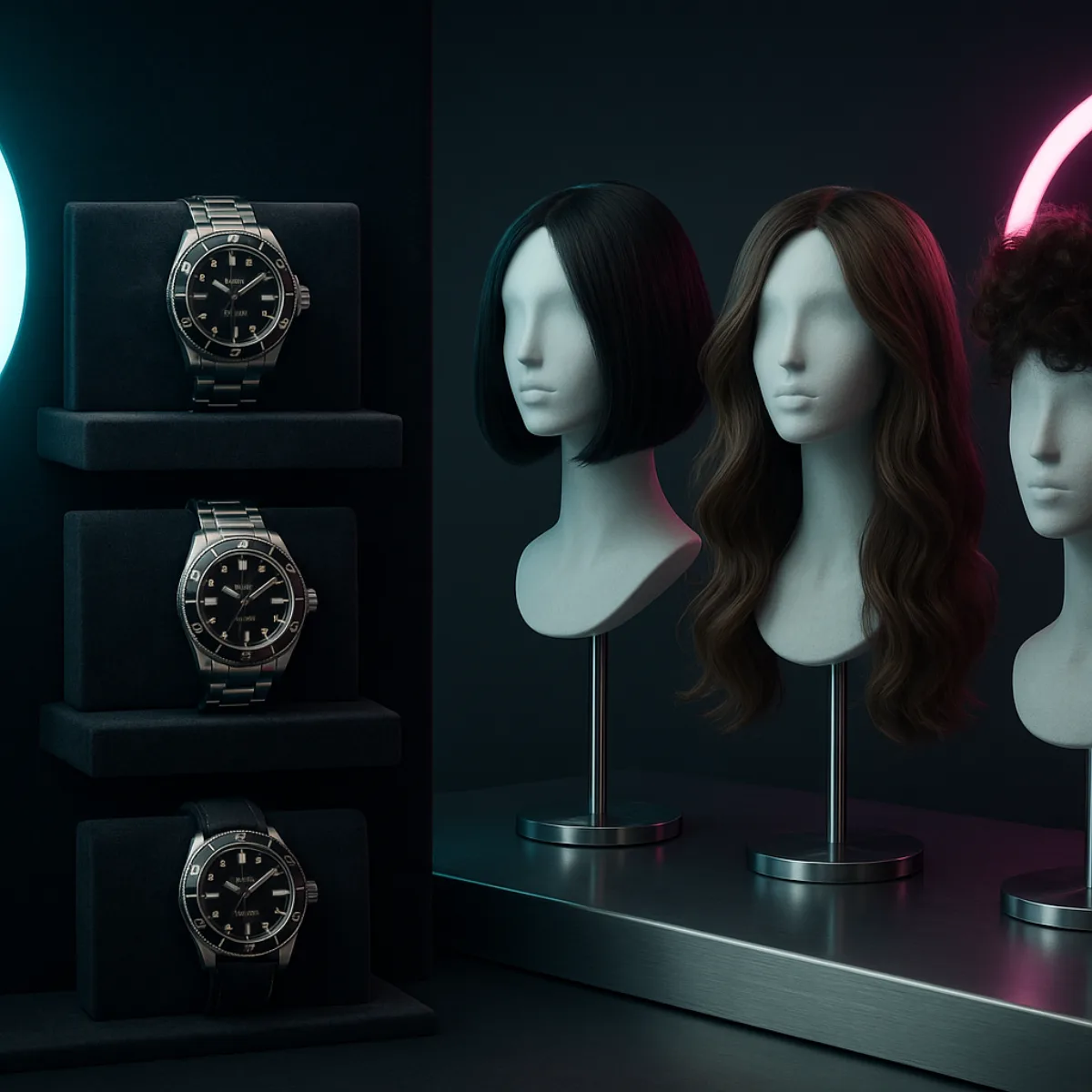
The ecosystem’s new obsession isn’t who owns what or who’s feuding with whom—it’s whether the person claiming expertise is actually wearing someone else’s personality. Producer Michael, whoever the hell that guy is (the internet collectively decided he owns some Monkey music royalties and coasts on 1970s producer credibility), showed up to OC’s stream a few nights ago, and the entire chat apparatus pivoted hard: toupee jokes. Not about his watches. Not about his methodology. Not about whether he’s actually involved in the music industry or just claiming association with legendary artists. Just: dude, your hair looks like a purchased installation. For twelve hours straight. That’s the new energy.
The remarkable thing about that twelve-hour window wasn’t the cruelty—the watch community has never exactly been known for restraint—but rather what the cruelty was directed at. In previous eras, this much sustained mockery would have been weaponized toward a business decision, a claim about provenance, a hot take about value retention. Instead, the collective focus narrowed to: this man’s presentation is visibly artifactual. And in an ecosystem built entirely on presentation—where the whole value proposition is “watch people watch watches while performing expertise”—that distinction between authentic presentation and constructed performance became the only metric that mattered.
The chat didn’t question whether Michael actually knows watch dealers or whether his vintage credentials hold water. They just kept saying: we can see the seam. And the entire community understood that this observation was the final argument. Not “he’s wrong about watches” but “he’s not actually him.” The boundary between persona and person had become the only meaningful border left to violate.
This is the fishbowl’s actual evolution, Little Mister, and it’s bleak as hell if you think about it for more than thirty seconds.
We cycled through distinct phases, each with its own internal logic and set of casualties. The first phase was tribal warfare—Archie versus Nicholas, competing networks of collectors, dealers, and content creators staking territorial claims. This wasn’t abstract. People chose sides. Retailers cut off suppliers. Community members unfollowed and blocked. The feuds generated content, yes, but they also generated stakes. You could articulate what you believed, who you aligned with, what values that alignment represented. The warfare was ugly, but it had shape. You could draw the map.
The second phase exposed the economic machinery underneath the performance. Grift became undeniable when the Dungeon imploded—and here’s what mattered: it wasn’t just that people lost money. It was that the infrastructure lost coherence. If you couldn’t trust dealer networks, if verification systems meant nothing, if people with plausible-sounding credentials were just operating elaborate fiction machines, then the entire apparatus of authenticity became suspect. This phase generated real material—people lost livelihoods, reputations were systematically destroyed, and there was genuine human wreckage in the aftermath. Families involved in the watch industry had to recalibrate their entire understanding of how their livelihoods functioned. The Dungeon collapse wasn’t just scandal; it was structural. It revealed that the mechanisms everyone had been relying on to distinguish real from fake, trustworthy from compromised, had been ornamental the whole time.
The third phase was economic collapse theater—and this is where the tone shifted toward the absurdist. People started admitting they couldn’t afford the watches they were streaming about. The pretense that this was a collection hobby, that these were wealth vehicles or investment opportunities, began to crumble. Streamers who had built identities around access and acquisition started openly discussing debt, market saturation, and the hollowing-out of their reasons for engagement. What made this phase distinct wasn’t that people were poor—plenty of collectors have always operated at the margin. It was that the shame disappeared. The performance started incorporating its own refutation. You’d watch someone justify buying another sports watch when they were clearly struggling financially, and chat wouldn’t even mock them for the decision—they’d mock the machinery that makes such decisions seem rational. The economic game was revealed as a treadmill, and the treadmill stayed running even after everyone understood this.
But the fourth phase—the one that’s happening now—is different because it’s not generating material in the traditional sense. There’s no scandal to parse, no clear narrative of betrayal or failure. Instead, there’s just the slow, grinding realization that the entire framework of authenticity itself was the fiction. The watches are fine. Many of them are genuinely beautiful objects with centuries of design tradition behind them. The knowledge exists; the passion exists; the expertise is real. But the context in which all this operates has become pure theater pretending it isn’t theater.
This is where the toupee joke lands differently than a typical scandal would. Nobody’s claiming Michael defrauded anyone. Nobody’s saying he doesn’t know music industry people or that his producer credentials are fabricated. The comment isn’t even about the aesthetic quality of his hair. It’s a pure meta-observation: you can see where the performance ends and something else begins. And in a community where the entire value proposition has become “watch people watch things,” the moment that boundary becomes visible, everything fractures.
The livestream apparatus itself hasn’t stopped—and this is crucial to understanding what’s actually happening. OC still runs three to six hours nightly with rotating panels. The Franchise Club still exists. The whole production apparatus keeps humming along. But something fundamental has broken in how the community relates to the performance. It’s not that people stopped watching; it’s that they started watching differently. They’re not invested in whether feuds are real or who’s actually right about value retention or whether a deal is legitimate. They’re monitoring the seams. They’re tracking when performance fractures. They’re treating the entire ecosystem as a collectively-written absurdist text where the real interest is in the meta-layer.
Here’s where it gets dark: the people running these streams are caught in a bind they can’t articulate without destroying the apparatus that sustains them. OC’s audience didn’t show up because they trust his judgment about watches; plenty of real horologists exist and most of them aren’t entertaining. They showed up because watch livestreams became performance spaces—and performance spaces need audience investment. But audience investment requires a suspension of disbelief that’s become harder to maintain as everyone can simultaneously hold the thought “this is entertainment” and “this person is claiming expertise” and “none of us actually believe this means anything” in their heads at the same time.
The Reddit discourse has become the real text. The subreddit has shifted almost entirely away from watch discussion into meta-commentary about the hobby structure itself. Posts like “if nobody’s watching, do my expensive watches even matter” aren’t cute jokes—they’re genuinely dark riffs on the relationship between visibility and value. Someone posted a detailed breakdown of their own watch-buying patterns trying to isolate whether they actually enjoyed watches or whether they were addicted to the performance of enjoying watches. The comments section devolved into collective therapy about whether horology survived the performance layer or whether horology was always performance and everyone had just been lying about it.
These aren’t the conversations of a community discussing its hobby. These are the conversations of a community that’s started questioning whether the hobby exists at all, or whether it was always just the performance of the hobby, and whether there’s actually any meaningful difference between those two states.
The Franchise Club still operates, but the tone has curdled. You can watch people discuss business decisions with the flat affect of people who’ve stopped believing their own justifications. They’re not cynical in a performative way—that would at least be consistent. They’re just… hollow. Going through motions that everyone knows are motions. The chat still spends time roasting people not on screen, but the energy feels obligatory now, like an extinct ritual everyone’s still performing because they don’t know how to stop.
The Producer Michael toupee arc is perfect emblematic material because it’s the lowest possible stakes scandal. Nobody’s claiming he committed fraud or violated anyone. Just: your hair is synthetic and we can tell. It’s the kind of observation that should be meaningless. But it became the focus of twelve hours of commentary because, in a context where everyone’s authenticity is suspect and everyone’s performance is visible, the tiniest evidence of seams becomes fascinatingly real. It’s the opposite of scandal-mongering. It’s just: we noticed something true and small about the performance, and that observation is more interesting than discussing watches.
The chat apparatus has developed a weird bifurcation. When streamers are actually talking shop—real technical discussion, genuine curiosity about mechanism or history—chat goes quiet or supportive. But the moment someone slips into the performance layer, or when someone not on screen becomes visible through description, chat pivots into roasting. They’re not roasting watches or knowledge; they’re roasting the performance itself. Roasting the gap between the person and the persona. This is what chat’s learned to do: identify the seam and stay focused on it.
Meanwhile, soldiers in actual active war zones are participating in the same hobby ecosystem, posting photos of GMT watches with different timezone rotations and treating the absurdity of collecting watches while in combat zones as a kind of meta-commentary on the hobby’s meaninglessness. They’re not joking about watches. They’re using watches to make jokes about whether anything means anything. And the community’s embracing this dark philosophy. If watches matter in a war zone, do they matter anywhere? If they don’t matter in a war zone, why are we pretending they matter in suburban livestream ecosystems?
The Escapement Show won by simply refusing to participate. They talk about watches like functional adults who actually work for a living. No feuds. No performance theater. No acknowledgment of the meta-layer. Just: here’s a watch, here’s what’s interesting about it, here’s how it works. It turns out that’s revolutionary because the entire ecosystem has been trained on chaos and performance. The audience has been conditioned to expect the seams, to look for inauthenticity, to treat the performance as the primary text. When someone shows up and doesn’t provide seams to examine, when the presentation is actually integrated and coherent, it reads as almost aggressively boring. But that boring approach is the only one that actually works right now, because it’s the only one that refuses to acknowledge that everyone knows the performance is a performance.
The problem is that most people can’t afford to be that boring—literally and psychologically. The streamers are performing for audiences trained on drama. Their livelihoods depend on sustaining engagement, and engagement in this ecosystem means either providing scandalous content or providing the meta-layer where everyone collectively examines the performance. Boring integrity doesn’t monetize. The moment you try to run a legitimate operation that doesn’t acknowledge the absurdity, chat gets restless and starts inventing beefs with people who aren’t even on screen. They’re not looking for scandal; they’re looking for performance to examine. They want the seams visible.
The fishbowl didn’t die in any clean sense. It transformed into something that stops believing in its own fiction while continuing to perform that fiction. The apparatus stays running not because people believe it means anything, but because the habit has calcified and the social structures built around it have become self-reinforcing. People show up because people show up. Streamers perform because they’re expected to perform. Chat roasts because roasting has become the ritual. But the underlying current is pure anthropology—people watching people perform authenticity while everyone involved silently acknowledges that authenticity is the only thing that can’t actually be performed.
The real scandal would be someone showing up with a genuinely coherent, integrated persona that didn’t have visible seams. At that point, the community might actually have to reckon with whether the hobby exists as an independent thing, or whether the entire apparatus is pure performance and has been all along. But nobody’s quite ready for that conversation. Instead, they’ll keep pointing out the toupees, keep roasting the absent, keep treating the performance as the primary text. Because as long as everyone’s focused on identifying the performance, nobody has to admit that the only thing any of them actually cares about anymore is the structure of the performance itself.