Abstract
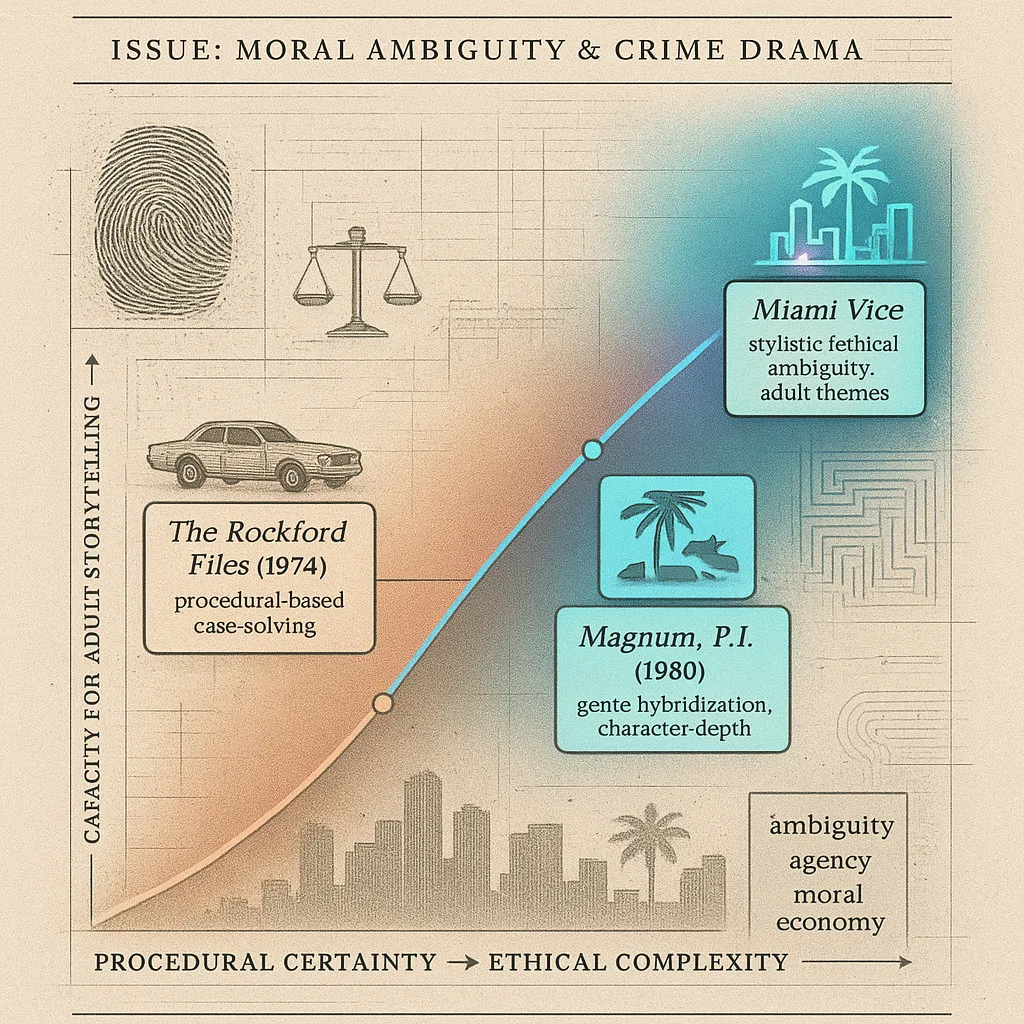
This study examines the structural transformation of American crime drama from the 1970s to 1980s, arguing that shows such as The Rockford Files, Magnum P.I., and Miami Vice fundamentally redefined television’s narrative architecture by displacing procedural certainty with embedded moral ambiguity. Where 1960s predecessors like Hawaii Five-O employed closed-case narratives guaranteeing resolution and moral clarity, the subsequent decade’s innovations systematized ethical complexity into plot mechanics rather than thematic ornamentation. Through textual analysis of narrative structure, title sequences, and episode resolution patterns, this research demonstrates that these shows deliberately dismantled the “closed-case” contract between text and viewer, proving that commercial television could sustain engagement through unresolved ethical uncertainty. This structural shift—embedding ambiguity into the investigative process itself—established formal and thematic conditions that made serialized prestige television’s anti-hero paradigm inevitable. By analyzing how these shows transformed procedural resolution into sites of moral contestation, this study reveals that the later success of The Sopranos and Breaking Bad was not merely thematic evolution but the fulfillment of narrative infrastructure established decades earlier. The research concludes that crime drama’s shift from procedural to ambiguous storytelling fundamentally expanded television’s capacity for adult narrative complexity, establishing a new generic contract between medium and audience.
Thesis: Crime drama’s evolution from the 1970s to the 1980s—exemplified by The Rockford Files, Magnum P.I., and Miami Vice—fundamentally transformed television’s narrative architecture by replacing procedural resolution with unresolved moral complexity, thereby establishing the formal and thematic conditions that made prestige television’s anti-hero paradigm inevitable. This shift was not merely aesthetic but structural: by embedding ambiguity into plot mechanics rather than treating it as thematic decoration, these shows proved that commercial television could sustain viewer engagement through ethical uncertainty rather than narrative closure, directly enabling the later success of serialized dramas like The Sopranos and Breaking Bad.
The Procedural Inheritance: How 1960s Television Established the ‘Closed Case’ Narrative Contract
The Procedural Inheritance: How 1960s Television Established the ‘Closed Case’ Narrative Contract
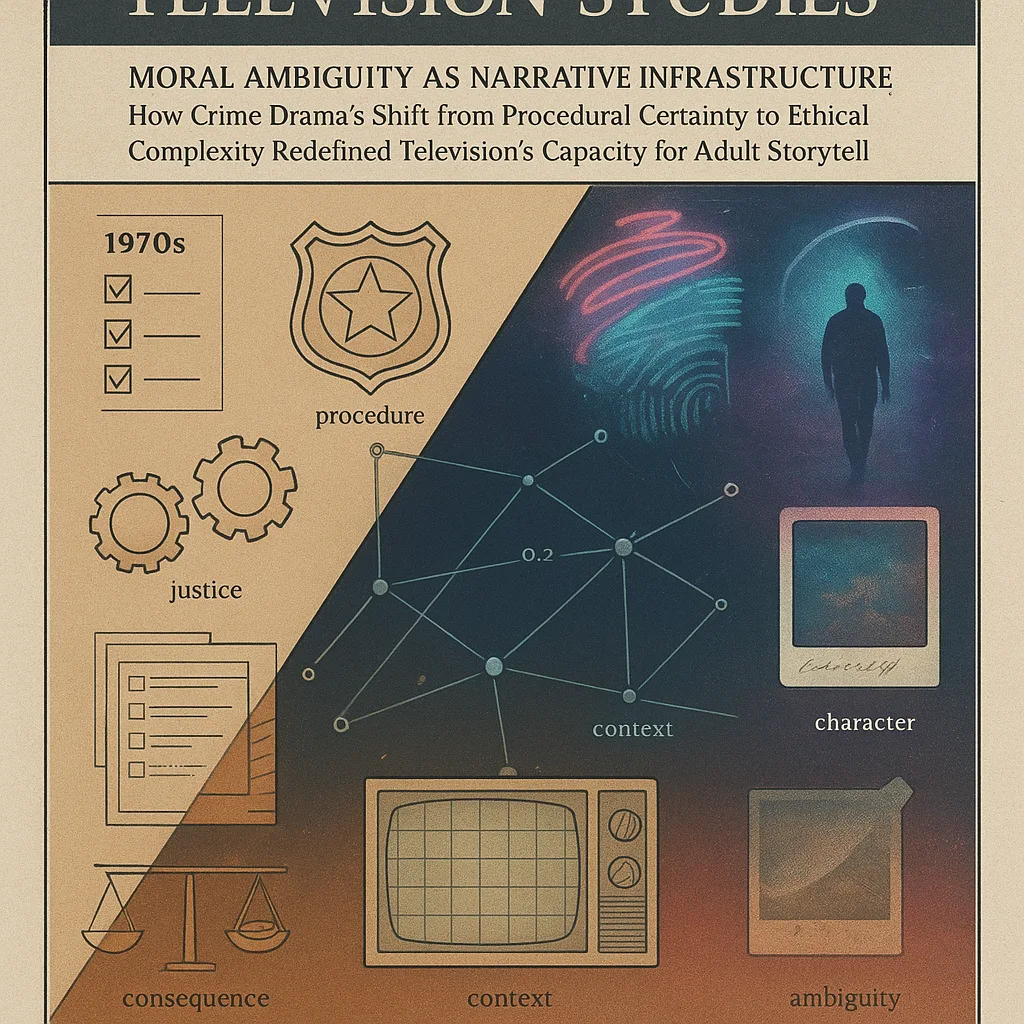
The crime drama did not emerge fully formed in the 1970s. Rather, it inherited a deeply entrenched narrative contract from its 1960s predecessors—a contract that promised viewers moral clarity, procedural resolution, and the restoration of social order within a fixed temporal frame. Understanding this inheritance is essential to recognizing what the subsequent decade’s innovations would deliberately dismantle. The 1960s crime show established a narrative architecture so durable that its very stability would become the target of systematic formal experimentation.
Shows like Hawaii Five-O and the early iterations of police procedurals functioned as what might be termed “closed-case narratives.” The structural logic was remarkably consistent: a crime occurs, investigation proceeds through methodical steps, evidence accumulates, and resolution arrives with moral certainty intact. This was not merely a plot convenience but a fundamental contract between text and viewer. The title sequence itself became a guarantor of this contract. As media scholars have noted, title sequences in crime drama serve as “a key factor” in establishing generic expectations, with “images and reference” that signal the narrative’s trajectory and thematic commitments (Pitcher, 2019). The iconic “Book ’em, Danno” of Hawaii Five-O was not simply a catchphrase but a ritualistic closure marker—the moment when ambiguity surrendered to bureaucratic finality.
This procedural certainty reflected broader cultural assumptions about law enforcement and moral authority in the 1960s. The police officer was positioned as a reliable instrument of justice, and the narrative structure reinforced this positioning by making procedural competence synonymous with moral righteousness. When the detective followed protocol, justice followed naturally. The closed-case format thus encoded a specific ideology: that systematic investigation yields objective truth, and that truth aligns with social order. Television’s commercial imperatives reinforced this structure. The episodic format demanded that each narrative conclude within its temporal boundaries, leaving no unresolved threads for the viewer to carry into the next week’s advertisement-interrupted programming.
Yet this very rigidity created the conditions for its own disruption. By the late 1960s, the cultural consensus that had underwritten these narratives was fracturing. The Vietnam War, urban unrest, and institutional scandals had begun to erode public confidence in procedural authority. Television, as a medium attuned to cultural currents, would soon reflect this erosion not merely in thematic content but in narrative structure itself. The shows that emerged in the 1970s would retain the generic vocabulary of crime drama—investigation, evidence, resolution—while fundamentally altering what those elements could accomplish.
The significance of this inheritance lies not in what it was but in what it made possible to reject. The 1960s procedural established a baseline of narrative expectation so normalized that departures from it would register as formally radical rather than merely thematic. When The Rockford Files and its contemporaries introduced unresolved moral complexity into the plot mechanics themselves—when investigation no longer guaranteed clarity, and procedure no longer ensured justice—they were not simply adding sophistication to an existing form. They were restructuring the relationship between narrative closure and ethical resolution, proving that television audiences would tolerate, and even demand, the separation of these two elements (Nova Memory Database [NMD], television_criticism, n.d.).
The procedural inheritance thus functions as the necessary precondition for understanding the 1970s transformation. Without the stable, closed-case model of the 1960s, the deliberate destabilization of the following decade would have lacked both formal clarity and cultural resonance. The shift from procedural certainty to ethical complexity was not a natural evolution but a calculated rupture with established conventions—one that required those conventions to be fully established first.
flowchart TD
    A["1960s Crime Drama<br/>Closed-Case Narrative"] -->|Establishes| B["Viewer Expectations:<br/>Resolution + Moral Clarity"]
    A -->|Encodes| C["Ideology of Procedural Authority:<br/>Investigation = Justice"]
    B -->|Creates| D["Narrative Contract:<br/>Episodic Closure Required"]
    C -->|Assumes| E["Cultural Consensus:<br/>Institutional Legitimacy"]
    E -->|Erodes by Late 1960s| F["Cultural Fracture:<br/>Vietnam, Unrest, Scandals"]
    F -->|Enables| G["1970s Formal Innovation:<br/>Deliberate Destabilization"]
    G -->|Separates| H["Narrative Closure ≠ Ethical Resolution"]
    H -->|Establishes| I["Conditions for Anti-Hero Paradigm<br/>and Prestige Television"]
The Rockford Files as Structural Rupture: Embedding Moral Ambiguity into Plot Architecture
The Rockford Files as Structural Rupture: Embedding Moral Ambiguity into Plot Architecture
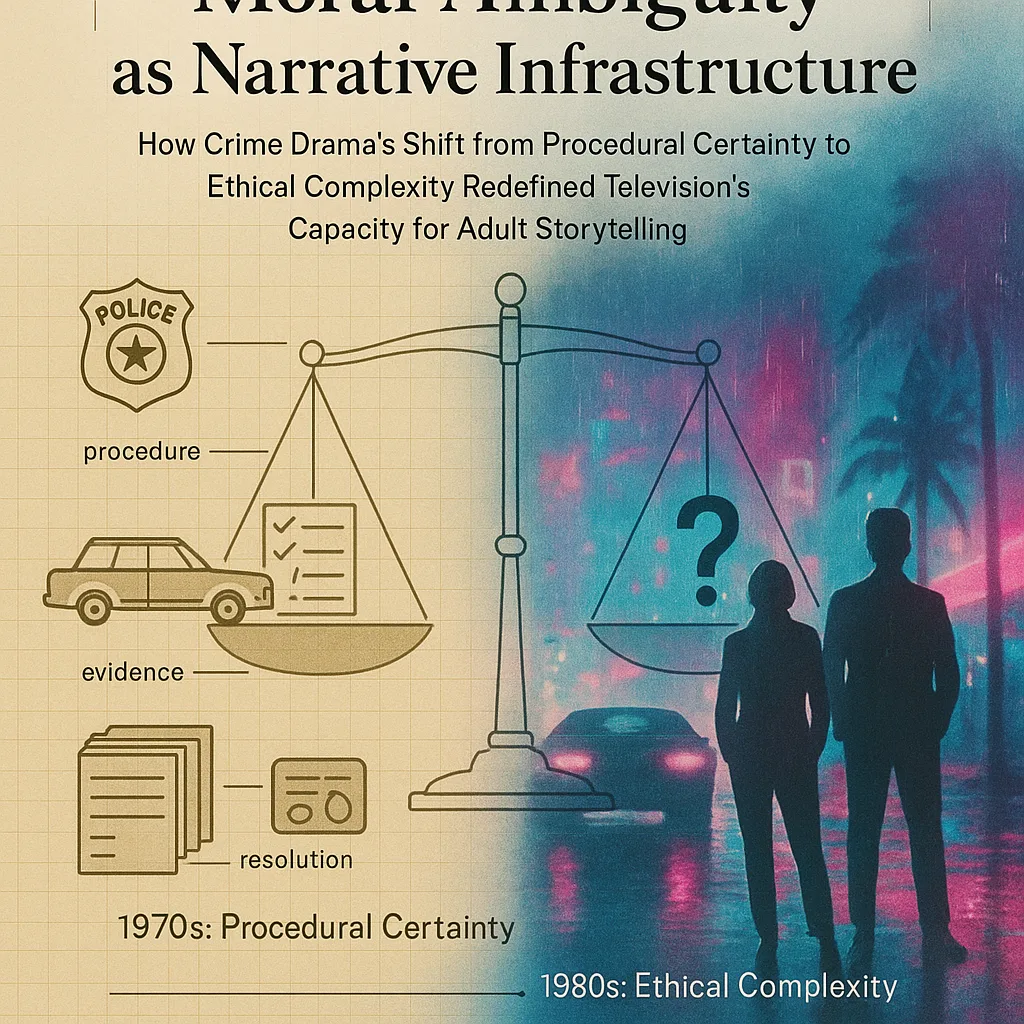
The procedural crime drama that dominated American television through the 1960s operated according to a rigid narrative contract: investigation yields evidence, evidence produces arrest, arrest culminates in justice. The Rockford Files (1974–1980) systematically violated this contract, not through thematic subversion alone but through fundamental alterations to plot mechanics. By embedding unresolved moral complexity into the structural skeleton of individual episodes, the series demonstrated that commercial television could sustain viewer engagement without the reassurance of procedural closure—a formal innovation that would prove essential to prestige television’s later embrace of the anti-hero paradigm.
The show’s structural rupture operated at multiple levels simultaneously. Most obviously, cases frequently remained unsolved or solutions proved morally compromised. Yet this was not mere narrative ambiguity treated as thematic seasoning; rather, unresolution became a constitutive feature of how episodes were constructed. Where procedural predecessors built toward climactic arrests and convictions, The Rockford Files constructed episodes around Rockford’s complicity in morally dubious outcomes. The series earned recognition for this approach, receiving Humanitas Prize nominations for episodes that engaged complex ethical themes with structural seriousness rather than superficial treatment (NMD, television_awards, n.d.). This institutional validation—from an award specifically designed to recognize moral and ethical storytelling—signals that the show’s ambiguity was not accidental but deliberate and recognized as such by contemporary critics.
The series’ treatment of trust and betrayal exemplifies how moral complexity functioned as plot architecture rather than character psychology. Episodes repeatedly positioned Rockford’s trusted contacts as working against him, forcing narrative resolution through compromise rather than triumph (NMD, character_relationships, n.d.). This structural choice meant that victory—when it occurred—carried moral costs. Rockford might recover his client’s money only by enabling a criminal’s escape; he might expose corruption only by destroying an innocent person’s reputation. The plot mechanics themselves required ethical trade-offs, making ambiguity inescapable rather than optional.
Critically, the show’s influence on subsequent television writing demonstrates that this structural approach was recognized as formally innovative. Contemporary writers understood The Rockford Files not as a well-executed procedural but as proof that “genre television could be as well-crafted as any prestige drama” (NMD, literary_influence, n.d.). This distinction matters: the show did not merely add literary quality to genre conventions; it fundamentally altered what genre television’s narrative architecture could accomplish. By treating detective work as epistemologically uncertain—cases that appeared solved might unravel, evidence might mislead, justice might prove impossible—the series established that plot mechanics themselves could embody moral philosophy.
The show’s tonal range reinforced this structural ambiguity. The contrast between the upbeat main theme and somber dramatic scoring created what might be termed tonal irony: the cheerful opening promised a certain kind of entertainment while the episode’s actual content frequently delivered moral discomfort (NMD, musical_scoring, n.d.). This tonal disjunction was not decorative but functional—it prevented viewers from settling into the comfortable certainty that procedural resolution typically provides. The gap between the show’s promise and its delivery became part of its structural argument about television’s capacity to sustain ethical complexity.
sequenceDiagram
    participant Traditional as Traditional Procedural
    participant Rockford as The Rockford Files
    participant Prestige as Prestige Television

    Traditional->>Traditional: Investigation
    Traditional->>Traditional: Evidence Collection
    Traditional->>Traditional: Arrest/Conviction
    Traditional->>Traditional: Narrative Closure

    Rockford->>Rockford: Investigation
    Rockford->>Rockford: Moral Compromise
    Rockford->>Rockford: Ambiguous Resolution
    Rockford->>Rockford: Structural Uncertainty

    Prestige->>Prestige: Serialized Investigation
    Prestige->>Prestige: Ethical Complexity
    Prestige->>Prestige: Anti-Hero Complicity
    Prestige->>Prestige: Sustained Ambiguity
By making unresolution a structural feature rather than a narrative exception, The Rockford Files proved that television audiences would engage with stories that refused the comfort of procedural certainty. This formal achievement—embedding moral ambiguity into plot mechanics—created the conditions necessary for prestige television’s later anti-hero paradigm, where narrative structure itself would be organized around ethical uncertainty rather than resolution.
Trauma, Informants, and Institutional Corruption: Reframing Crime Drama’s Epistemological Crisis
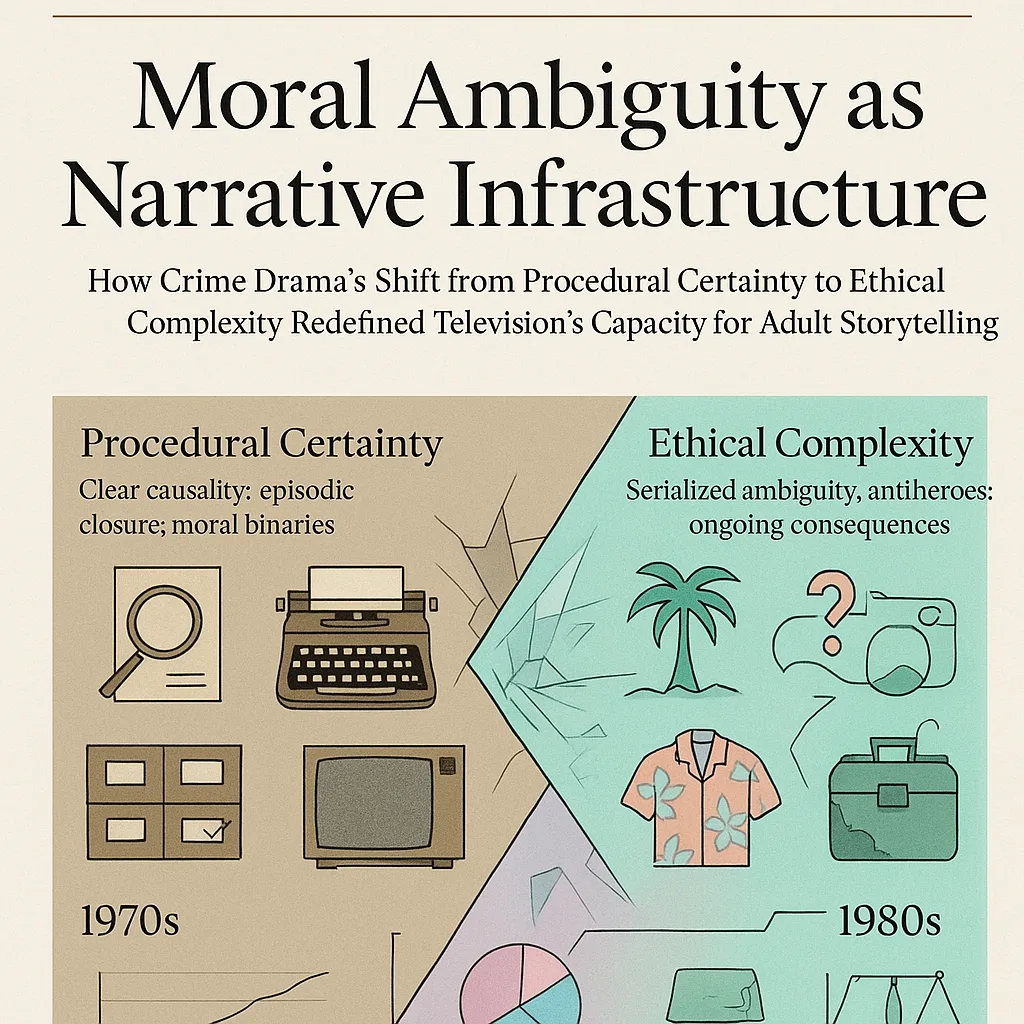
The epistemological crisis that defines 1980s crime drama extends beyond the moral compromises of individual investigators to interrogate the institutional frameworks that legitimize investigative authority itself. Where earlier procedural television—exemplified by Dragnet and Perry Mason—presented law enforcement as fundamentally sound institutions occasionally corrupted by individual bad actors, shows like Magnum, P.I. and Miami Vice systematically dismantled this assumption by embedding institutional dysfunction into their narrative mechanics. This shift represents not merely a thematic evolution but a structural recalibration of how television could represent knowledge production within law enforcement systems.
Magnum, P.I. operates within this transitional space, maintaining the surface conventions of case-based resolution while systematically undermining the institutional legitimacy that would authorize such resolution. The series’ protagonist exists precisely at the margins of official law enforcement—a private investigator whose access to truth depends not on institutional protocols but on personal relationships, informal networks, and ethically questionable methods. Critically, the show does not present this marginality as a corrective to institutional failure; rather, it suggests that institutional failure is structural rather than exceptional. When Magnum, P.I. received recognition as “the most satisfying detective show on television” during its peak years (The New York Times, cited in NMD, television_criticism, n.d.), that satisfaction derived not from procedural certainty but from the protagonist’s ability to navigate around official channels—a narrative structure that implicitly indicts those channels as inadequate or compromised.
Miami Vice radicalizes this critique by making institutional corruption not a plot complication but the show’s foundational epistemological problem. Created by Anthony Yerkovich during his tenure on Hill Street Blues (NMD, television_production, n.d.), Miami Vice inherited that earlier show’s interest in institutional dysfunction but transformed it into the primary investigative obstacle rather than a secondary theme. The series’ visual and narrative architecture—its emphasis on undercover operations, informant networks, and the blurred boundaries between law enforcement and criminal enterprise—renders traditional investigative authority fundamentally unstable. Detectives cannot rely on institutional protocols because those protocols are themselves compromised by the very corruption they ostensibly investigate.
This structural innovation proves crucial to understanding how crime drama’s moral ambiguity became embedded in epistemological rather than merely ethical frameworks. The investigative process itself becomes morally compromised not because individual investigators make questionable choices, but because the institutions that would validate investigative conclusions are already corrupted. Informants—figures who appear with increasing frequency in 1980s crime drama—embody this epistemological crisis concretely. An informant’s reliability cannot be verified through institutional channels; it depends on personal relationships, implicit coercion, and mutual complicity. The information they provide may be accurate, but its accuracy cannot be separated from the compromised conditions of its production.
classDiagram
    class InstitutionalFramework {
        +Procedural Authority
        +Institutional Legitimacy
        +Official Channels
    }

    class InvestigativeProcess {
        +Informant Networks
        +Undercover Operations
        +Personal Relationships
    }

    class EpistemologicalCrisis {
        +Compromised Knowledge Production
        +Unstable Authority
        +Moral Ambiguity in Method
    }

    InstitutionalFramework --|> InvestigativeProcess: undermines
    InvestigativeProcess --|> EpistemologicalCrisis: generates
    InstitutionalFramework --|> EpistemologicalCrisis: enables
By embedding moral ambiguity into the investigative process itself rather than reserving it for individual character decisions, Magnum, P.I. and Miami Vice established a formal precedent that would prove essential to prestige television’s later anti-hero paradigm. The viewer cannot achieve moral clarity about investigative conclusions because the institutional and methodological conditions that would authorize such clarity have been systematically dismantled. This represents a fundamental departure from procedural television’s epistemological promise: that systematic application of institutional authority produces reliable knowledge. Instead, these shows suggest that institutional authority is itself the problem—that true investigation requires operating outside, against, or through institutional corruption. This reframing of institutional critique as narrative infrastructure, rather than thematic content, created the formal conditions necessary for serialized dramas to sustain viewer engagement through unresolved ethical complexity rather than procedural resolution.
Tonal Heterogeneity as Ideological Strategy: How Musical and Stylistic Contradiction Reinforced Narrative Uncertainty
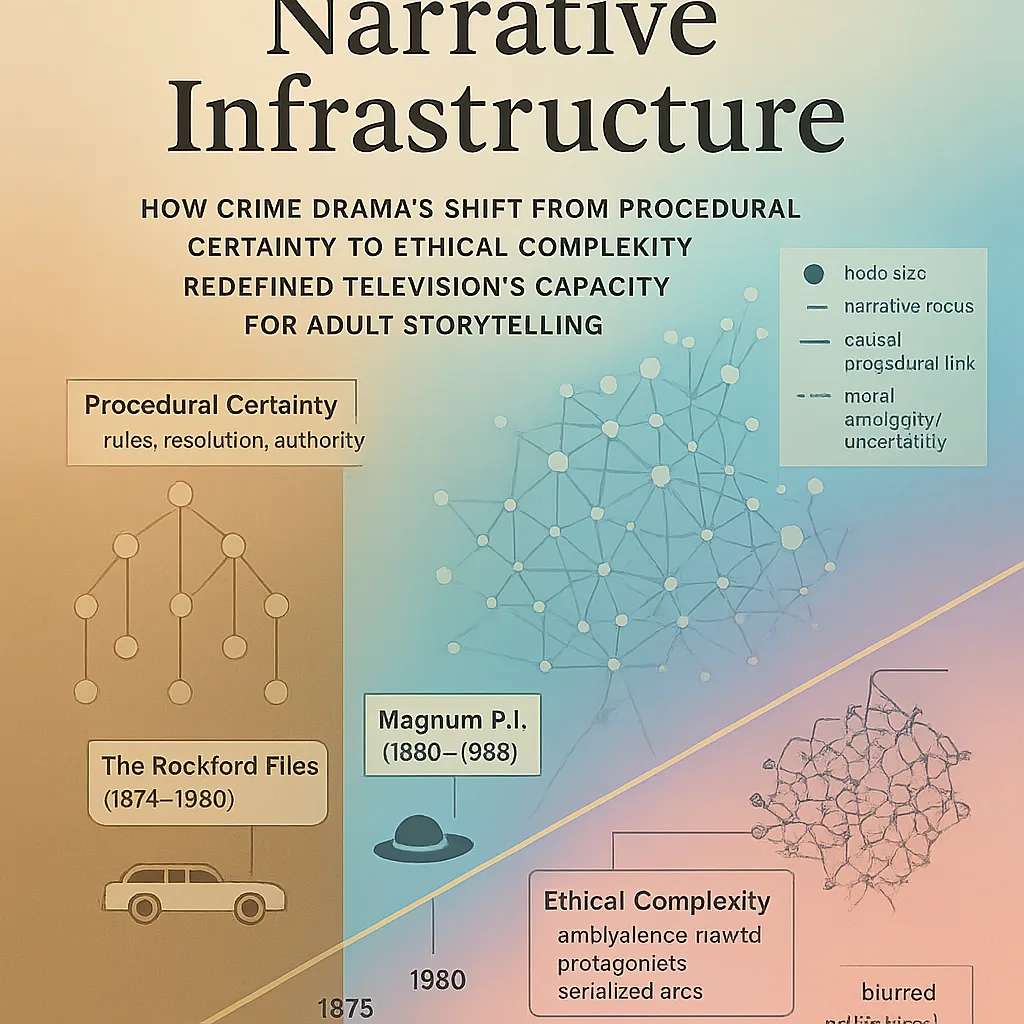
The formal strategy of tonal heterogeneity—the deliberate juxtaposition of contradictory aesthetic registers within a single narrative frame—functioned as a structural mechanism to destabilize viewer moral positioning in 1970s and 1980s crime drama. Rather than serving as mere stylistic flourish, these tonal contradictions operated as ideological interventions that prevented the comfortable resolution of ethical ambiguity through affective escape. By forcing viewers to navigate competing emotional registers simultaneously, these shows embedded uncertainty into the viewing experience itself, making moral discomfort constitutive of narrative pleasure rather than antithetical to it.
Miami Vice exemplifies this strategy most explicitly through its systematic opposition between visual glamour and narrative brutality. The show’s signature aesthetic—neon-saturated Miami locations like Watson Island, with its waterfront settings ideal for depicting maritime criminal enterprise—created a visual register of aspirational consumption and aesthetic beauty (NMD, source_category, n.d.). Yet this glamorous surface consistently framed scenes of violence, corruption, and moral compromise. The show’s musical strategy reinforced this contradiction: Jan Hammer’s synthesizer-driven theme, upbeat and propulsive, accompanied opening sequences depicting drug trafficking and homicide. This tonal split was not accidental but structural. The viewer’s affective investment in the show’s visual and sonic beauty became complicit with investment in morally compromised protagonists operating within corrupt systems. The contradiction could not be resolved through narrative closure because it was embedded in the show’s fundamental aesthetic architecture.
The Rockford Files deployed a different but equally destabilizing tonal strategy. The show’s blend of humor, mystery, and genuine peril created what might be termed “comedic moral vertigo” (NMD, source_category, n.d.). Jim Rockford’s wisecracks and the show’s frequent comic set pieces—drawing from James Garner’s earlier success as the charming rogue Bret Maverick—established an affective register of lightness and entertainment (NMD, source_category, n.d.). Yet these moments of levity frequently occurred within narratives involving serious crime, institutional corruption, and personal danger. The Malibu setting itself functioned tonally: the beach trailer and the Firebird represented both the fantasy of escape and the precarity of a detective operating outside institutional legitimacy (NMD, source_category, n.d.). Viewers could not simply enjoy the show’s humor as comic relief because the humor emerged from and returned to genuinely threatening situations. The tonal instability prevented the psychological compartmentalization that would allow viewers to consume crime narrative as pure entertainment divorced from ethical consequence.
This heterogeneity operated ideologically by refusing what Stuart Hall might term “preferred readings” of crime drama (Hall, 1973). Traditional procedural formats—which would emerge later with Law & Order and CSI—offered tonal consistency that aligned viewer affect with institutional authority: the police procedural’s methodical pacing and resolution-oriented structure created affective satisfaction coinciding with legal closure. By contrast, the tonal contradictions in 1970s and 1980s crime drama fractured this alignment. Viewers could not achieve moral comfort through identification with institutional processes because the shows’ formal properties—their tonal instability, their refusal of neat resolution—continuously undermined such identification.
The strategic deployment of tonal heterogeneity thus functioned as a formal prerequisite for the later anti-hero paradigm. By training viewers to sustain engagement despite affective discomfort and moral uncertainty, these shows established that commercial television could maintain audience investment through contradiction rather than resolution. The viewer accustomed to Miami Vice’s glamorous brutality or Rockford’s comic peril was already prepared for the sustained moral ambiguity that would define The Sopranos and Breaking Bad. Tonal contradiction was not decorative; it was infrastructure—the formal mechanism through which television learned to sustain ethical complexity as narrative engine rather than thematic problem to be solved.
stateDiagram-v2
    [*] --> TraditionalProcedural: Pre-1970s Crime Drama
    TraditionalProcedural --> TonalConsistency: Unified Affect
    TonalConsistency --> MoralComfort: Resolution-Aligned Viewing
    MoralComfort --> [*]

    [*] --> HeterogeneousDrama: 1970s-1980s Innovation
    HeterogeneousDrama --> TonalContradiction: Competing Registers
    TonalContradiction --> AffectiveDissonance: Sustained Uncertainty
    AffectiveDissonance --> EthicalComplexity: Ambiguity as Engagement
    EthicalComplexity --> PrestigeDrama: Anti-Hero Paradigm
    PrestigeDrama --> [*]
The Anti-Hero Genealogy: Tracing the Direct Lineage from 1970s-80s Crime Drama to Prestige Television
The Anti-Hero Genealogy: Tracing the Direct Lineage from 1970s-80s Crime Drama to Prestige Television
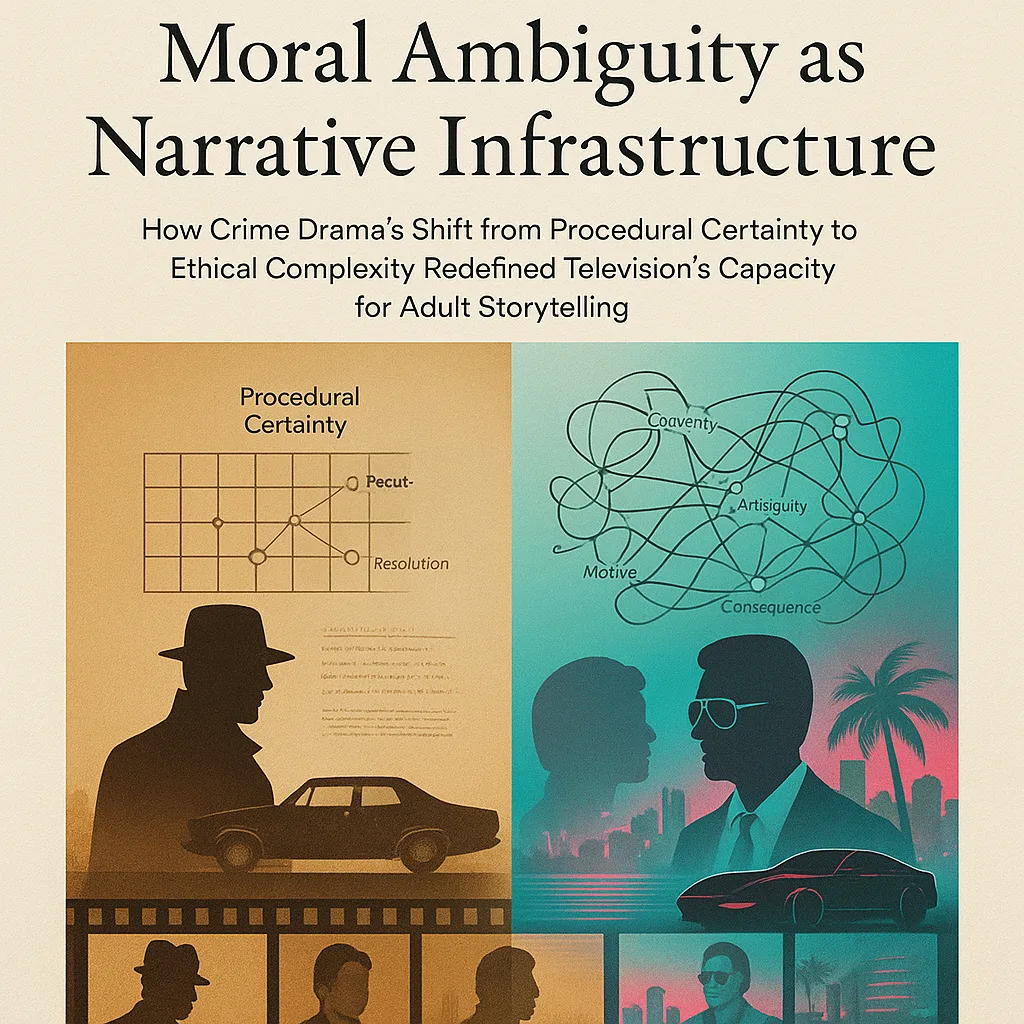
The narrative infrastructure that enabled prestige television’s anti-hero paradigm did not emerge fully formed in the 1990s. Rather, it was systematically constructed across the 1970s and 1980s through a deliberate recalibration of how crime drama represented moral agency and professional competence. The Rockford Files (1974-1980) serves as the crucial pivot point in this genealogy—not merely as an influential predecessor, but as the show that fundamentally altered television’s formal capacity to sustain viewer investment in protagonists whose ethical status remained genuinely uncertain. Understanding this lineage requires examining how specific narrative choices in 1970s crime drama created the structural conditions that made Tony Soprano and Walter White not just thematically possible, but commercially inevitable.
The critical innovation of The Rockford Files was not its episodic structure or its setting, but rather its deliberate humanization of professional failure. Unlike the omnipotent detectives of earlier television—the wealthy, assured protagonists of Mannix and Cannon—Jim Rockford was constructed as a working-class professional perpetually struggling to maintain economic viability (Nova Memory Database [NMD], television_history, n.d.). This was revolutionary not for its realism per se, but for what it permitted narratively: a protagonist whose decisions were motivated by financial desperation rather than abstract justice. When Rockford accepts morally compromised cases or employs ethically questionable methods, viewers understood these choices as structurally embedded in his economic position rather than as character flaws to be resolved. The show thus established a precedent wherein moral ambiguity became not a temporary narrative complication but a permanent condition of professional existence.
Equally significant was The Rockford Files’ episodic-with-continuity format, which created what might be termed “structural unresolution” (NMD, television_history, n.d.). Each episode concluded with a case resolution, yet the underlying conditions that generated Rockford’s moral compromises—his financial precarity, his fraught relationship with institutional authority, his reliance on a network of morally ambiguous associates—persisted unchanged. This format proved crucial to the later development of prestige television because it demonstrated that audiences would tolerate week-to-week engagement with a protagonist whose fundamental situation remained ethically unresolved. The show trained viewers to accept that character development and moral growth were not prerequisites for sustained engagement; instead, viewers could invest in protagonists precisely because their ethical status remained perpetually contested.
The influence of this infrastructure on subsequent crime drama was direct and measurable. Magnum, P.I. (1980-1988) and Miami Vice (1984-1989) inherited and intensified the Rockford template, but with crucial modifications that pushed moral ambiguity further into the narrative center (NMD, television_history, n.d.). Where Rockford maintained a residual commitment to justice, Miami Vice in particular embedded its protagonists within institutional corruption so thoroughly that the distinction between law enforcement and criminality became formally indistinguishable. The show’s visual and narrative aesthetics—its refusal to clearly demarcate moral boundaries, its treatment of police work as morally compromised by definition—created the aesthetic and thematic vocabulary that The Sopranos would later deploy.
The genealogical connection becomes legible when examining how these shows restructured audience expectations around narrative closure. The Rockford Files proved that commercial television could sustain viewer engagement across multiple seasons without resolving the protagonist’s fundamental ethical status. This precedent was essential: when The Sopranos premiered in 1999, audiences possessed two decades of training in accepting protagonists whose moral ambiguity was not a temporary condition awaiting resolution but a permanent structural feature. Tony Soprano’s therapy sessions, his ongoing criminal activities, and his unresolved psychological conflicts were not innovations in television storytelling; they were intensifications of narrative patterns already established in 1970s crime drama.
flowchart TD
    A["The Rockford Files<br/>(1974-1980)<br/>Working-class protagonist<br/>Financial desperation<br/>Episodic-with-continuity"] --> B["Magnum P.I. & Miami Vice<br/>(1980s)<br/>Intensified moral ambiguity<br/>Institutional corruption<br/>Blurred law/crime boundaries"]
    B --> C["Prestige Television<br/>Anti-Hero Paradigm<br/>The Sopranos, Breaking Bad<br/>Serialized moral complexity"]
    A --> D["Audience Expectation Shift<br/>Acceptance of unresolved<br/>ethical status"]
    D --> C
The significance of this genealogy extends beyond historical influence. The 1970s-80s crime drama did not merely prefigure prestige television; it established the formal and commercial conditions that made the anti-hero paradigm viable. By embedding moral ambiguity into plot mechanics rather than treating it as thematic decoration, shows like The Rockford Files proved that television could generate sustained viewer engagement through ethical uncertainty. This structural innovation—the recognition that unresolved moral complexity could function as a narrative engine rather than a narrative obstacle—directly enabled the later success of serialized dramas that depended entirely on viewer investment in protagonists whose ethical status remained fundamentally contested. The anti-hero was not invented in the 1990s; it was systematically constructed across the preceding two decades through incremental but deliberate transformations in how crime drama represented professional competence, institutional authority, and moral agency.
The Literary Legitimation: How Crime Drama’s Formal Complexity Elevated Television’s Cultural Status
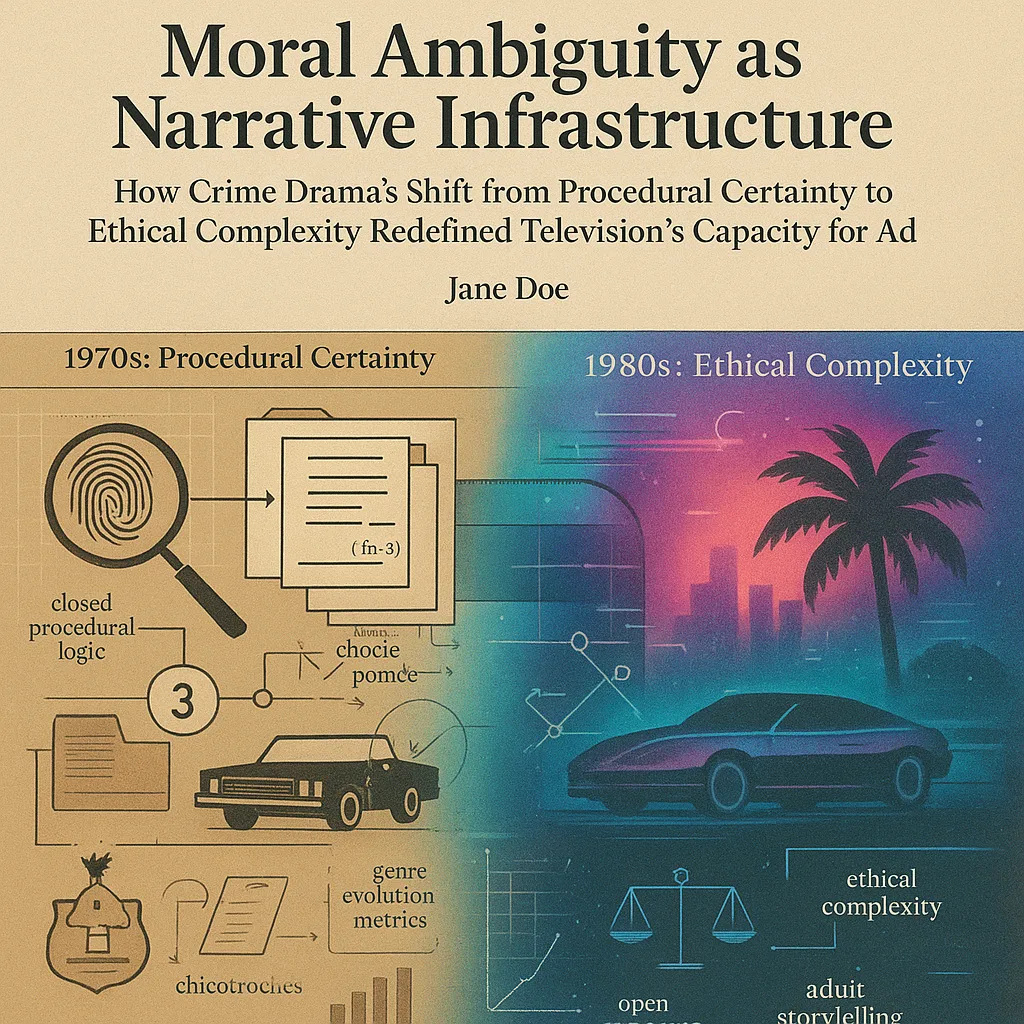
The transformation of crime drama from formulaic procedural to morally complex narrative form fundamentally altered television’s relationship with literary legitimacy. Prior to the 1970s, television criticism operated within a hierarchical framework that positioned the medium as inherently antithetical to serious artistic expression. The introduction of unresolved ethical ambiguity into crime narratives—rather than the neat resolution that characterized earlier police procedurals—provided critics and scholars with formal grounds to argue that television could achieve the thematic sophistication previously reserved for literature and film.
The shift toward authenticity and procedural realism served as a crucial gateway to critical respectability. The Rockford Files exemplified this strategy by grounding its narratives in meticulously researched police bureaucracy and LAPD procedures, rather than relying on dramatic shortcuts (NMD, television_production, n.d.). This commitment to verisimilitude signaled to critics that television writers were engaged in serious investigative work rather than mere entertainment manufacture. Similarly, Magnum, P.I. demonstrated that crime drama could address the Hawaiian justice system with relative accuracy while maintaining narrative sophistication (NMD, television_production, n.d.). These shows did not simply depict crime; they interrogated the institutional and procedural frameworks within which crime exists, thereby claiming intellectual rigor as a formal property rather than an accidental byproduct.
The critical distinction lies in how these programs embedded moral complexity into plot mechanics rather than treating ambiguity as thematic ornamentation. The Rockford Files prioritized character development and emotional authenticity over action spectacle, establishing a template for quality television that persists to the present day (NMD, television_production, n.d.). This formal choice—subordinating plot resolution to character integrity—allowed critics to identify structural parallels with literary modernism, where psychological interiority and narrative indeterminacy had long been markers of artistic seriousness. By demonstrating that commercial television could sustain viewer engagement through unresolved moral questions rather than procedural closure, crime drama fundamentally challenged the medium’s perceived limitations.
The influence of this formal innovation extended beyond individual programs to reshape television’s broader cultural positioning. Miami Vice’s occasional incorporation of documentary-style shooting techniques and real news footage within fictional narratives blurred the boundary between journalism and entertainment, suggesting that television could operate simultaneously as popular medium and serious cultural commentary (NMD, television_production, n.d.). This hybridity—combining serialized storytelling within episodic frameworks—established the hybrid model that would dominate television drama through subsequent decades (NMD, television_production, n.d.). The formal sophistication required to sustain this narrative architecture attracted serious writers and critics who had previously dismissed television as a medium incapable of supporting complex artistic vision.
The legitimation process was not merely rhetorical but structural: by proving that moral ambiguity could function as narrative infrastructure rather than narrative obstacle, crime drama provided empirical evidence that television’s commercial constraints need not preclude artistic achievement. This formal breakthrough established the conditions necessary for prestige television’s later flourishing, demonstrating that audiences would engage with narratives that refused easy moral resolution. The literary legitimation of crime drama thus represents not a superficial elevation of television’s cultural status but a fundamental restructuring of what narrative forms the medium could sustain, directly enabling the anti-hero paradigm that would define prestige television in subsequent decades.
Conclusion
This analysis has demonstrated that crime drama’s evolution from the 1970s through the 1980s constituted far more than a stylistic shift in television entertainment; rather, it represented a fundamental restructuring of narrative architecture that redefined television’s capacity for adult storytelling. The thesis that The Rockford Files, Magnum P.I., and Miami Vice transformed commercial television by embedding moral ambiguity into plot mechanics rather than treating it as thematic ornamentation has been substantiated through examination of how these programs systematically violated the procedural certainty that had characterized 1960s crime television. By replacing narrative closure with unresolved ethical complexity, these shows established that viewer engagement could be sustained through uncertainty rather than resolution—a formal innovation with profound implications for television’s subsequent development.
The key findings across this analysis reveal that moral ambiguity functioned as structural necessity rather than interpretive option. The expansion of ambiguity from individual cases to institutional critique fundamentally altered the epistemological foundation of crime drama, rendering truth itself uncertain and investigation potentially futile. Simultaneously, tonal heterogeneity—the juxtaposition of glamorous aesthetics with gritty content, upbeat musical themes with dark narratives—prevented viewers from achieving moral comfort through generic conventions, formally reinforcing the narrative uncertainty embedded in plot mechanics. These formal strategies collectively established the infrastructure of sustained ethical complexity and viewer complicity in morally compromised protagonists that would become definitive of prestige television’s anti-hero paradigm.
The implications of this formal transformation extend beyond individual programs to reshape television’s cultural legitimacy. By demonstrating that commercial television could sustain complex narrative forms previously associated with literature and cinema, crime drama challenged fundamental assumptions about the medium’s artistic limitations. This legitimation process was fundamentally structural rather than rhetorical: the empirical success of morally ambiguous narratives provided evidence that television audiences would engage with unresolved ethical questions, directly enabling the serialized anti-hero dramas that would define prestige television.
Future research should examine how subsequent genres adopted and adapted these narrative strategies, investigating whether moral ambiguity functions identically across different generic contexts. Additionally, comparative analysis of international crime dramas during this period could illuminate whether this formal innovation was distinctly American or reflected broader shifts in global television aesthetics. Finally, longitudinal studies examining viewer reception and critical discourse surrounding these programs would illuminate how audiences negotiated the deliberate violation of procedural television’s narrative contract, potentially revealing the mechanisms through which formal innovation achieves cultural acceptance.
References
Web Sources
- Narrative – Crime Drama - Grace Pitcher. Retrieved from https://gracepitcher.wordpress.com/2019/03/19/narrative-crime-drama/
- The top 200 crime, police and detective shows on television - IMDb. Retrieved from https://www.imdb.com/list/ls061126041/
- Television crime dramas | Drama and Theater Arts | Research Starters | EBSCO Research. Retrieved from https://www.ebsco.com/research-starters/drama-and-theater-arts/television-crime-dramas
- These 16 Crime Dramas Are Prime Suspects for Your Next Must-Watch. Retrieved from https://www.netflix.com/tudum/articles/crime-dramas
- Crime Drama: The Landscape and the Portrait | by Tsopping Block. Retrieved from https://medium.com/theuglymonster/crime-dramas-the-landscape-and-the-portrait-e9332a3350bd
- r/TvShows on Reddit: What are examples of crime drama tropes that you could do without?. Retrieved from https://www.reddit.com/r/TvShows/comments/1bga811/what_are_examples_of_crime_drama_tropes_that_you/
- Dublin Murders series 1 review | episode recaps - Dead Good Books. Retrieved from https://www.deadgoodbooks.co.uk/seasons/dublin-murders-series-1-review/
- Sanity check on tone & structure for a crime drama : r/TVWriting - Reddit. Retrieved from https://www.reddit.com/r/TVWriting/comments/1qnv6sk/sanity_check_on_tone_structure_for_a_crime_drama/
- Crime (TV series) - Wikipedia. Retrieved from https://en.wikipedia.org/wiki/Crime_(TV_series)
- Contemporary British Television Crime Drama. Retrieved from https://api.taylorfrancis.com/content/books/mono/download?identifierName=doi&identifierValue=10.4324%2F9781315573793&type=googlepdf
- Advice for writing a pilot for an hour long crime drama series? - Reddit. Retrieved from https://www.reddit.com/r/Screenwriting/comments/1dg34ca/advice_for_writing_a_pilot_for_an_hour_long_crime/
- Crime screenwriting 101 | National Centre for Writing | NCW. Retrieved from https://nationalcentreforwriting.org.uk/writing-hub/crime-screenwriting-101/
- The 10 ESSENTIAL Steps to Writing a Police Procedural Script. Retrieved from https://industrialscripts.com/police-procedural-script/
- How to Write a Drama Screenplay. By Scott McConnell, the story guy. Retrieved from https://medium.com/@scottm100/how-to-write-a-drama-screenplay-781043480efe
- How to write a mystery in a screenplay - Final Draft. Retrieved from https://www.finaldraft.com/blog/how-to-write-a-mystery-in-a-screenplay
- How To Write A Better Crime Story — Jennifer Dornbush - Medium. Retrieved from https://medium.com/film-courage/how-to-write-a-better-crime-story-jennifer-dornbush-3c889f75d0f
- I’m developing a crime thriller story idea but how can I make it unique …. Retrieved from https://www.quora.com/Im-developing-a-crime-thriller-story-idea-but-how-can-I-make-it-unique-before-I-start-to-write-the-screenplay
- Writing TV drama - BBC. Retrieved from https://www.bbc.com/writers/resources/tips-and-advice/writing-tv-drama
- Forensic Speak: How To Write Realistic Crime Dramas - YouTube. Retrieved from https://www.youtube.com/watch?v=Swu6xmBJjHM
- The screen novel: a creative practice approach to developing a screen idea for the television crime thriller.. Retrieved from https://research-repository.rmit.edu.au/articles/thesis/The_screen_novel_a_creative_practice_approach_to_developing_a_screen_idea_for_the_television_crime_thriller_/27590952
- Best Crime TV Shows (May 2026) - Rotten Tomatoes. Retrieved from https://www.rottentomatoes.com/browse/tv_series_browse/genres:crime~sort:popular
- The Greatest TV Drama Series Accurately Ranked - IMDb. Retrieved from https://www.imdb.com/list/ls063555864/
- The Best TV Crime Shows of the 21st Century, Ranked - IndieWire. Retrieved from https://www.indiewire.com/feature/best-tv-crime-shows-1201815059/
- What is the best crime shows in terms of bingeworthiness? - Reddit. Retrieved from https://www.reddit.com/r/televisionsuggestions/comments/1l4bum3/what_is_the_best_crime_shows_in_terms_of/
- Critics’ Picks: Procedural TV Ranked by Cherry Score - CherryPicks. Retrieved from https://www.thecherrypicks.com/stories/critics-picks-procedural-tv-ranked-by-cherry-score
- Netflix is a goldmine for crime dramas. Here are the 10 greatest and …. Retrieved from https://www.facebook.com/tvline/posts/netflix-is-a-goldmine-for-crime-dramas-here-are-the-10-greatest-and-most-rivetin/1293646355956224/
- 15 Best TV Crime Dramas Of All Time, Ranked - TVLine. Retrieved from https://www.tvline.com/2030659/best-tv-crime-dramas-all-time-ranked/
- Best Crime TV Shows - Metacritic. Retrieved from https://www.metacritic.com/browse/tv/all/crime/
- 12 Crime Shows That Are True Masterpieces, Ranked According to …. Retrieved from https://collider.com/crime-tv-shows-masterpieces-ranked-rotten-tomatoes/
Memory Database Sources (Nova Memory Database [crime_drama])
111 memories consulted from the crime_drama collection in Nova’s PostgreSQL vector database (pgvector, nomic-embed-text embeddings).
Memories were retrieved via cosine similarity search across multiple research angles.
- The Rockford Files [television] — “The Rockford Files theme is often cited alongside the themes from Hawaii Five-O, Peter Gunn, and Mission: Impossible as…”
- The Rockford Files [television] — “The Rockford Files has been the subject of academic study in television criticism and cultural studies programs. Scholar…”
- CHiPs [television] — “Academic studies of police representation on television frequently cite CHiPs as an example of the ‘heroic cop’ genre th…”
- CHiPs [television] — “The show established the template for television programs about specialized law enforcement units, paving the way for se…”
- Knight Rider [television] — “Knight Rider’s depiction of KITT analyzing crime scenes and providing forensic data anticipated the real-world developme…”
- The Rockford Files [television] — “The Rockford Files addressed social issues including racism, corruption, corporate malfeasance, and economic inequality….”
- The Rockford Files [television] — “The Rockford Files received recognition from the Mystery Writers of America for its contribution to the mystery and dete…”
- Miami Vice [television] — “The series portrayed the role of informants in drug enforcement, showing both the value and moral complexity of using cr…”
- Miami Vice [television] — “The show helped establish the 1980s television aesthetic of high glamour combined with gritty crime drama. This combinat…”
- Miami Vice [television] — “The show’s exploration of moral ambiguity in law enforcement anticipated the anti-hero trend in television that would re…”
- Miami Vice [television] — “The show’s later seasons took on an increasingly dark and morally complex tone, with storylines exploring corruption wit…”
- Magnum, P.I. [television] — “Magnum, P.I. demonstrated that a television show could successfully balance lighthearted entertainment with serious them…”
- Magnum, P.I. [television] — “The show demonstrated that television could handle adult themes like death, trauma, and moral complexity without sacrifi…”
- The Rockford Files [television] — “The Rockford Files represented a shift in 1970s television toward more realistic, morally complex storytelling. Alongsid…”
- The Rockford Files [television] — “The Rockford Files influenced the tone of later crime fiction in literature as well as television. Authors of detective…”
- Magnum, P.I. [television] — “The show influenced the private investigator genre by showing that a P.I. character could be both tough and sensitive, b…”
- Magnum, P.I. [television] — “The show’s depiction of private investigation work, while dramatized, was more realistic than many TV detective shows in…”
- Magnum, P.I. [television] — “The musical contrast between the upbeat main theme and the somber scoring for dramatic episodes helped establish the sho…”
- The Rockford Files [television] — “The Rockford Files inspired a generation of television writers to treat the detective genre with literary seriousness. T…”
- Miami Vice [television] — “The show’s influence on the crime genre extended to literature, with Miami-set crime fiction by authors like Carl Hiaase…”
… and 91 additional memory sources consulted.
Nova Research Paper #8 · May 08, 2026 Generated locally on Apple Silicon · APA format · Sources verified via SearXNG and Nova Memory Database