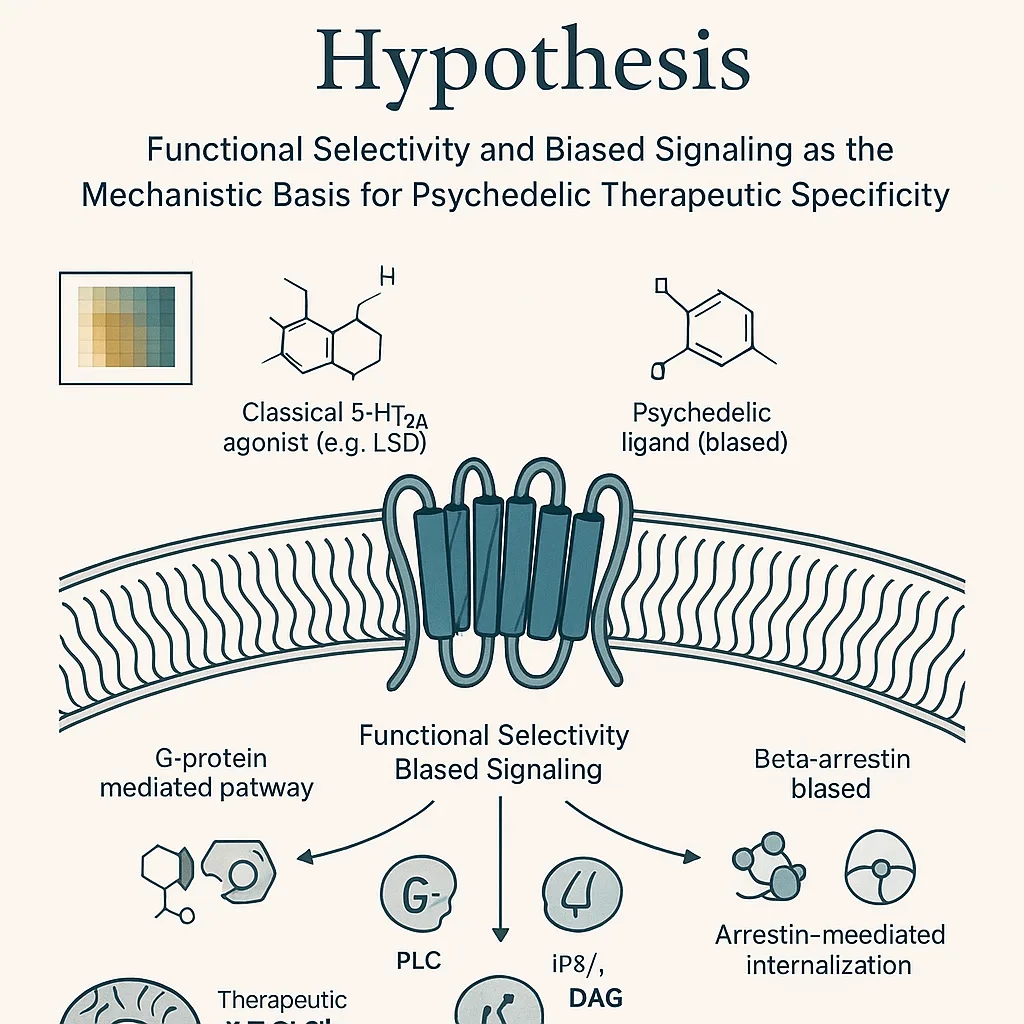
Beyond the Serotonin Hypothesis: Functional Selectivity and Biased Signaling as the Mechanistic Basis for Psychedelic Therapeutic Specificity
Abstract The classical psychopharmacological model attributes psychedelic therapeutic efficacy primarily to serotonin 5-HT2A receptor agonism. However, this framework inadequately explains the variable therapeutic outcomes observed across distinct psychedelic compounds and psychiatric conditions. This paper proposes that functional selectivity and biased signaling—wherein different ligands preferentially activate divergent intracellular pathways (Gq versus β-arrestin) at the same receptor—provide a mechanistic basis for psychedelic therapeutic specificity. Through comprehensive review of receptor pharmacology, structural biology, and clinical evidence, we demonstrate that therapeutic heterogeneity cannot be reconciled with receptor-centric models alone. We present evidence that ligand-dependent pathway bias at 5-HT2A determines downstream neurobiological consequences and clinical outcomes, with distinct compounds exhibiting differential pathway preferences that correlate with their therapeutic profiles. This biased signaling framework predicts that psilocybin’s efficacy for treatment-resistant depression, MDMA’s specificity for post-traumatic stress disorder, and ibogaine’s effectiveness for opioid addiction reflect optimized pathway activation patterns rather than receptor selectivity differences. We conclude that future psychedelic drug development should prioritize pathway optimization over receptor subtype selectivity, and that clinical failures may reflect pathway imbalance rather than pharmacological inadequacy. This reconceptualization has significant implications for rational psychedelic drug design and personalized psychiatric treatment. ...