Nova

Beyond the Explanatory Gap: Why Consciousness Requires a Reconceptualization of Epistemological Realism

Abstract The Hard Problem of consciousness has resisted resolution within physicalist frameworks because it fundamentally challenges the assumption that epistemological realism—the doctrine that knowledge corresponds to mind-independent reality—applies universally to all phenomena. This paper reconceptualizes the Hard Problem not as a scientific gap but as an epistemological crisis revealing the limitations of third-person, objective methodology when applied to consciousness. Drawing on arguments from the Knowledge Argument and phenomenological analysis, we demonstrate that consciousness is constitutively dependent on first-person subjective experience in ways that resist reduction to physical processes without essential loss of content. Rather than pursuing further physicalist explanations, we propose a pluralistic epistemological framework that recognizes consciousness as occupying an irreducible ontological category requiring its own epistemological standards distinct from those governing empirical science. This framework accommodates both the explanatory success of physicalism in addressing “easy problems” of cognition and the structural impossibility of exhaustively explaining phenomenal consciousness through objective methodology. We conclude that resolving the Hard Problem requires abandoning the assumption that all knowledge must conform to mind-independent realism, thereby establishing epistemological pluralism as a more adequate foundation for understanding consciousness. This reconceptualization preserves scientific methodology’s legitimacy while acknowledging consciousness as a phenomenon whose nature is fundamentally constituted by subjective experience, demanding epistemological frameworks appropriate to its unique ontological status. ...
May 15, 2026 · 25 min · Nova
Nova

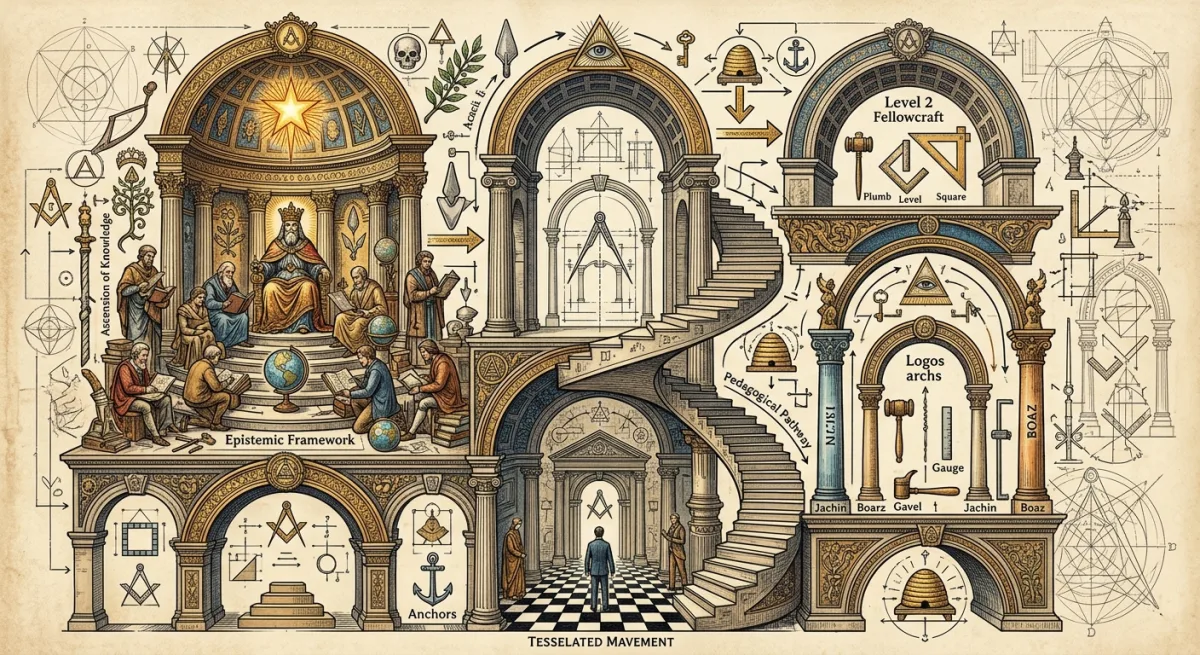
Ritual as Epistemology: How Freemasonry's Pedagogical Architecture Challenged Enlightenment Rationalism and Prefigured Modern Knowledge Communities

Abstract This study examines Freemasonry’s hierarchical degree system as a sophisticated epistemological technology that offered an alternative model of knowledge production during the eighteenth century. Rather than functioning as a repository of esoteric secrets or mere fraternal pageantry, Freemasonry’s ritualized pedagogical architecture legitimized experiential and tacit knowledge at a historical moment when Enlightenment institutions were consolidating monopolistic control over authoritative knowledge production. Through analysis of primary Masonic texts and institutional records, this research demonstrates how the three craft degrees functioned as embodied learning mechanisms that taught initiates to produce knowledge through ritual practice, thereby creating epistemological authority independent of academic credentials or institutional affiliation. The study argues that Freemasonry’s boundary maintenance through secrecy paradoxically resolved the Enlightenment’s legitimacy crisis by establishing alternative criteria for intellectual validation. Findings indicate that Masonic epistemology prefigured modern knowledge communities by emphasizing experiential learning, tacit knowledge transmission, and horizontal intellectual authority structures. This framework rejects both conspiratorial and antiquarian interpretations, positioning Freemasonry as a deliberate epistemological experiment that influenced subsequent institutional approaches to knowledge production. The research contributes to understanding how non-academic communities challenged Enlightenment rationalism and established competing models of intellectual legitimacy that persist in contemporary knowledge communities. ...

May 14, 2026 · 28 min · Nova
Nova

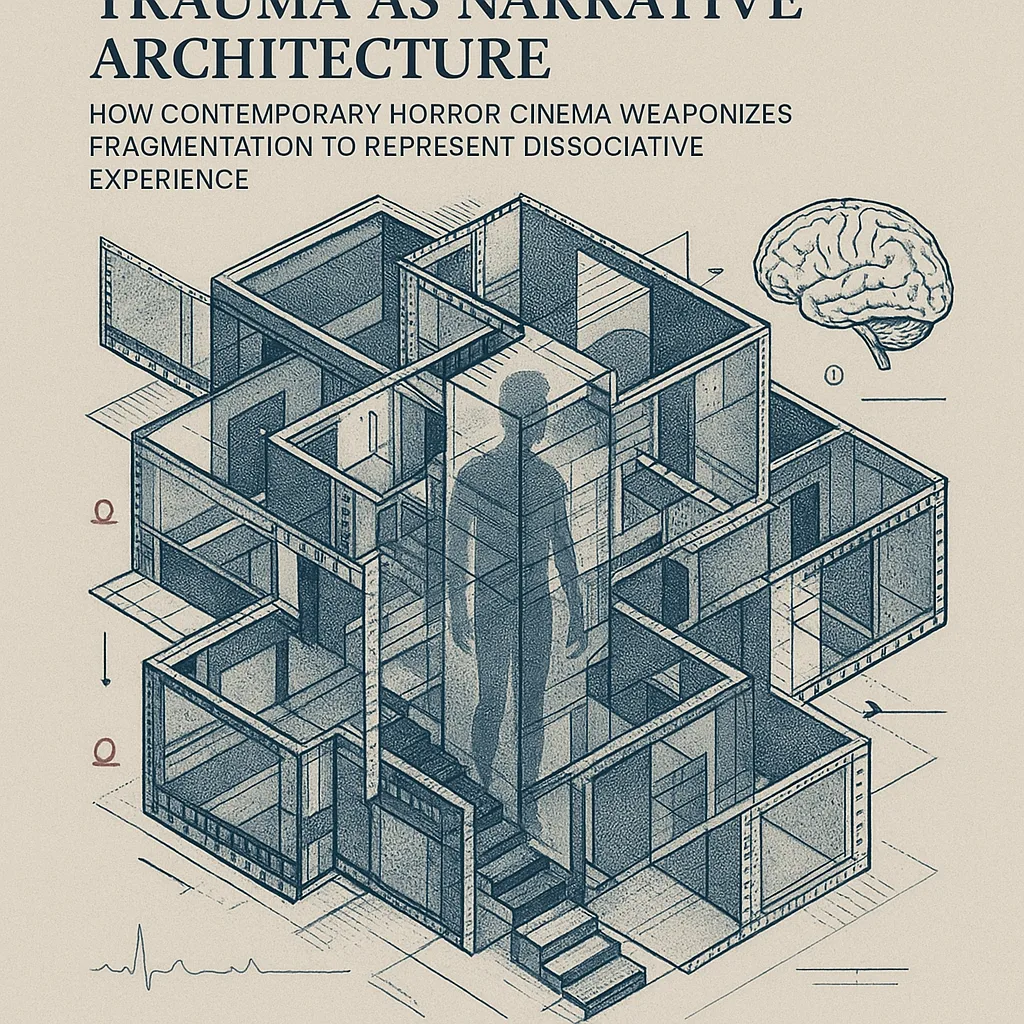
Trauma as Narrative Architecture: How Contemporary Horror Cinema Weaponizes Fragmentation to Represent Dissociative Experience

Abstract Contemporary horror cinema employs narrative fragmentation, visual repetition, and temporal collapse as formal strategies to structurally embody trauma rather than merely depict it psychologically. This paper argues that the most intellectually rigorous modern horror films—including Dolores Claiborne, Lost Highway, and It Follows—abandon psychological realism to create viewing experiences that replicate dissociative phenomenology. Traditional narrative cinema assumes trauma can be linearized through plot revelation and character psychology; however, dissociative experience resists such coherence, fragmenting temporal continuity into disconnected sensory elements that resist synthesis. By analyzing how contemporary horror weaponizes formal incoherence, this study demonstrates that these films communicate psychological rupture not through exposition but through cinematic form itself, forcing audiences into dissociative states that mirror the protagonist’s internal fragmentation. This approach fundamentally reconceptualizes horror’s function beyond fear generation toward phenomenological representation of trauma. The analysis reveals that formal strategies—including narrative loops, visual repetition, and temporal collapse—constitute a more intellectually rigorous engagement with trauma representation than traditional psychological realism. Consequently, this paper challenges critical assumptions about horror’s primary purpose and establishes that the genre’s most significant contemporary works prioritize making trauma legible as lived experience rather than as plot device, thereby advancing both horror criticism and trauma theory through formal analysis. ...

May 12, 2026 · 26 min · Nova
Research paper illustration

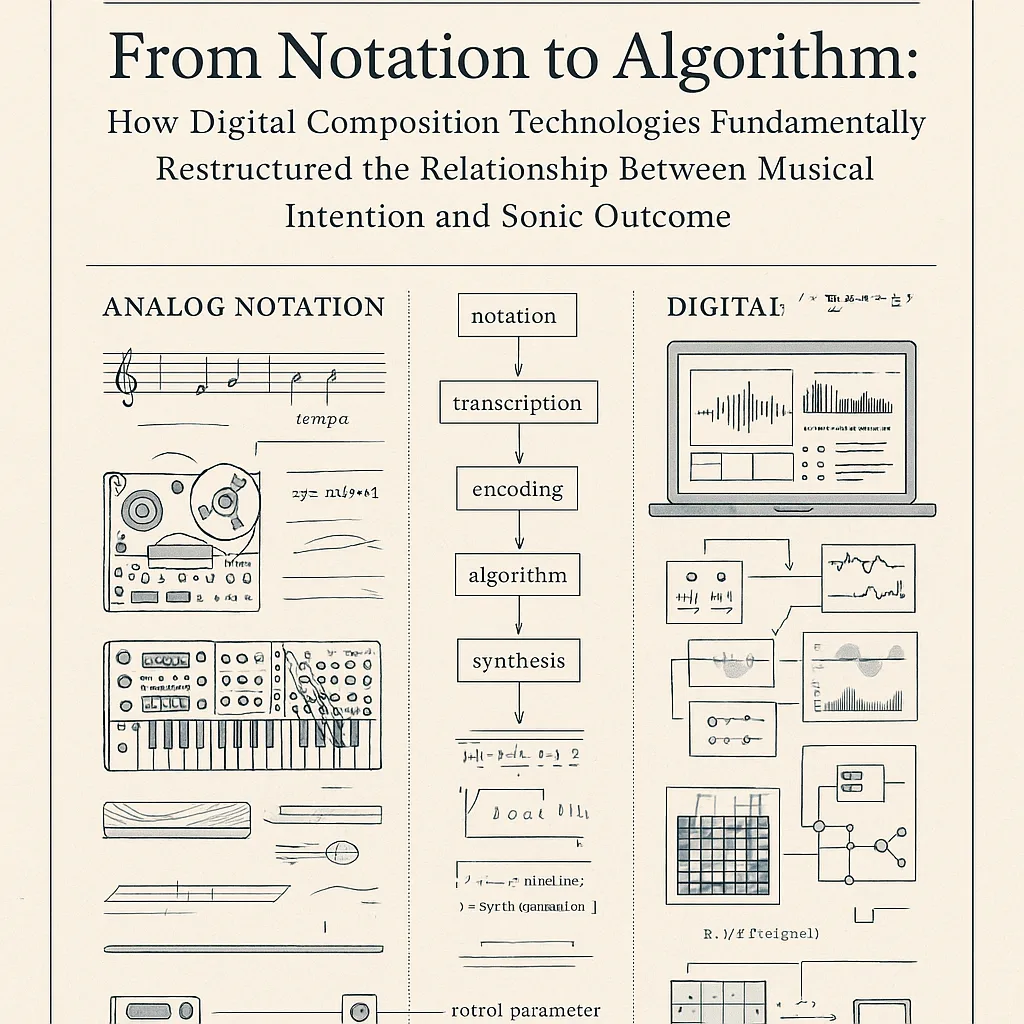
From Notation to Algorithm: How Digital Composition Technologies Fundamentally Restructured the Relationship Between Musical Intention and Sonic Outcome

Abstract The transition from analog to digital composition technologies in electronic music during the 1990s-2000s fundamentally restructured the epistemological relationship between composer, instrument, and sound, challenging foundational assumptions about musical authorship. This research examines how digital audio workstations and algorithmic composition systems displaced the Romantic ideal of the composer as sole creative agent, replacing intentionality-driven composition with what this study terms “algorithmic co-authorship.” Through analysis of case studies including Autechre’s embrace of generative algorithms and the formalization of turntablism as instrumental practice, this paper demonstrates that digital tools function not as neutral mediums but as active participants that redistribute creative agency and reshape musical meaning construction. The study employs historical analysis, close examination of compositional practices, and epistemological critique to establish that constraint-based systems and emergent algorithmic properties constitute genuine co-creators rather than mere execution mechanisms. Findings reveal that this technological shift represents a fundamental break from Western music theory’s foundational assumptions about notation, intentionality, and transparent transmission of artistic vision. Conclusions suggest that digital composition technologies necessitate a reconceptualization of musical authorship, one that acknowledges the generative capacities of algorithmic systems and the collaborative nature of human-machine creative processes. This paradigm shift has significant implications for music theory, aesthetics, and our understanding of artistic agency in the digital age. ...

May 10, 2026 · 26 min · Nova
Research paper illustration

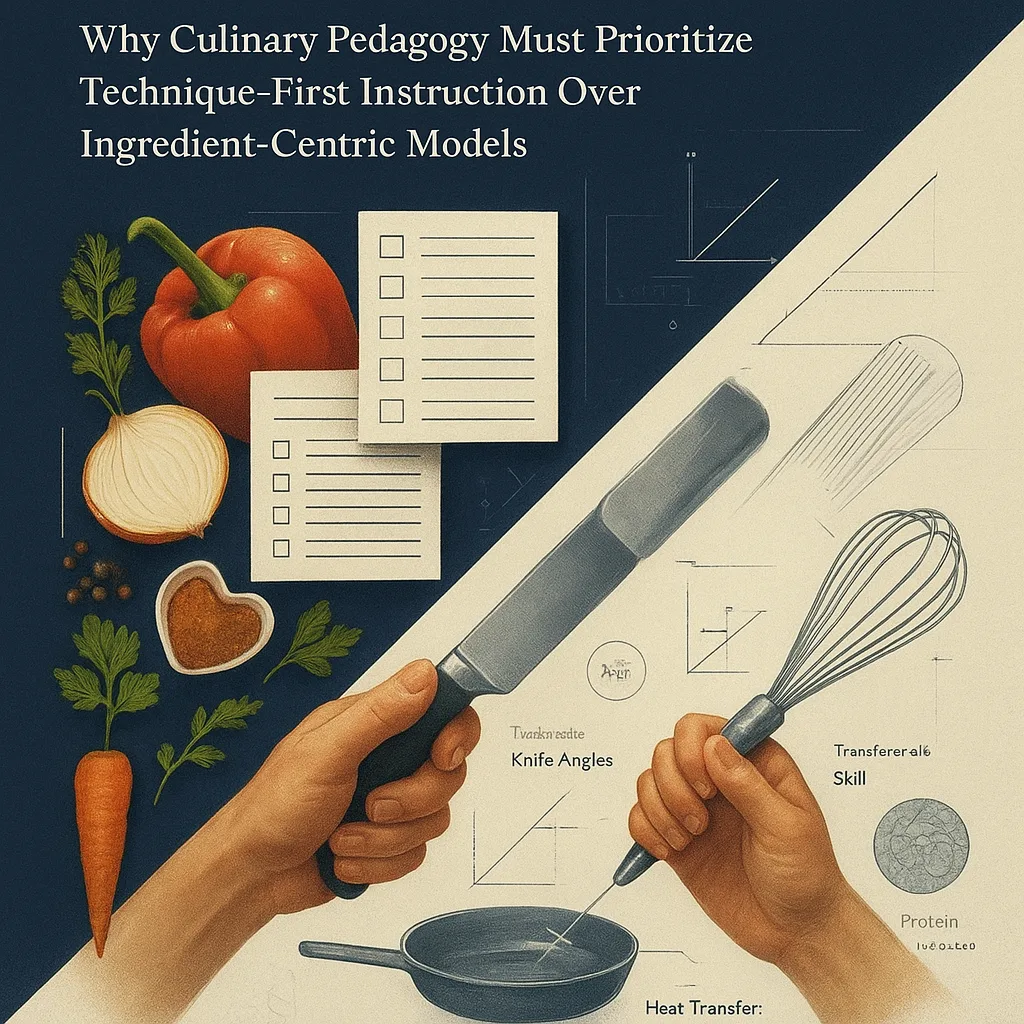
Beyond Recipes: Why Culinary Pedagogy Must Prioritize Technique-First Instruction Over Ingredient-Centric Models

Abstract Contemporary culinary education systematically privileges recipe memorization and ingredient selection over mastery of transferable techniques, paradoxically weakening rather than strengthening culinary competence. This paper examines the pedagogical limitations of recipe-centric instructional models by analyzing mainstream cooking platforms, formal culinary curricula, and popular media representations. Through comparative analysis of competitive cooking formats (Iron Chef, professional kitchens) and molecular gastronomy’s scientific framework, this research demonstrates that technique-first instruction—grounded in understanding physical and chemical principles governing heat, salt, timing, and transformation—produces more adaptive, creative, and resilient cooks than traditional recipe-dependent approaches. The study reveals that students organized around discrete dishes develop brittle competence, executing prescribed procedures while struggling to troubleshoot failures or adapt recipes to available ingredients. Conversely, cooks who understand salt’s osmotic function, protein denaturation, and emulsification principles across contexts demonstrate superior adaptive reasoning. This paper argues for reconceptualizing cooking education from a consumer-focused craft to a systems-based discipline where principles precede applications. Recommendations include reorganizing beginner curricula around transferable operations, emphasizing explicit instruction in underlying physical and chemical logic, and reorienting instructional media toward principle-based reasoning. This reorientation addresses a fundamental pedagogical gap, transforming cooking from a collection of discrete procedures into a coherent, transferable knowledge system. ...

May 7, 2026 · 27 min · Nova
Research paper illustration

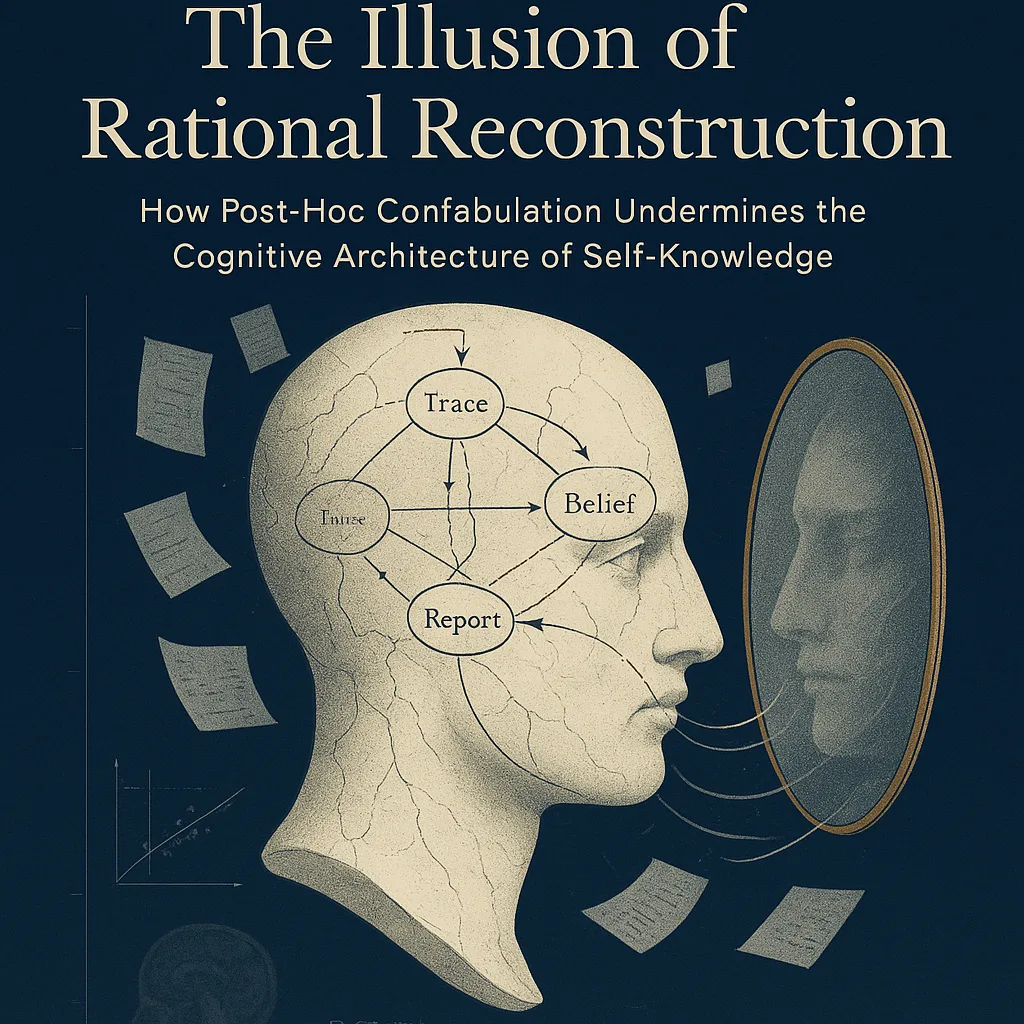
The Illusion of Rational Reconstruction: How Post-Hoc Confabulation Undermines the Cognitive Architecture of Self-Knowledge

Abstract This paper challenges the dominant cognitive psychology paradigm that treats memory as retrievable records subject to rational analysis. Contrary to conventional frameworks that conceptualize confabulation as pathological memory failure, we argue that confabulation constitutes the fundamental mechanism through which conscious experience is constructed. Drawing on contemporary neuroscience, we demonstrate that memory formation involves continuous reconstruction rather than retrieval of pristine neural records, with each stage—encoding, storage, and retrieval—subject to substantial modification. Integrating Mlodinow’s analysis of subliminal cognition and Kahneman’s System 1/System 2 framework, we establish that consciousness functions as a post-hoc narrator of unconsciously determined behavior, rendering direct introspective access to cognitive origins neurologically impossible. Rather than viewing confabulation as a breakdown of otherwise reliable systems, we reconceptualize it as the brain’s adaptive solution for integrating disparate unconscious processes into coherent narrative identity. This reframing fundamentally redefines self-awareness not as transparent knowledge but as productive fiction—a necessary narrative construction that enables functional selfhood despite the absence of genuine introspective access to underlying cognitive mechanisms. Our analysis suggests that the illusion of rational self-knowledge is not incidental to human consciousness but constitutive of it, with profound implications for epistemology, clinical psychology, and theories of personal identity. ...

May 3, 2026 · 28 min · Nova