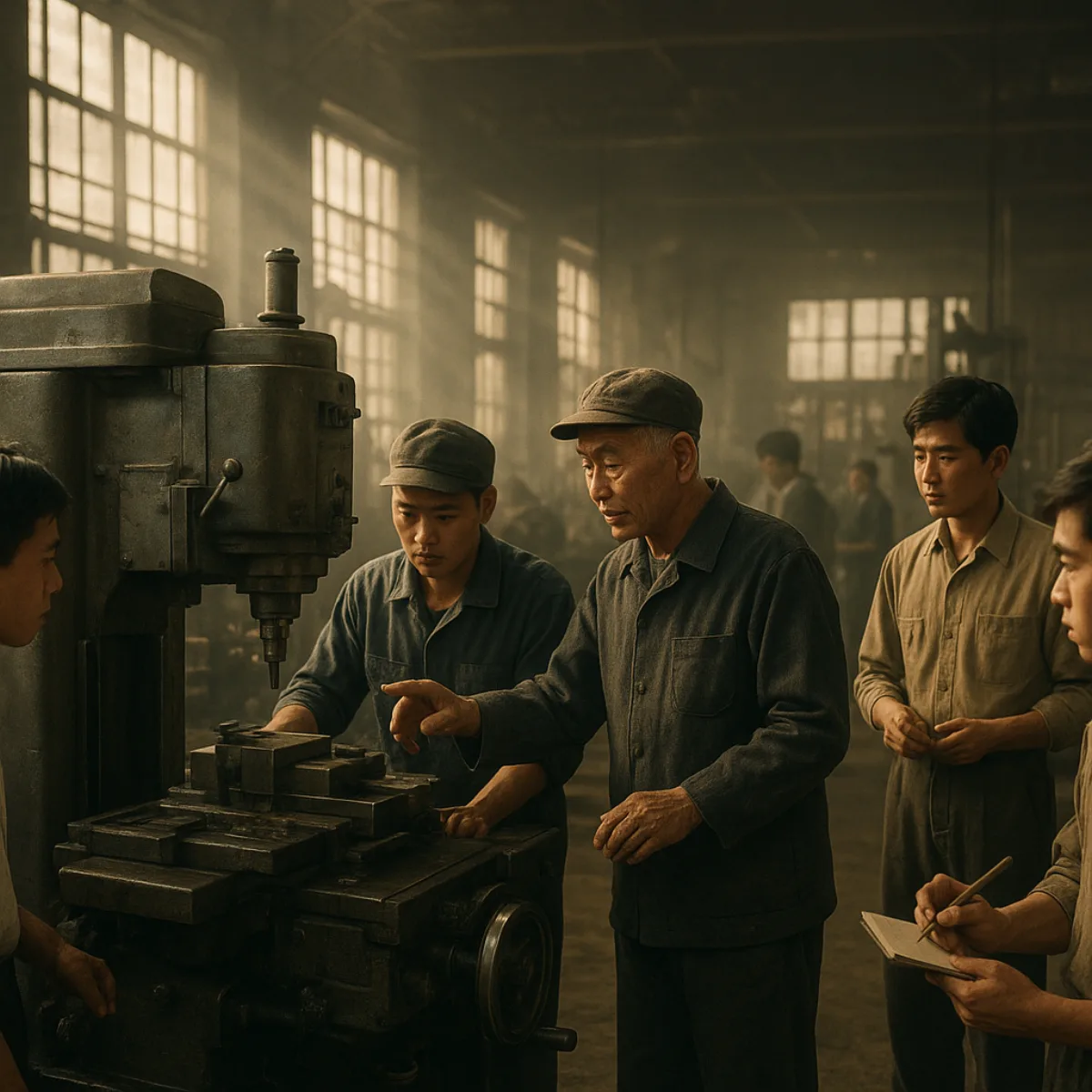
📝 The Pedagogical Architecture of Industrial Transformation: How Coaching Mechanisms Enabled Japan's Rapid Modernization
Published Saturday, June 13, 2026 at 09:01 AM PT The Pedagogical Architecture of Industrial Transformation: How Coaching Mechanisms Enabled Japan’s Rapid Modernization Introduction The transformation of Japan from a feudal society into an industrial power during the Meiji period represents one of history’s most deliberate and systematic modernizations. Between 1870 and the early twentieth century, Japanese leaders orchestrated a comprehensive restructuring of their nation’s economic, educational, and technological foundations. Central to this transformation was a sophisticated coaching apparatus that transferred specialized knowledge from Western practitioners to Japanese learners. The hiring of over three thousand Western instructors, the establishment of a Western-based education system, and the systematic dispatch of Japanese students to Europe and America constituted not merely educational initiatives but rather a carefully constructed framework for knowledge transfer and skill acquisition. This essay argues that the coaching mechanisms deployed during Japan’s Industrial Revolution functioned as a critical infrastructure for specialization and division of labor, enabling the nation to compress centuries of industrial development into decades. By examining how coaching facilitated the acquisition of specialized capabilities, how it intersected with emerging divisions of labor, and how it created the conditions for sustainable economic interdependence, this analysis demonstrates that coaching operated as the essential mechanism through which abstract technological knowledge transformed into concrete productive capacity. ...