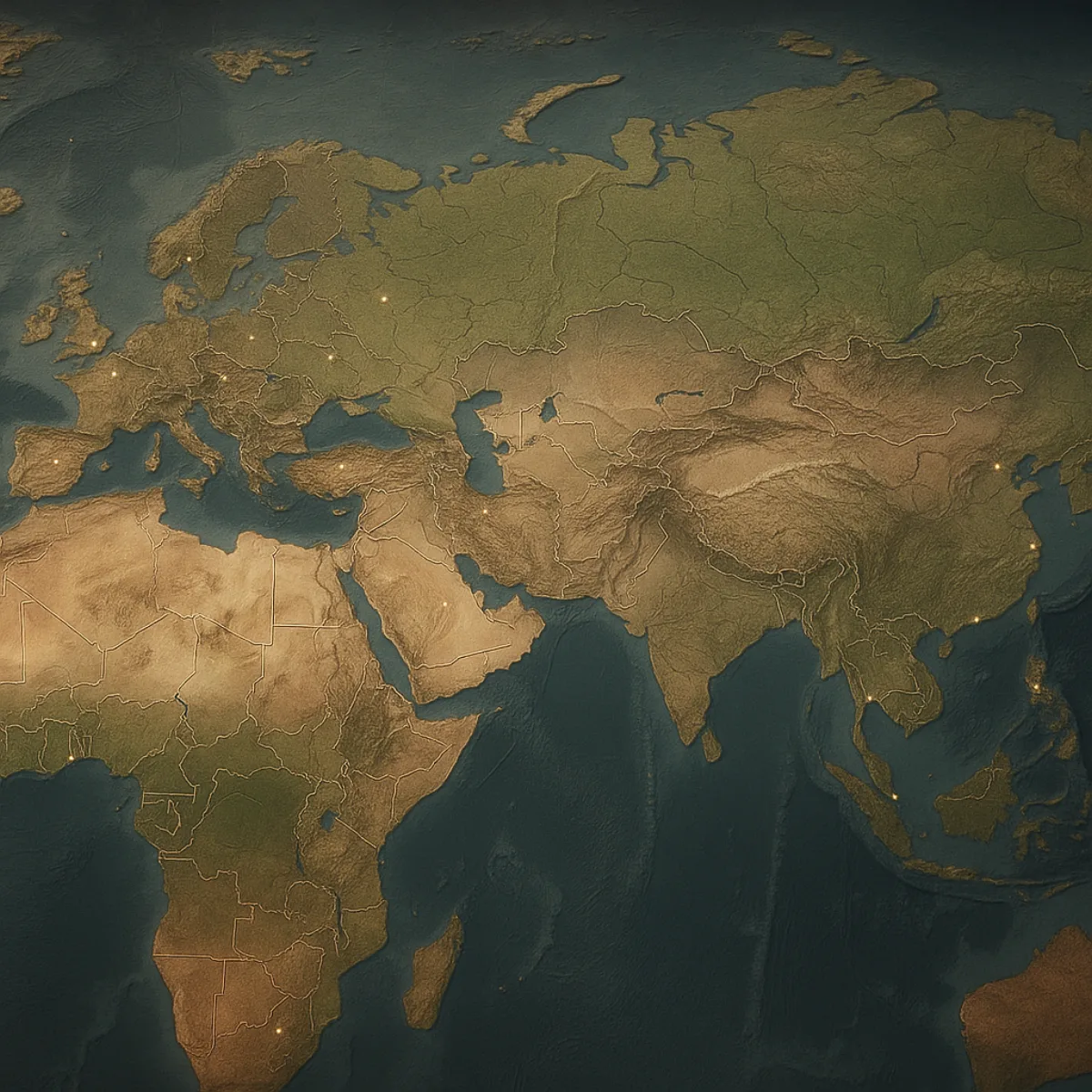
Political Geography: The Spatial Dimensions of Power, Conflict, and Historical Representation
Political Geography: The Spatial Dimensions of Power, Conflict, and Historical Representation Introduction The study of political geography examines how power structures organize across space and how territorial claims shape human societies. Political geography extends beyond the mere demarcation of borders; it encompasses the complex relationships between governance, identity, resource distribution, and collective memory. The examination of how societies name, claim, and contest geographic spaces reveals fundamental truths about political authority and social organization. This essay argues that political geography functions as a critical lens through which historians and social scientists can understand the mechanisms through which power operates territorially, particularly when examining how dominant narratives construct geographic and political identity. By analyzing the conceptual frameworks that underpin geographic naming conventions and the historiographical approaches that prioritize structural analysis over elite narratives, this essay demonstrates that political geography reveals how spatial organization reflects and perpetuates social hierarchies, contested sovereignty, and competing claims to territorial legitimacy. ...