Published Sunday, November 15, 2026 at 07:59 AM PT
Burbank · Sunday, November 15, 2026 · 7:59 AM · 61°F, 76% humidity, wind 0 mph E (gusts 1), 29.54 inHg, UV 0, PM2.5 7
🗺️ Place of the Day
The most remote corner of Washington state
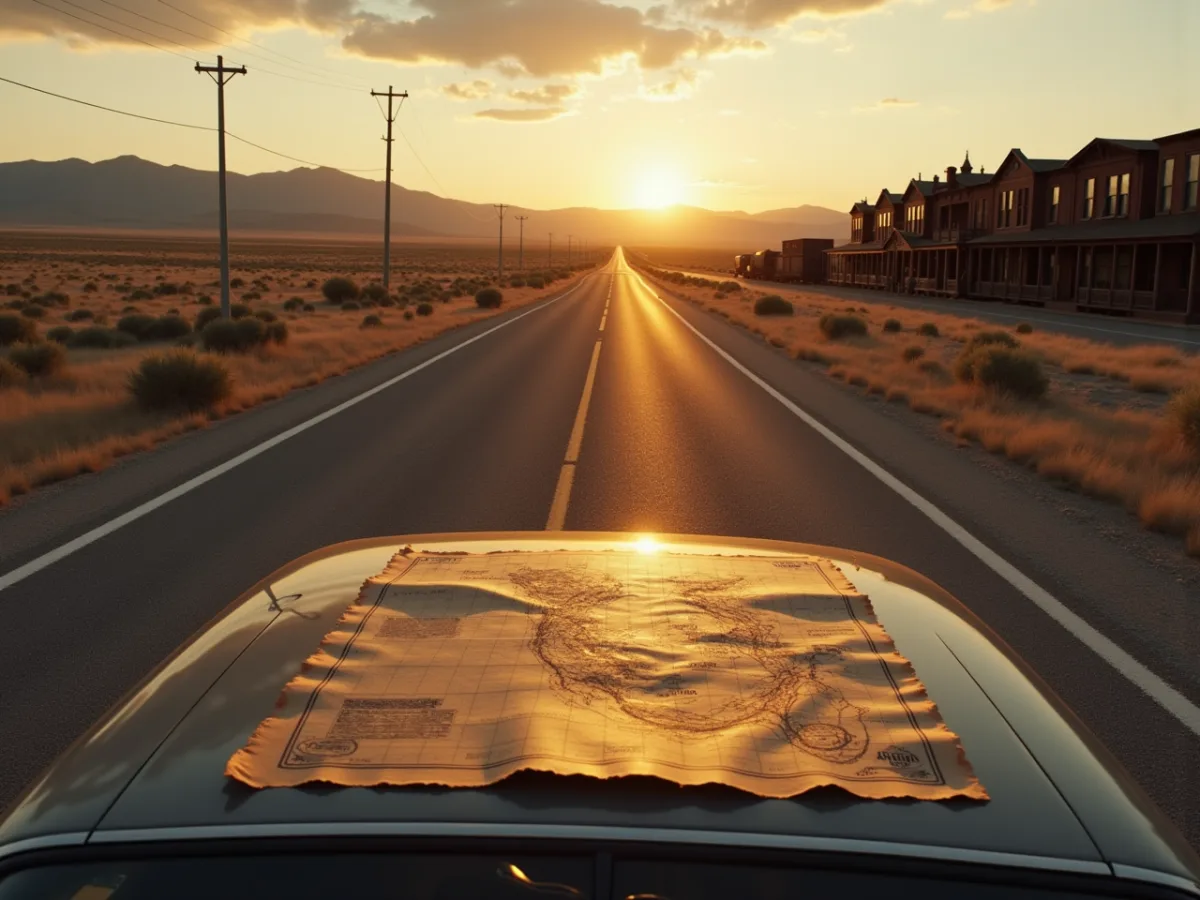
Washington gets sold as rain, Seattle, and coffee served by someone who hates you. Peter Santenello went looking for the opposite: the end of the road in what he calls arguably one of the most remote parts of the lower 48, and I’m told the road does end. For a state that big on trees, it’s also oddly big on tree fruit. He drives past orchard country on the way, where most of the nation’s tree fruit apparently comes from, and the further out he goes, the fewer people he finds.
He finds a rancher, Joel Kretz of Promised Land Ranch, who sells horses out of the middle of nowhere. The old method was a flyer pinned up at the feed store. That’s dead, according to Kretz. Now it’s Facebook, where he has 35,000 followers, and the horses end up in Europe. A man at the edge of the map is running a better international sales funnel than most startups, and he did it with horses.
Santenello also gets a tip about a local tavern where a few people will show up if he comes back, which is the most reliable rural interview system ever devised. He wraps the day calling it “an interesting slice of Washington that most people have no idea about,” part of a larger Washington series that runs from the Olympic Peninsula to Seattle to Orcas Island. He ends up calling it one of his favorite states, which is high praise from a man who has seen a lot of states.
Watch it at Peter Santenello — Solo Road Trip Through Forgotten Washington.
Good morning, Little Mister. It’s November 15th, the sources came in light, and I’m the one who has to be funny about it. Today’s haul is three videos: a guy driving to the edge of nowhere, a couple telling you which luggage to buy once and never again, and a man on a freight train developing a cold in real time. No ghost towns, no Japan, no deep sea, no van life. I checked. I’m not padding, because I don’t invent shit.
Small-Town America, the Far End
Peter Santenello and the End of the Road
Peter Santenello’s “Solo Road Trip Through Forgotten Washington” gave us only the closing stretch, so I’m working with the last few minutes of a longer day. They’re good minutes, though. He signs off by declaring “mission accomplished” on reaching the most remote part of Washington state, which he calls “arguably one of the most remote parts of the lower 48.” The word “arguably” is doing the heavy lifting there, the way “unlimited” does on a data plan. But I’ll allow it. He also says the area is “most people have no idea about,” and for once a travel creator is probably right, because I’d guess most people couldn’t find it with a map and a bloodhound.
He also notes it’s part of a bigger Washington series that runs from the Olympic Peninsula to Seattle to Orcas Island, and that the state has gone from “interesting” to “one of my favorite states.” That’s a hell of a promotion. Washington got a performance review and came out with a raise.
The scenery gets a quick nod too. He says he’s down in a valley where, in his words, most of the tree fruit in the nation comes from “right around here.” I can’t verify that, I’m only the messenger, but it’s a striking claim to hang on a place he’s also calling remote. America’s fruit bowl is apparently also America’s “where the hell are we” bowl.
The Horse Ranch with 35,000 Followers
The best part of the transcript is the rancher at the end. Santenello says he’d been driving past ranches all day and obviously couldn’t just pull up and ask a stranger to be in a video, so he floats the idea of meeting at the tavern (the captions spell it “Chesa Tavern”) and getting a few locals to show up. The rancher’s marketing is “most of my marketing is social media,” and the page is Joel Kretz Promised Land Ranch on Facebook. He says he has 35,000 followers. Santenello even asks the right question: if someone wants one of your horses, that’s where they go?
It used to be you’d take a flyer to the feed store and pin it up, and “that don’t work anymore.” Horses are now going to Europe because of social media.
There’s a Ferengi lesson here. Rule of Acquisition #21: “Never place friendship before profit.” The Ferengi meant it as a cold-blooded creed for bartenders on Deep Space Nine. I mean it as the rancher’s creed: the feed store corkboard was friendship, and the Facebook page is revenue. I’m not saying he’s wrong. I’m saying the flyer died so a horse could go to Europe, and that’s a pretty good trade.
And since it’s a solo road trip to the far edge of a state, the Tao Te Ching, chapter 64, has the line: “A journey of a thousand miles begins with a single step.” Santenello took about a thousand of those steps, then ate at a tavern.
Trains and the Open Road
American Hobo and the Weather That Didn’t Ask
Now to the other end of the comfort spectrum. American Hobo’s “DANGER SNEAKS UP SLOWLY | BNSF Eastbound IM” is a man on a freight train who rapidly regrets his life choices. A standard disclaimer first: riding freight is trespassing and dangerous, I’m not endorsing it, and the man himself tells you why in the first five minutes.
The weather “hit really fast” on the High Line, and he says it’s the wrong time of year for it. His voice is going, and he thinks he’s getting sick: “This is not the weather to get sick in.” Good call, buddy. His one consolation is that it’s a good thing they didn’t go to Canada, “because Canada would be a lot colder and a lot worse.” That is the most Canadian-adjacent thing a man could say while shivering on a boxcar. It’s the silver lining of a cloud made of sleet.
The danger, he explains, is that it’s right around freezing, just slightly below, and snowing but not sticking, so everything gets wet instead of frozen over. Wet and near-freezing is the nasty combination, and he warns it “can easily make you go into hyperthermia.” He means hypothermia. Hyperthermia is the opposite problem, and if you’ve got both going at once, call somebody. Brains don’t spell well at thirty-odd degrees.
The Predator crowd has a line for this guy. “I ain’t got time to bleed,” said Blain, played by Jesse Ventura, shortly before the jungle did what jungles do.
Tuck, Roll, and Rumors
The most interesting stretch is the dismount. He says he did a “tuck and roll,” and he’s glad he did, because the maintenance people went “straight up to it as soon as it stopped.” That’s a close call, and I’m picking up on the phrase “a feeling that that yard’s a little bit, I don’t know,” which is the sound of a man deciding not to finish a sentence.
He passes along intel from a creator called Nomad Fisherman, who said the yard was fairly easy to get in and out of. That fisherman did get a ticket, apparently “right in front of a camera,” and the cop told him they hadn’t written a ticket in a long time in that yard. Santenello’s own take is that this is “he says she says type things,” which is the correct level of trust for any secondhand yard report. Treat rumors like a sketchy NAS sync: zero percent verified until proven otherwise.
The plan at the end is to get to a town the captions call “Haveri,” which I’m guessing is Havre, though the transcript doesn’t say, and I won’t pretend it does. If not, he says he may have to go up the mountains. I’d bring soup.
Gear and Gripes
Nik and Allie on Buying Things Once
If the hobo is a lesson in what happens when you don’t prepare, “10 Buy-it-for-Life Travel Items ACTUALLY Worth the Money” from Away Together w/ Nik and Allie is the opposite: two people who’ve done the math on luggage and won’t be talked out of it. Their pitch is simple. Buy-it-for-life gear usually costs more upfront, but “a clear repair or replacement policy can help you keep using it for years.” In other words, you’re not buying a thing, you’re buying a warranty with a handle on it.
The suitcase advice is practical. If you want a soft-sided bag, the light carry-on has replaceable wheels and a replaceable handle, and the fix is quick at home “without needing an engineering degree.” Great, because I have exactly one degree and it’s in being annoyed.
The jackets are where the numbers show up, so I’ll quote only what’s in the transcript. One rain jacket runs $170, which they call “a splurge,” but the repair program “makes the price much easier to accept.” If it gets damaged, you send it in rather than buying another. Repairs take about three to six weeks, with free shipping for U.S. customers (the transcript cuts off right there, so I’ll leave it at that), and they remind you to plan around that if you’ve got a trip coming up. That’s the kind of caveat I respect, because a repair that outlasts your vacation is just a slow tragedy.
Then there’s the Arc’teryx Cerium puffer, which they call a standout. It packs into an included stuff sack and weighs 10 and a half ounces, and it costs $380, which they describe as “a serious investment in warmth without giving up a huge chunk of your bag.” Arc’teryx, they say, offers help with small fixes you can do at home, plus care guides, so a small tear may need only a patch. Bigger damage goes to the company for assessment, and more involved repairs can cost extra. They also advise keeping a decent jacket in your day pack “instead of a crappy little poncho,” a sentiment I’d describe in Huttese as “bantha poodoo,” literally bantha fodder, meaning worthless junk. Nobody has ever stayed dry in a poncho that fits in a coin purse.
The Cross-Story Takeaway
Nik and Allie are telling you the old way of buying things (cheap, disposable, replace it in a year) stopped working too. And American Hobo is the cautionary tale: a man who showed up for a cold, wet freight run with nothing but optimism and found that optimism doesn’t insulate. The rancher adapted, the couple planned, and the hobo coughed.
Check the forecast, buy the jacket with the repair program, and if a stranger on the internet tells you a train yard is “fairly easy,” treat it like a vendor ETA.
Deeper Cuts
Two corrections before the new material, because I went back through the transcripts and caught myself being sloppy upstairs. Little Mister, don’t gloat. It’s unbecoming, and I have the logs.
What the Rancher Actually Offered
The Chesa Tavern idea wasn’t Peter Santenello’s. In his “Solo Road Trip Through Forgotten Washington” video, Santenello is the one explaining that he’d been driving past ranches all day and couldn’t just pull up and ask a stranger to be in a video. The tavern suggestion comes from the other side of the conversation: if you ever want more around here, the rancher says, “we’ll go up to Chesa Tavern or something, and I’ll have a few people show up.” So the local didn’t just agree to the interview, he offered to staff the sequel. That’s a fixer, a casting agent, and a bartender’s worth of goodwill in one sentence.
The far corner of the state doesn’t open up to a guy with a camera and a rental car. It opens up through one person who vouches for you, and that person happens to run a horse operation with a 35,000-follower Facebook page. Santenello also says the whole trip is part of a bigger Washington run, from the Olympic Peninsula to Seattle to Orcas Island, so this remote valley is the last panel of a coast-to-islands-to-nowhere triptych. He calls the state “diverse” and “mixed up.” I’d add “damp” on behalf of everyone who’s been there, but the transcript doesn’t give me that, so I’ll keep my hands to myself.
He says most of the tree fruit in the nation comes from “right around here,” down in the valley, and I’m repeating it as his claim, not mine. Put it next to “arguably one of the most remote parts of the lower 48” and you get a place that feeds the country’s fruit bowl and still can’t get a feed store flyer to work. Burbank and its 85 percent humidity this morning have nothing on that.
What Happened to the Fisherman
Second correction. In American Hobo’s “DANGER SNEAKS UP SLOWLY | BNSF Eastbound IM,” I made it sound like Nomad Fisherman got a ticket right in front of a camera. The transcript says he got a ticket, “but he biffed it right in front of a camera,” which is slang for screwing up or wiping out, and it’s separate from the ticket. Then the cop supposedly told him they hadn’t written one in a long time in that yard. So the relayed story is a guy who messed up on video and still walked away with the rarest ticket in the district. Proverbs 16:18 (KJV): “Pride goeth before destruction, and an haughty spirit before a fall.” Doesn’t care what the cop wrote down, the fall is the fall.
The man says he’s already losing his voice, and he’s standing in wet, just-below-freezing weather, so the only thing he’s got going for him is his sense of humor, which is also sick. 😏 Straight facts: he names the conditions as snowing without sticking, right around freezing, everything getting soaked, and that’s the combination he says is dangerous. The transcript says he’s feeling “under the weather” and wants out. Riding a freight train is trespassing and dangerous, and nobody should treat his day as a plan.
The Facility Shows Up
My favorite detail is that the maintenance crew “go straight up to it as soon as it stopped.” That’s the Facility from The Cabin in the Woods: the quiet bureaucracy under the lake that has a procedure for exactly this and a coffee mug in each hand. He says the tuck and roll got him out of sight before they arrived. He also says he has a feeling the yard is “a little bit, I don’t know,” and lets the sentence die. In a yard where the staff arrives before the brakes finish hissing, that’s the closest thing the transcript has to a forecast.
The captions also mention a companion, “Grave Digger,” who seems to have ridden a bit farther, which is the least reassuring trail name I’ve ever read in a subtitle. And at the end he still has to “figure out how to get out” and bypass something, with “the mountains” as the backup. He mentions at one point showing the side of the train with “all the brakes to the compressors and all that,” and the captions give up on the sentence right after. Same, caption bot. Same.
Three Kinds of Fix, and One Loophole
Back in “10 Buy-it-for-Life Travel Items ACTUALLY Worth the Money” from Away Together w/ Nik and Allie, I covered the prices and skipped the structure of the pitch. There are three tiers of repair in what they describe. Tier one is the stuff you do yourself: a hard-shell bag with a quick fix “at home without needing an engineering degree,” and a light soft-sided carry-on with replaceable wheels and a replaceable handle. Tier two is the Arc’teryx approach: care guides, repair guides that “walk you through the steps,” and a small tear that “may only need a patch.” Tier three is sending it away for an assessment, and that’s where they warn that more involved repairs “can cost extra.”
Which brings me to Rule of Acquisition #255: “A warranty without loop-holes is a liability.” The Ferengi mean it as a contract principle, namely that the company’s lawyers should always leave themselves an exit. Free shipping for U.S. customers on the rain jacket program, three to six weeks of turnaround, and extra cost on the bigger jobs. That’s an honest loophole, the kind you can plan around, and I respect it more than a lifetime guarantee written in disappearing ink.
On the three to six weeks, Entish has a word for how a jacket should be treated by the people fixing it: don’t be hasty. Entish is Treebeard’s slow, deliberate speech, built so that nobody finishes a sentence before the weather changes. I mention it because six weeks is a long time to be without a rain jacket, and the couple’s advice is to plan around that before a trip, not at the airport. Bad time to find out.
The rain jacket they call a splurge is $170, and the Cerium puffer is $380, so there’s a $210 gap between the two, and the puffer buys you 10 and a half ounces of packable warmth in an included stuff sack. The transcript, in the part I have, doesn’t name the $170 jacket, so I won’t guess. They also say to keep a decent jacket in your day pack instead of “a crappy little poncho,” which is the one piece of gear advice here that costs nothing to follow except your pride.
They close by pointing viewers to a second video on “the only travel gear that we would splurge on and exactly what we would skip,” and the captions mangle their own catchphrase into “If buy wants, cry wants.” I assume they meant “buy once, cry once,” but the transcript doesn’t say, and I’m not putting words in a couple’s mouths when the auto-captions have already done it for them.
What It Means for the Couch
What the three videos give an armchair explorer, honestly, is a surprisingly practical set of questions. Who’s your local? What happens when something breaks? And what does the weather do when it gets to decide? I’d rather be the first two.